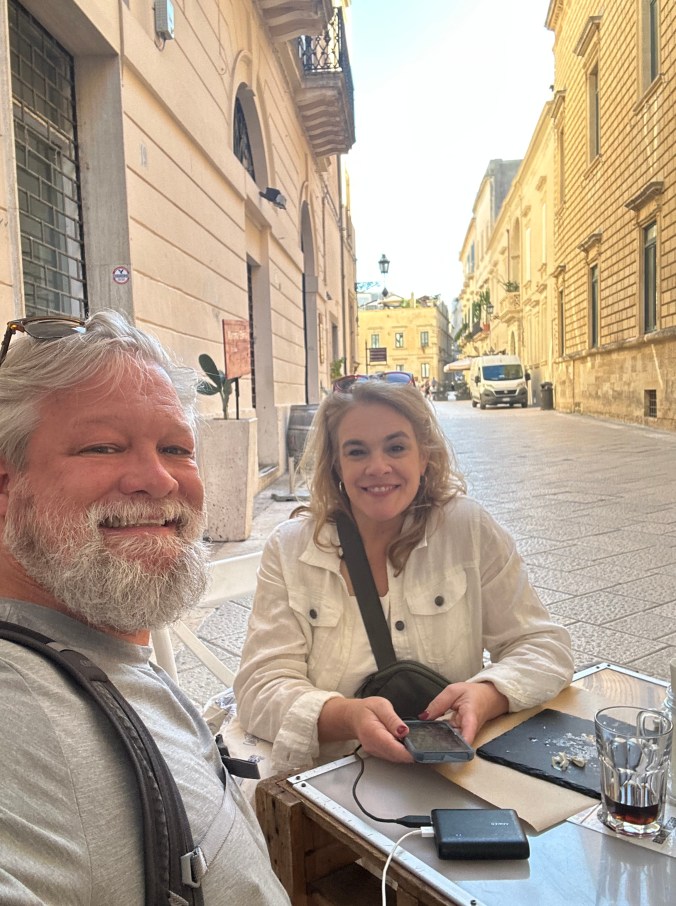
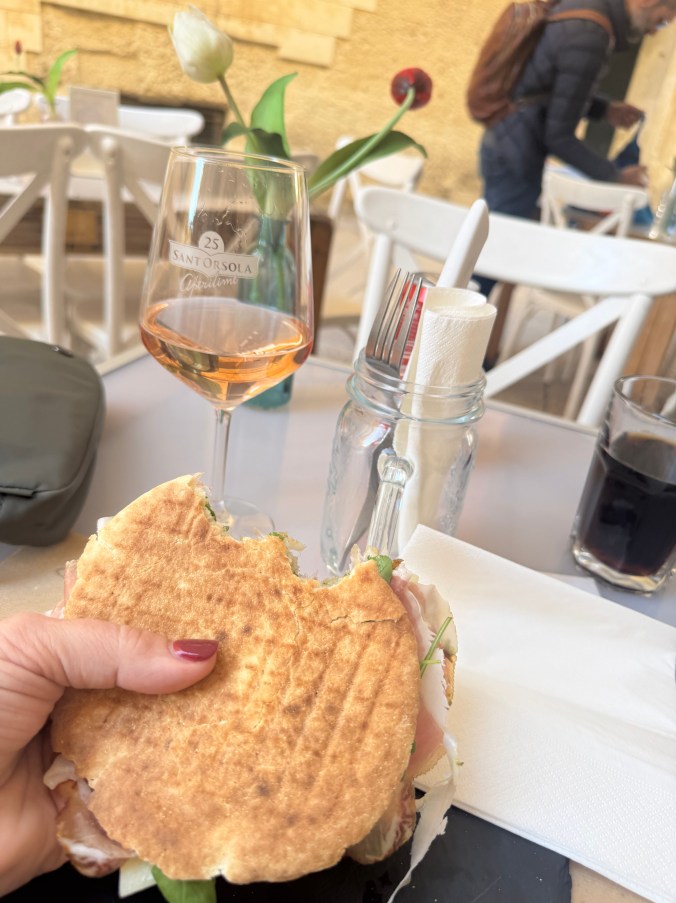
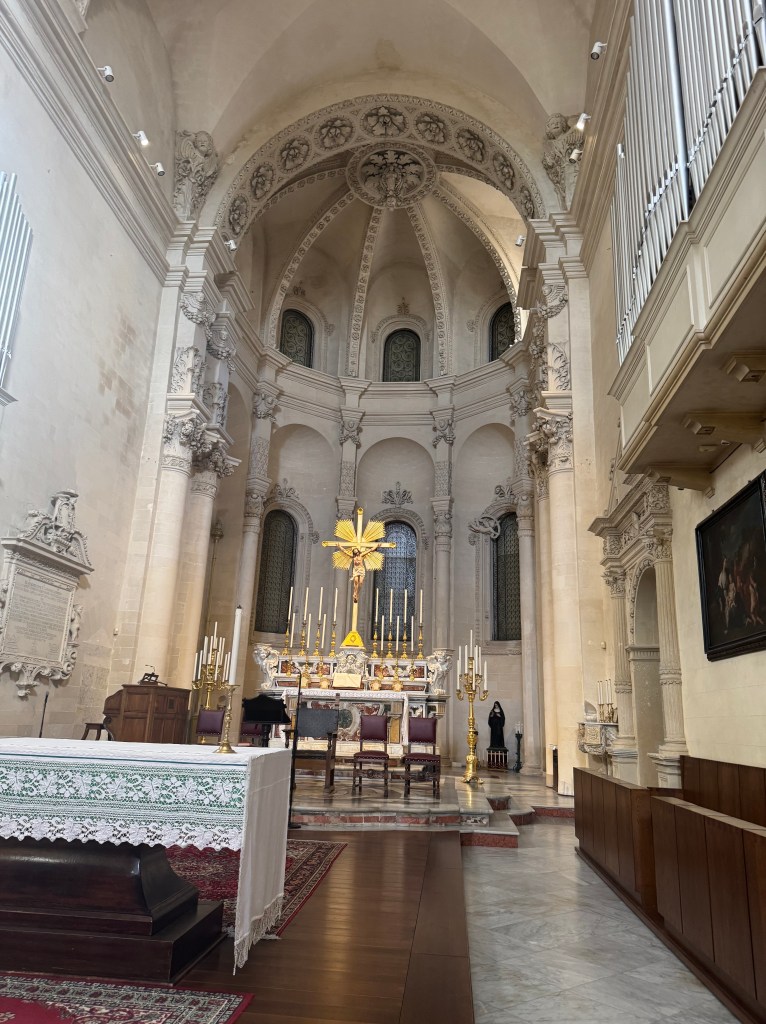
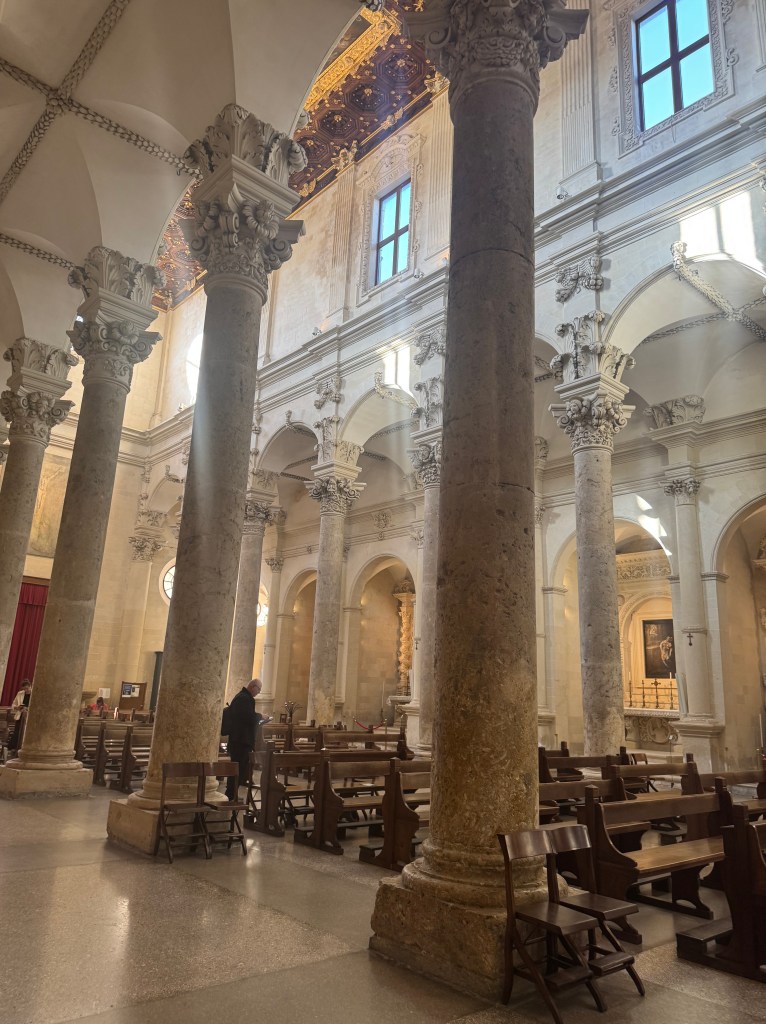
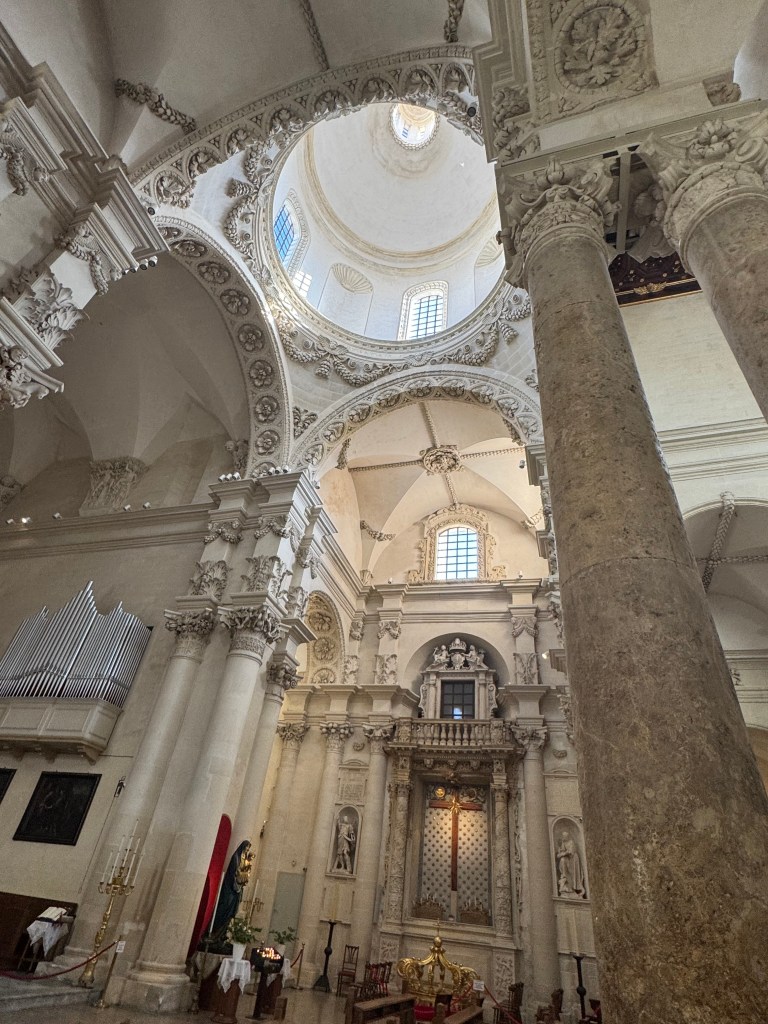
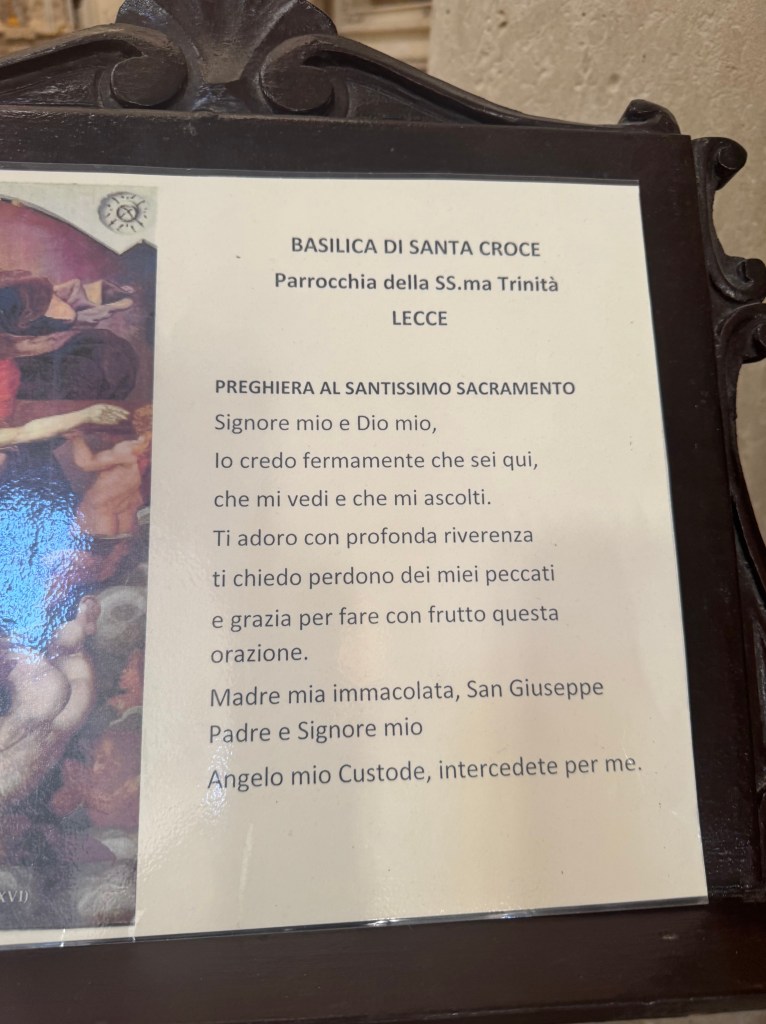
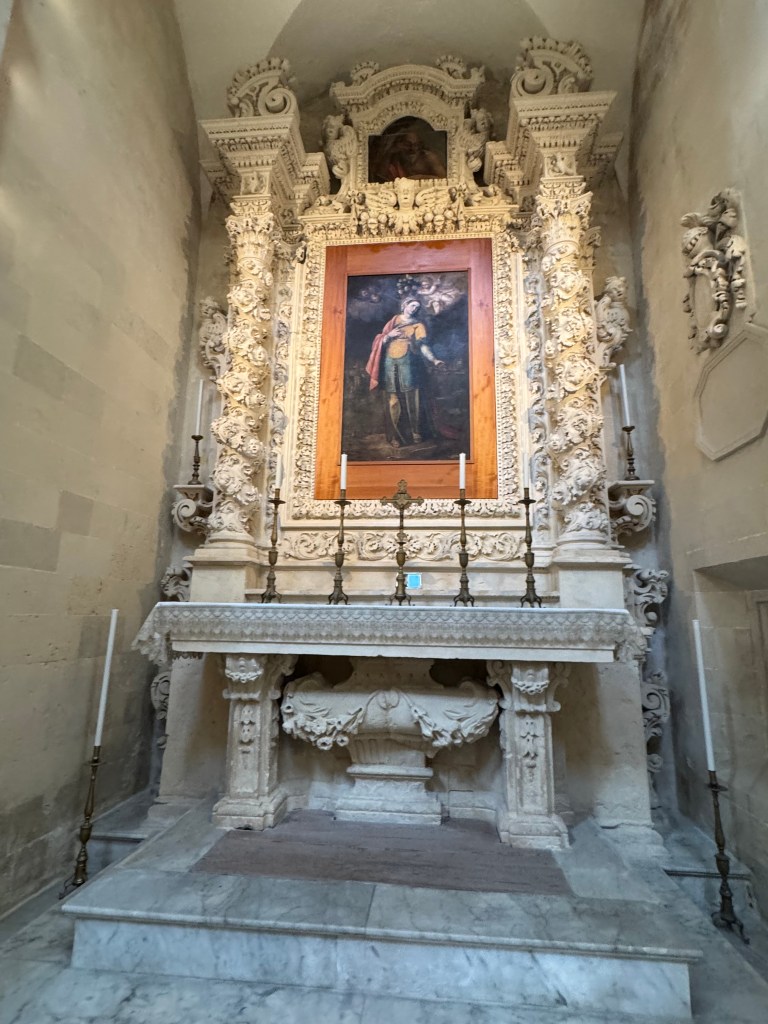
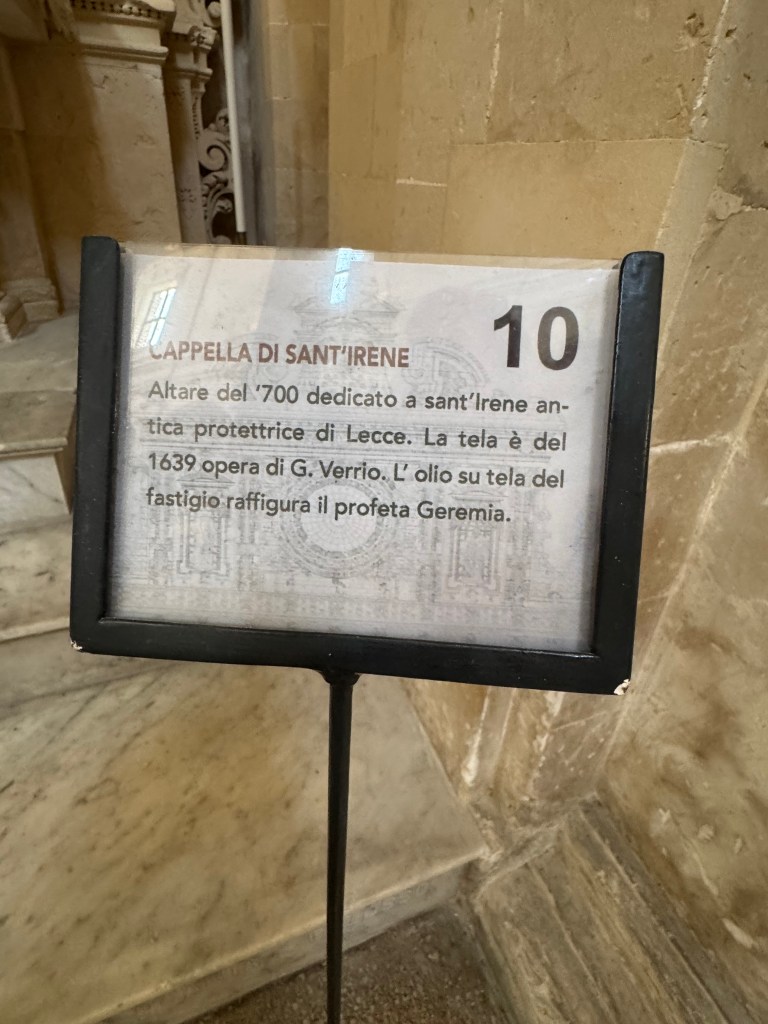
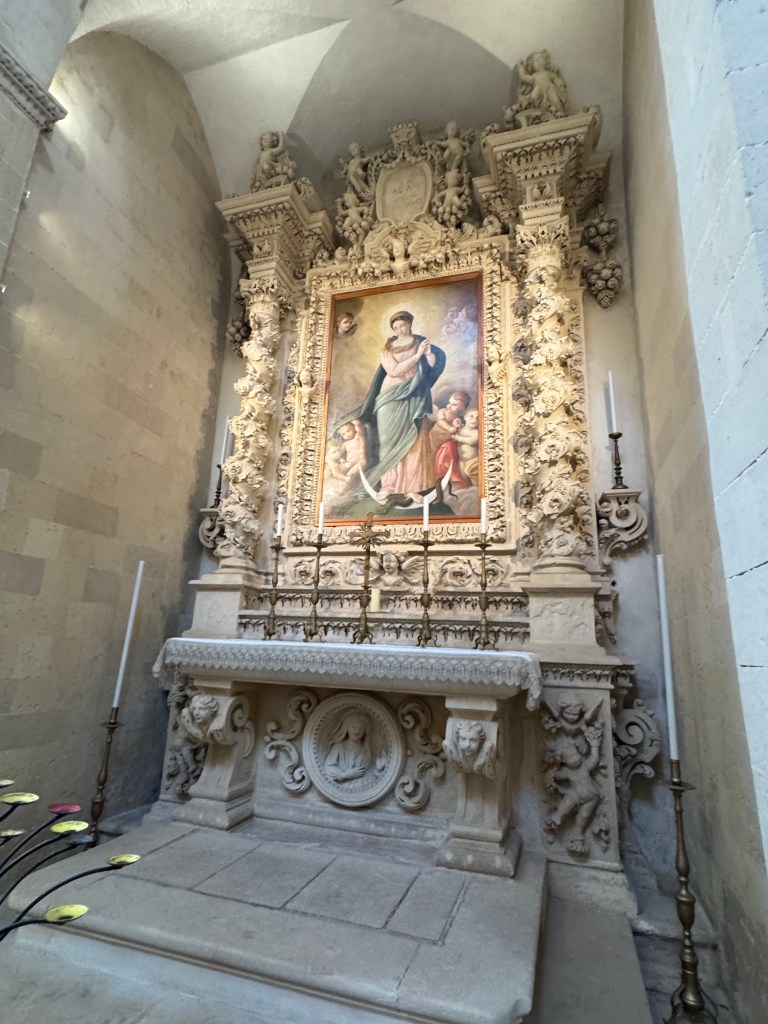
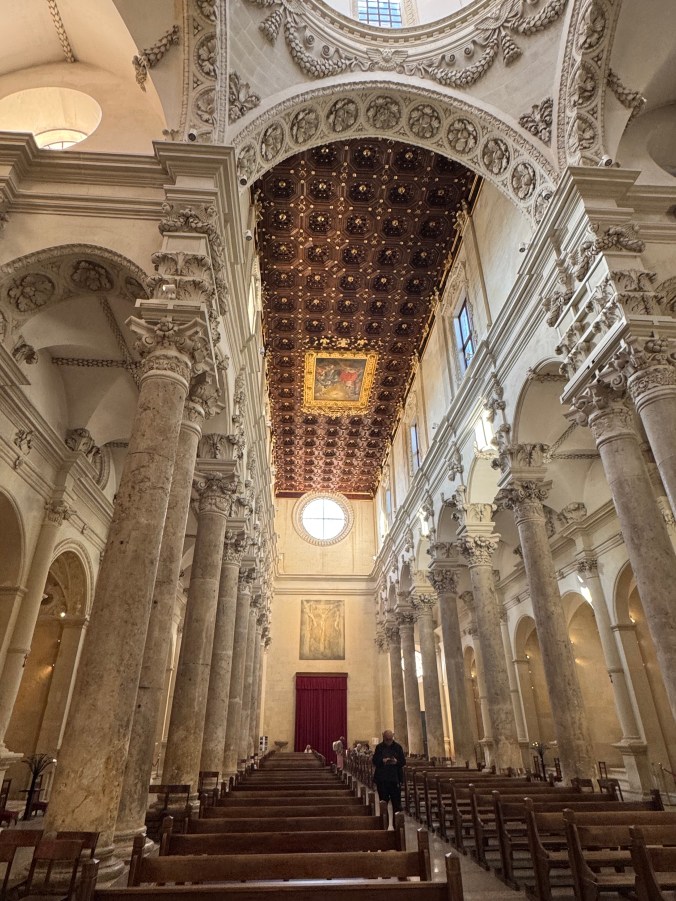
On October 29, we left Monopoli (on the back side of the boot ) and drove south along the coast to Lecce. Situated in the middle of the heel of the boot, it is an amazing place to visit. First up was Basilica di Santa Croce, as it was closest to where we were. From the link: “Walter IV, Count of Brienne, had founded a monastery in the 14th century in the current church. In 1549, a new church was begun, using, among the others, houses from Jews who had been ousted from Lecce in 1510. The construction dragged on for two centuries; by 1582, the lower façade had been finished, while the dome was completed in 1590. The portals were added starting in 1606, under the direction of Francesco Antonio Zimbalo. The church was completed by his successors Cesare Penna (upper façade and the rose window) and Giuseppe Zimbalo (decoration of the upper façade).”
- side note – When we got to the door, they told us we needed a ticket and directed us to a small office nearby. There, they explained that we could get a day pass type of situation where we could get in to about 5 of the churches we’d planned to visit. So that’s what we did. At each church, we showed the pass and we walked right in. Important to note, that they weren’t selling tickets at any of the doors so this seemed to be the deal.
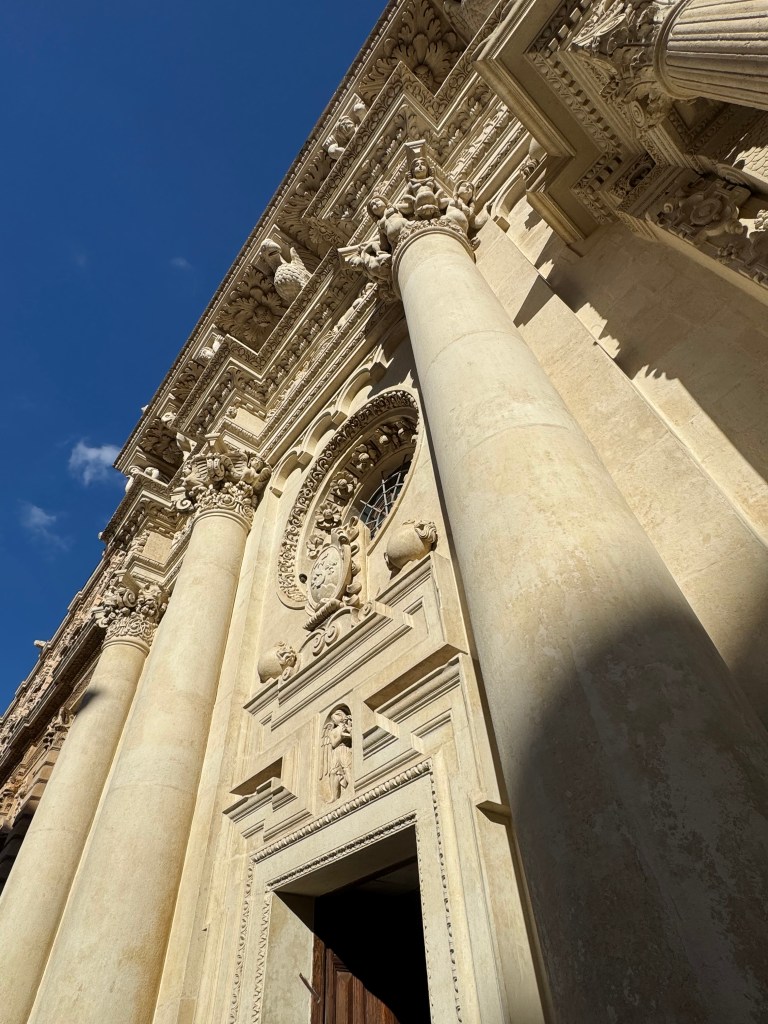
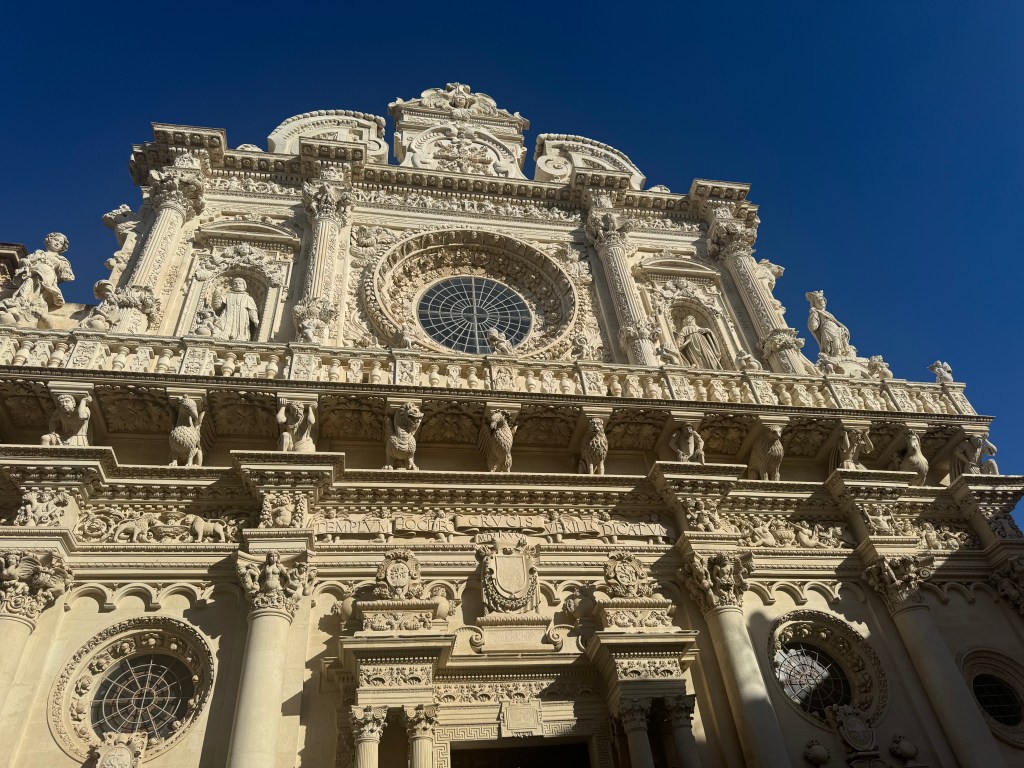
I have to admit, that having a career in Healthcare and maybe just not paying attention to details in general, I never fully understood the meaning of “baroque”. When we were researching about this trip, that word came up a lot in reference to Italian architecture, and I did understand that Basilica di Santa Croce was built in the baroque style. I’m going to go ahead and tell you what I learned about it: Baroque architecture, (linked to full page) –
“a highly decorative and theatrical style which appeared in Italy in the late 16th century and gradually spread across Europe. It was originally introduced by the Catholic Church, particularly the Jesuits, as a means to combat the Reformation and the Protestant church with a new architecture that inspired astonishment, reverence and awe.[1] It reached its peak in the High Baroque (1625–1675), when it was used in churches and palaces in Italy, Spain, Portugal, France, Bavaria and Austria. In the Late Baroque period (1675–1750), it reached as far as Russia, the Ottoman Empire and the Spanishand Portuguese colonies in Latin America.”
”Astonishment, reverence, and awe” are exactly what the Basilica Di Santa Croce inspired in us.
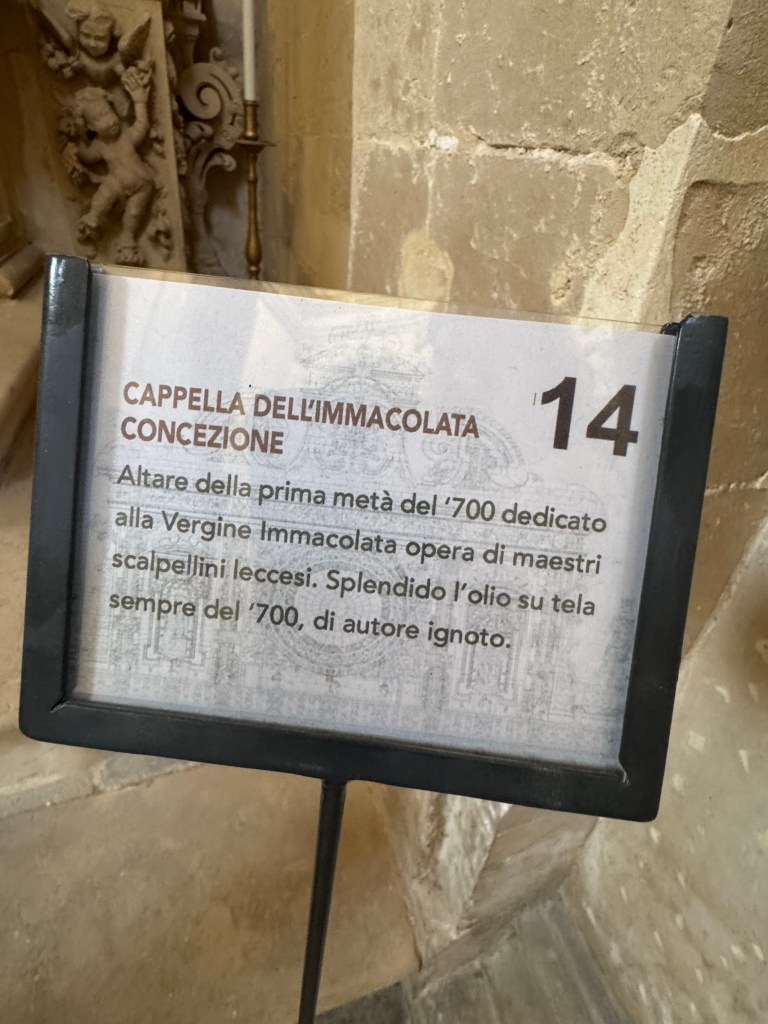
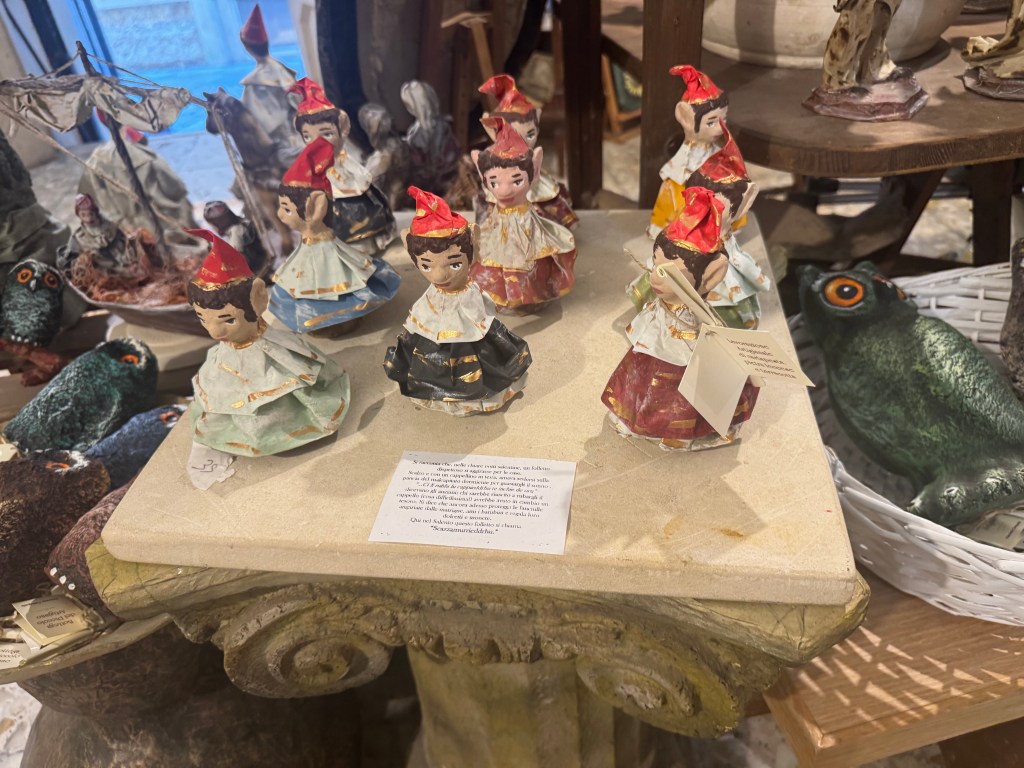
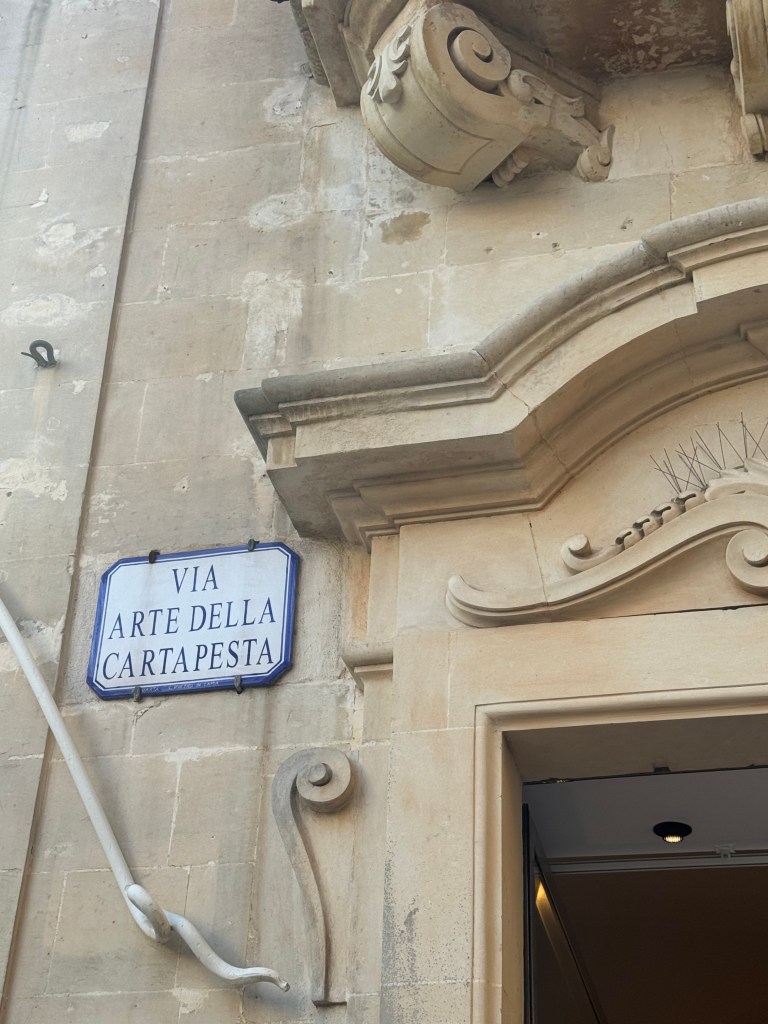
Have you ever heard of Cartapesta? I can’t remember when I first heard about it but it was very recent. Cartapesta (paper-mâché) is a traditional 17th century art form in Lecce. It was designed to make lightweight, affordable religious relics, as an alternative to expensive wood and marble. Centered around the historic city, this craft uses specialized techniques with paper, glue, and straw. A core structure (straw/iron) is covered in layers of paper and paste, then refined, sanded, and painted.
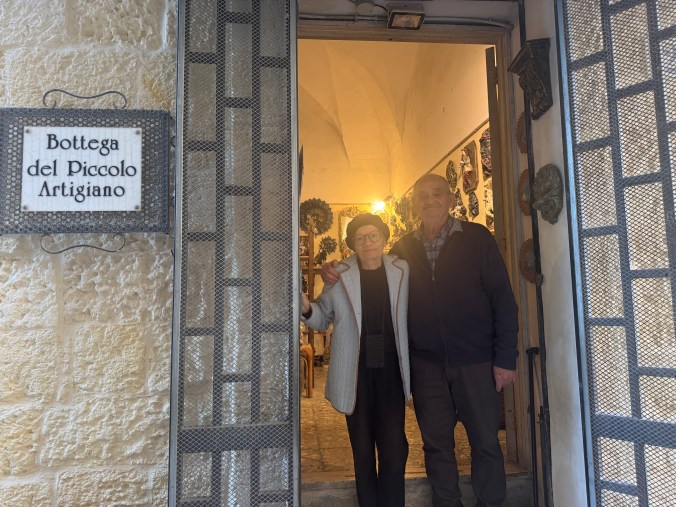
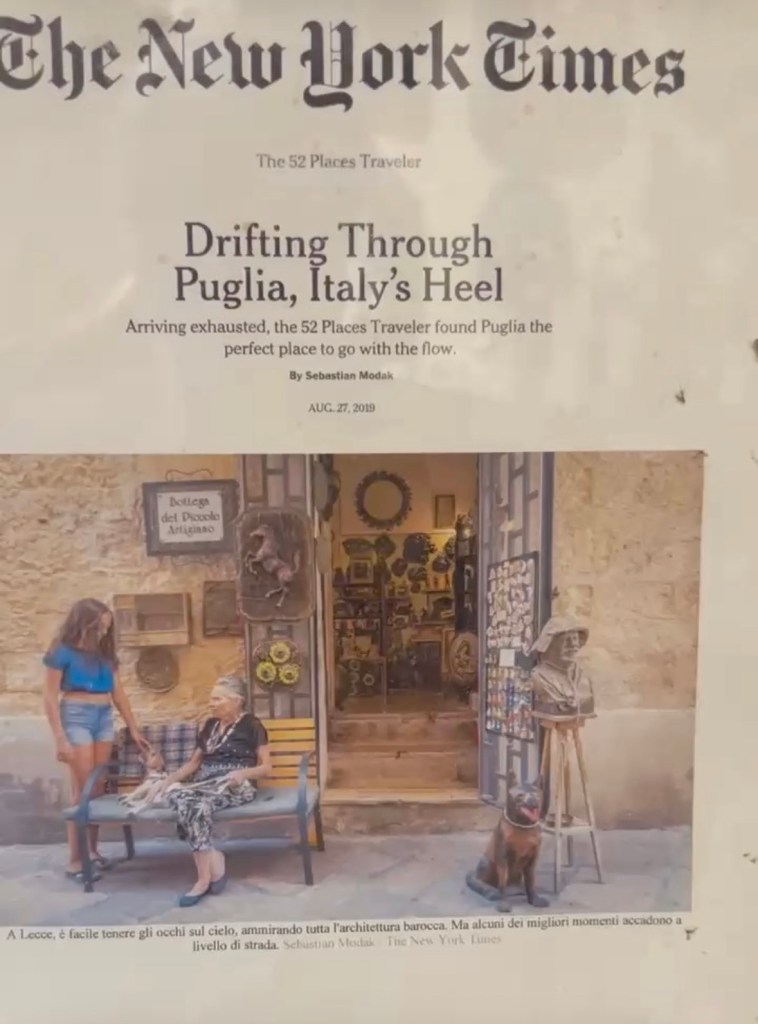
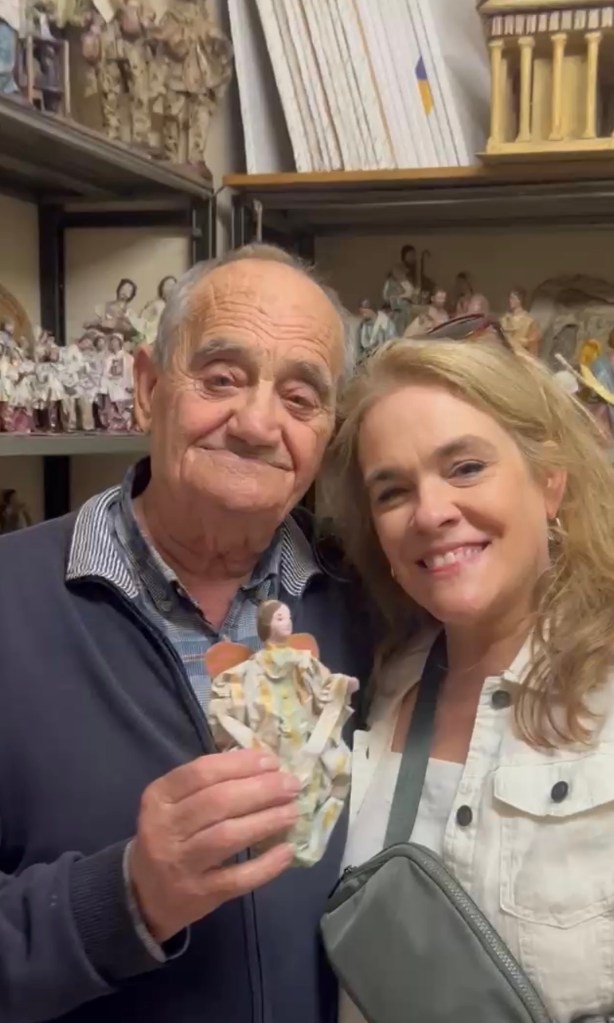
The photo above features Calcagnile Vincenzo and his wife. He was very excitedly showing us his shop and his pieces, and pointed to the back of the front door which held a copy of the New York Times. An article there dated August 27, 2019, featured him, and he was excitedly telling us about it in Italian. I’ve mentioned a few times that I studied a few months of Duolingo Italian lessons and it did not prepare me at all to speak Italian or to understand it when people talk fast. He was talking to me, having a full conversation, of which I understood about 3 words mostly out of context. He had an equal approximate 3 word understanding of my English but we both just smiled and gestured and laughed out way through it.
La Cartapesta di Calcagnile Vincenzo (The Paper mache art of Calcagnile Vincenzo) is one of the best things we came home with from Italy. I’m sure he is just a really amazing salesman, but he kept telling us we were beautiful, and he held my hand as he showed me around his store. The minute we gestured to something he had it in his hand and was walking toward the back to wrap it up for us. In the sweetest, gentlest way he took me into the back room to show me an angel he had recently made, that he presented to me as if to say “ta-da I know exactly what you want to go home with”. When I agreed with him that I needed to go home with her, he turned her over and signed the wings. *swoon*. She hangs on our wall in Alabama and we love her.
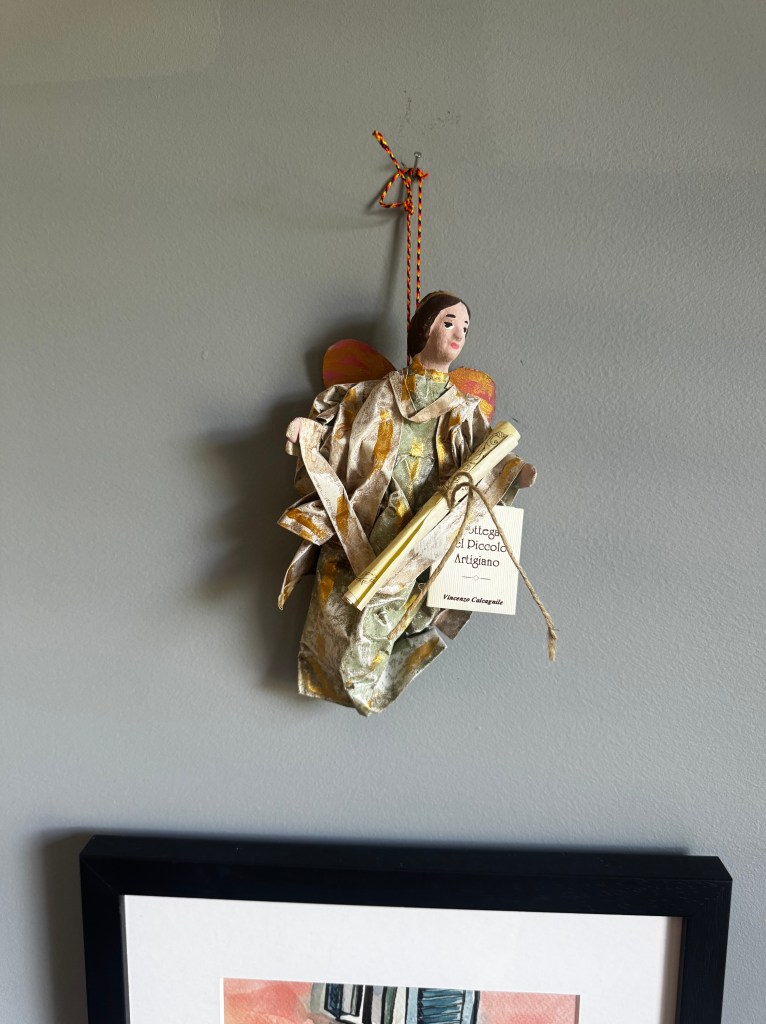
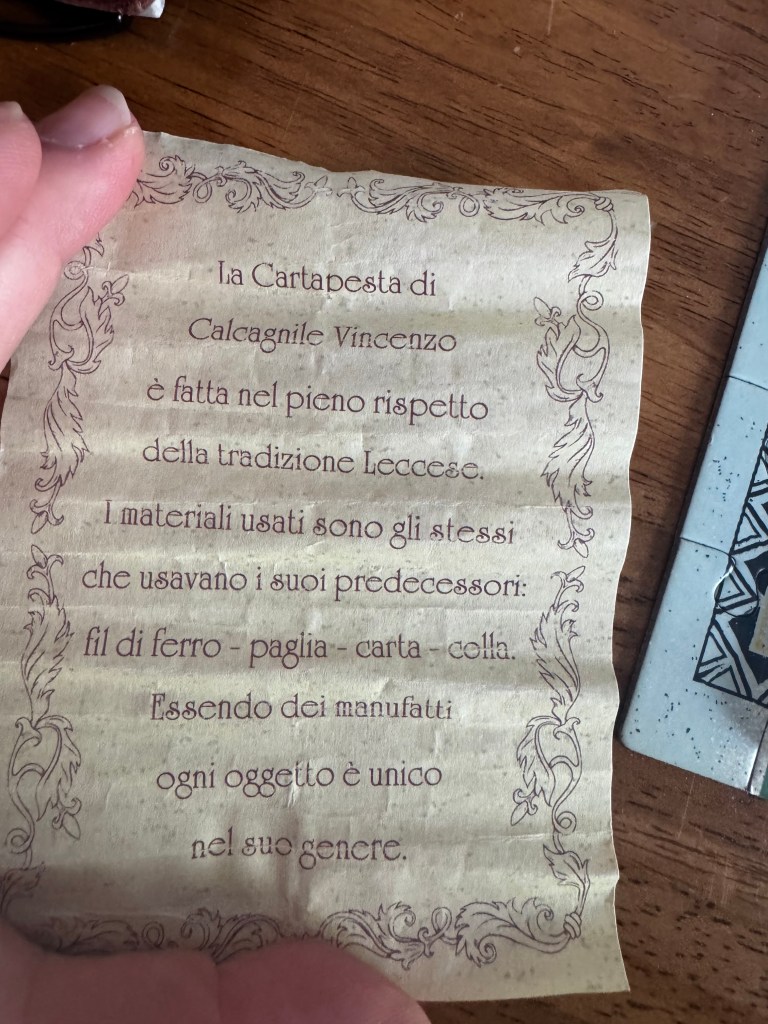
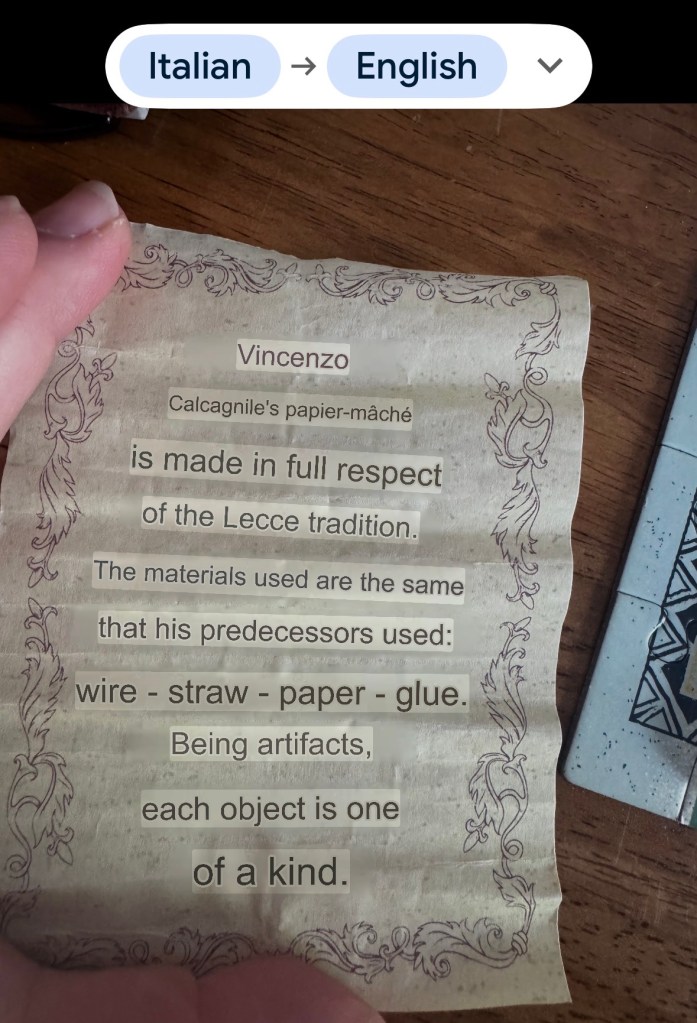
This is the little scroll in each piece:
We also left with a nativity scene for Shannon’s mother, and more angels for his sisters and niece and nephew. The charm of a sweet Italian couple goes a LONG way with us! Here are a few other photos of more things I’d love to have at my house:
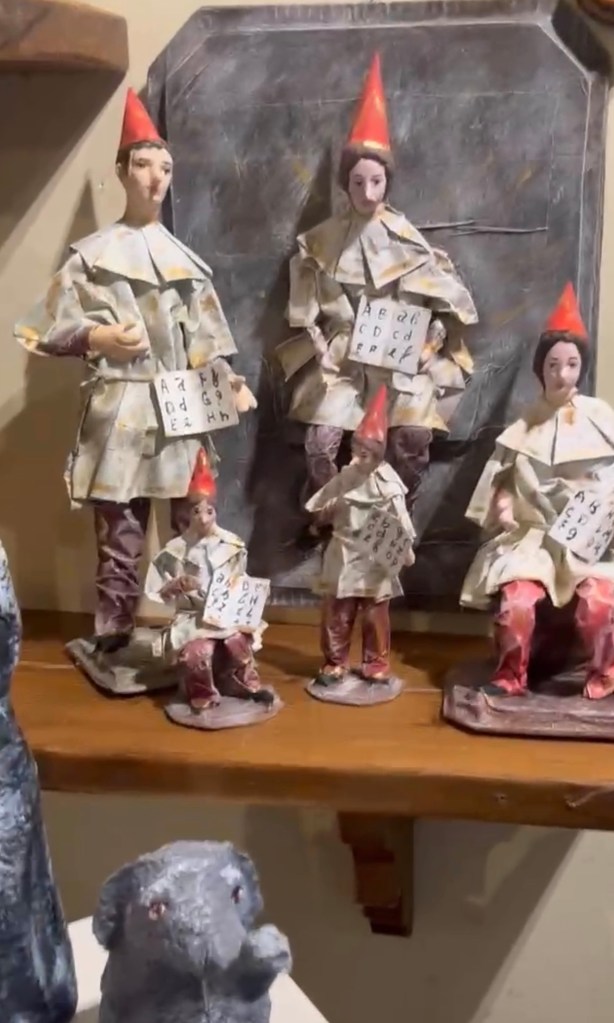
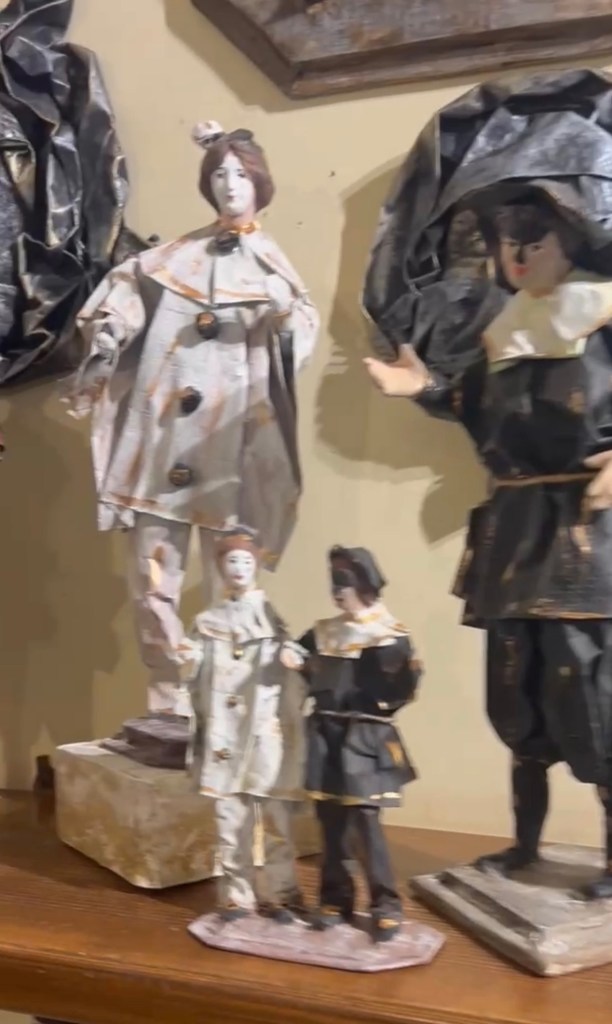
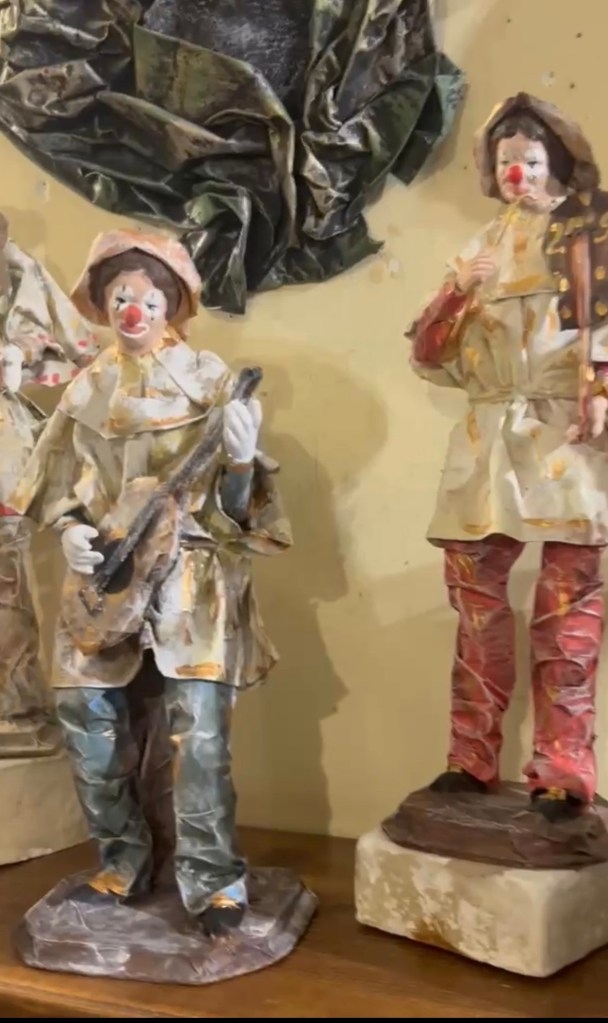
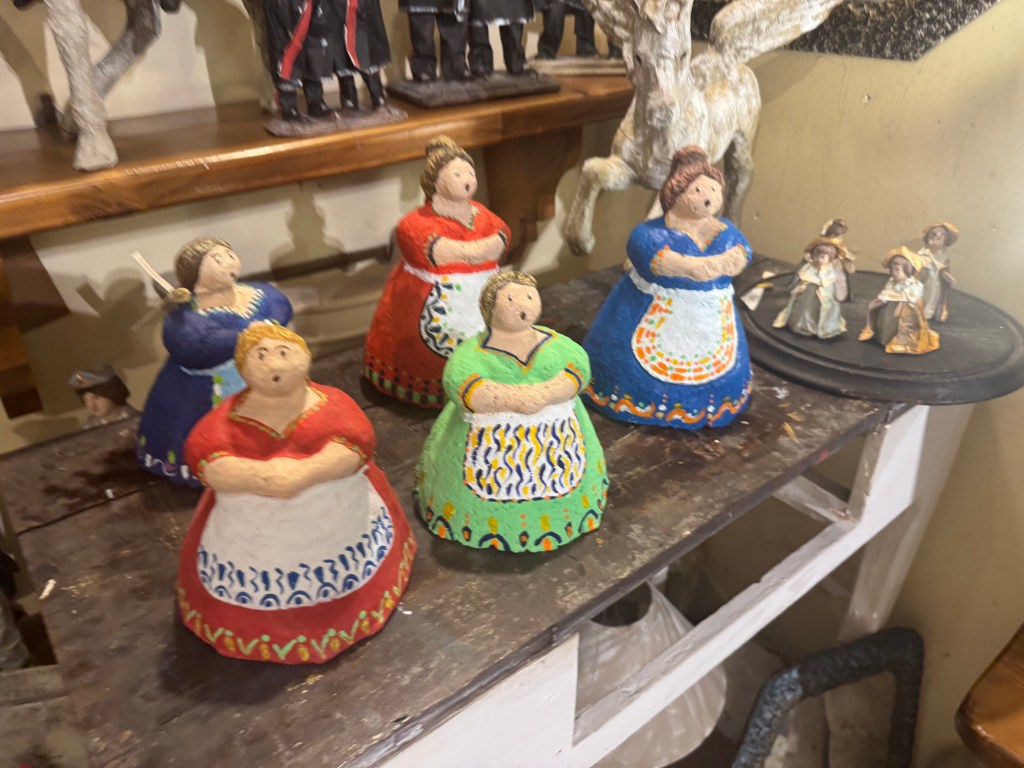
Calcagnile and his wife have been married for Sixty something years. He’s Eighty something years old and she’s Seventy something. I tried to explain in very broken Italian that we had been married for 4 days and he kept trying to correct me there. Anyway, he brought out one of those red horn things that he’d made, did some kind of blessing/gesture and wrapped it up for us as a gift.
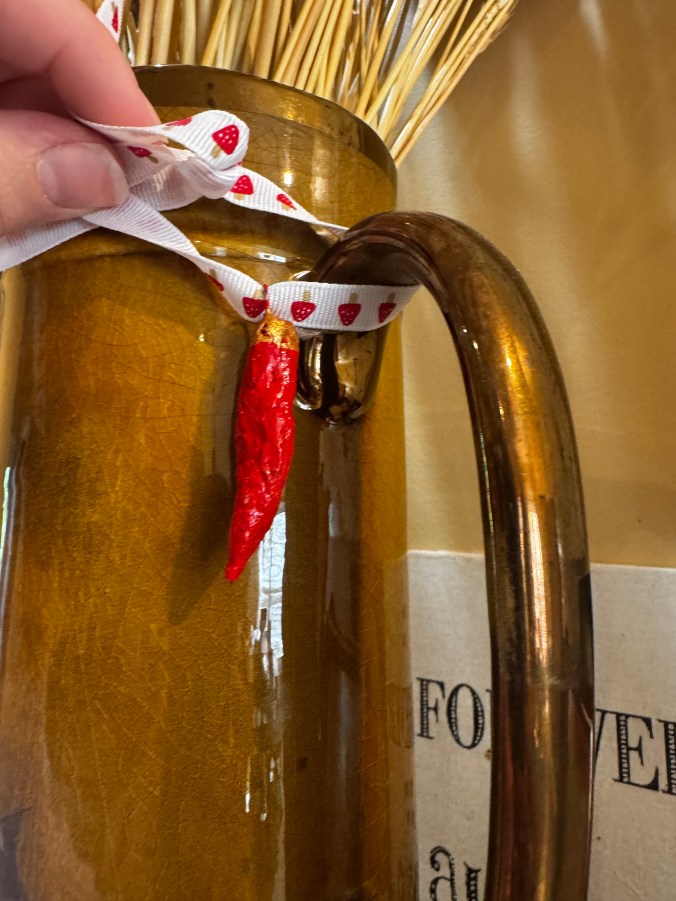
Cornicello (little horn) is a traditional amulet from Southern Italy designed to protect against the evil eye (malocchio), envy, and bad luck. It also is said to symbolize fertility, virility, and power and is frequently worn as a necklace or kept as a keychain.
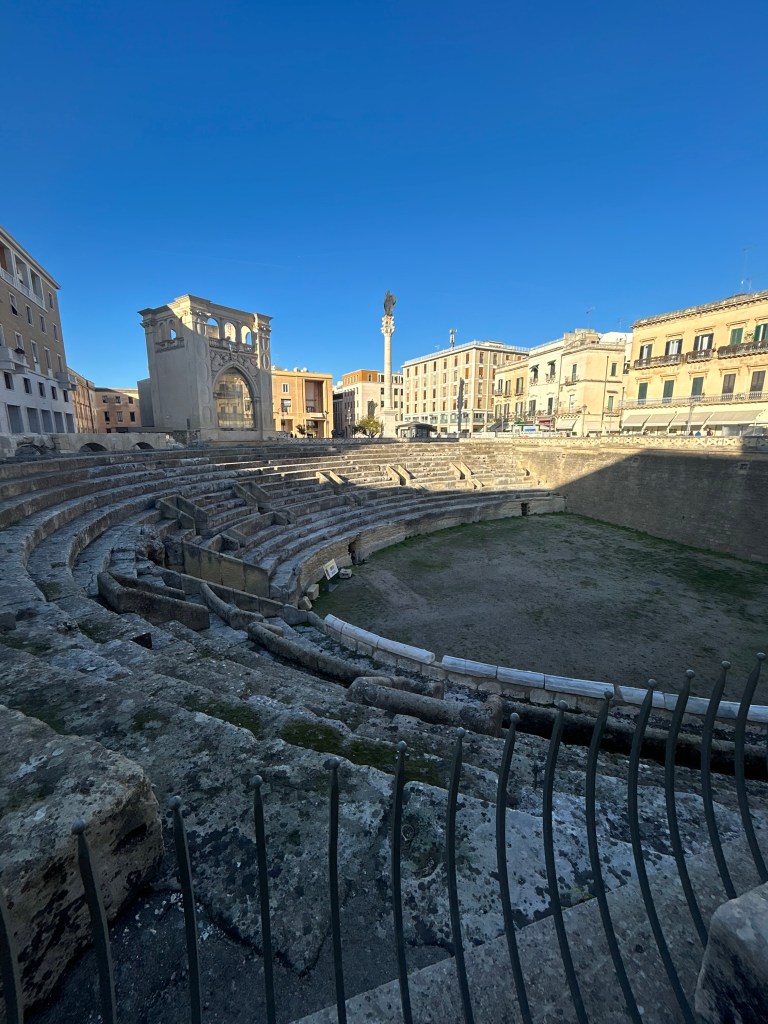
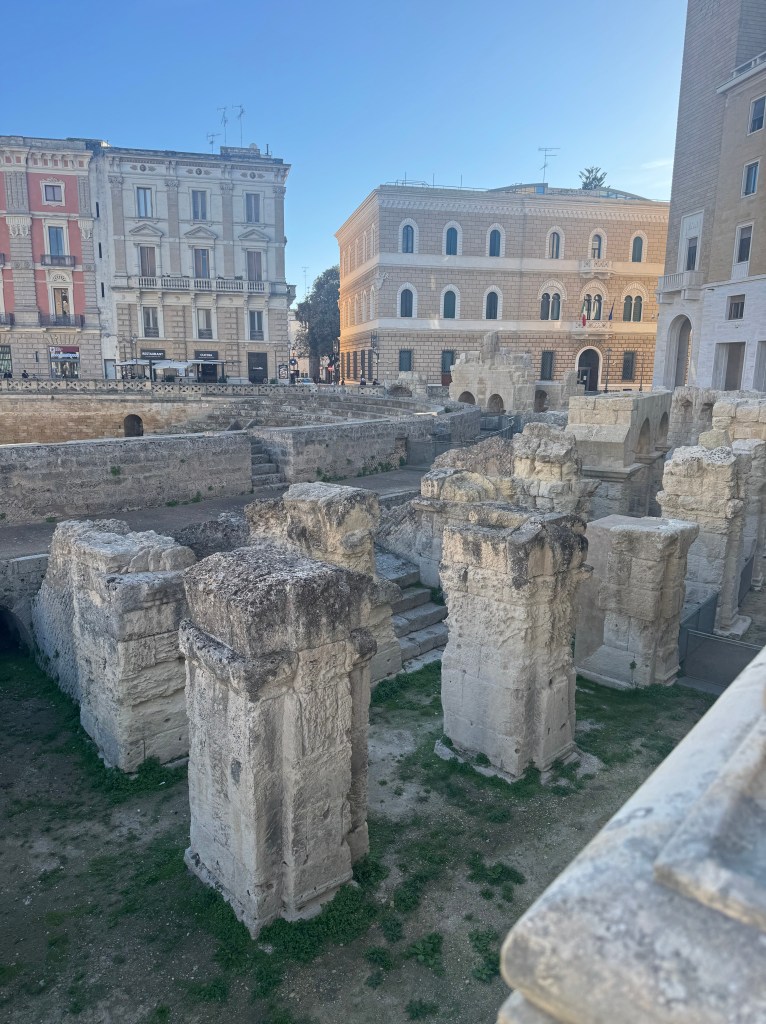
Lecce is also home to an archaic Roman amphitheater. Unearthed in the main Piazza of downtown Lecce. It was completely hidden and unknown until 1901, and was un-covered when construction workers were digging to begin building a bank. From the link:
The below-ground amphitheater was built during Hadrian’s reign as Roman emperor during the 2nd century CE, at which time Lecce was just a small village that could be used as a resort or a trading port along the Mediterranean. The theater is still partially buried, but you can easily make out the horseshoe-shaped arena, which in its time could hold at least 15,000 spectators. Ancient images on the walls depict the types of shows they would have seen, such as gladiators fighting with bulls, lions, bears, or other humans.
We still had tickets to see a few more churches and we were excited to explore those!
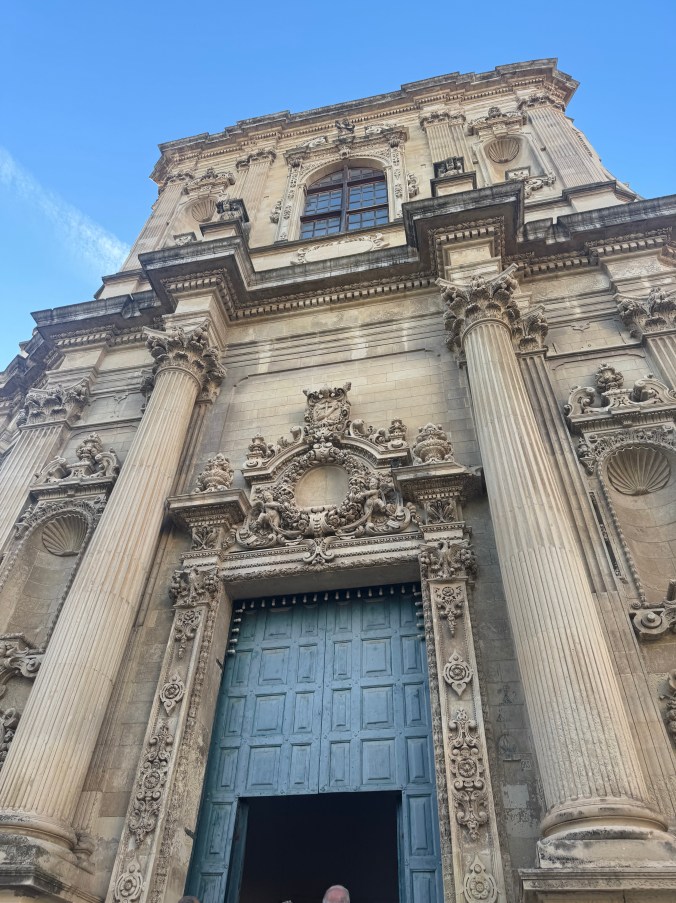
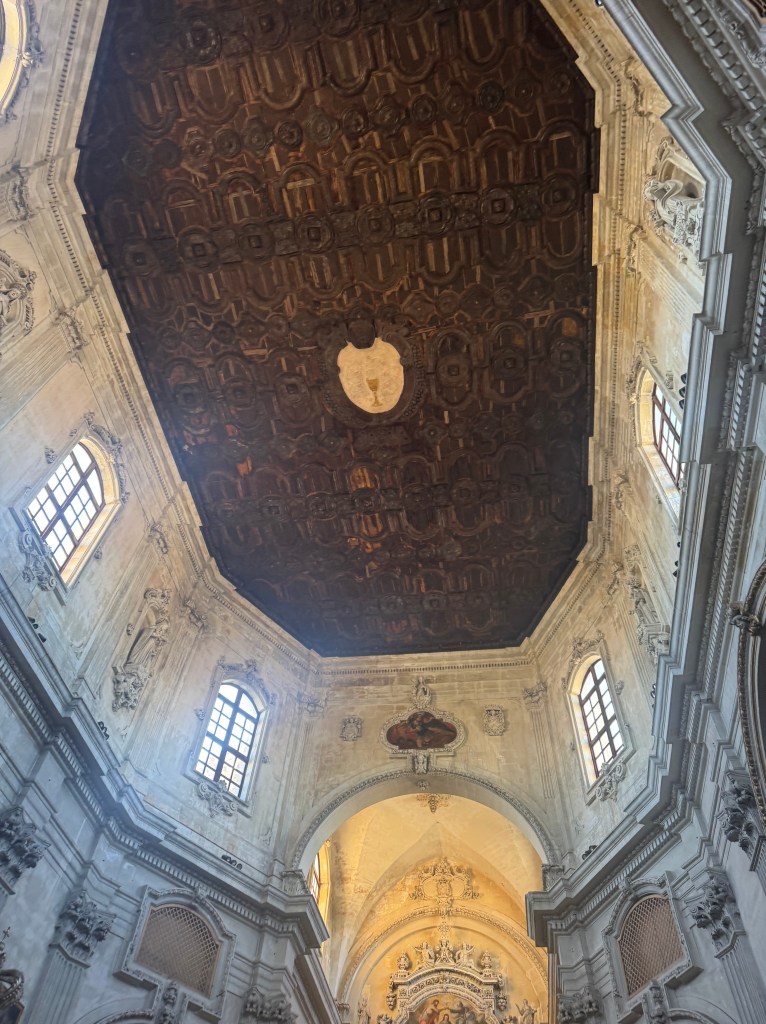
From the link: “ The church was rebuilt between 1687 and 1691 on the area of a previous fifteenth century structure, always belonging to Santa Chiara’s order. A Lecce baroque masterpiece traditionally attributed to the great architect and sculptor Giuseppe Cino from Lecce both for the architectural structure and the decoration; the project is attributed to G.A. Larducci.The splendid Baroque façade, slightly convex and without apex, recalls the octagonal layout of the interior which hosts, besides the majestic structure of the high altar, six side chapels with the same number of baroque altars with wooden statues made in Naples.Worthy consideration is to be given to the papier-mâché false ceiling of the eighteenth century.“
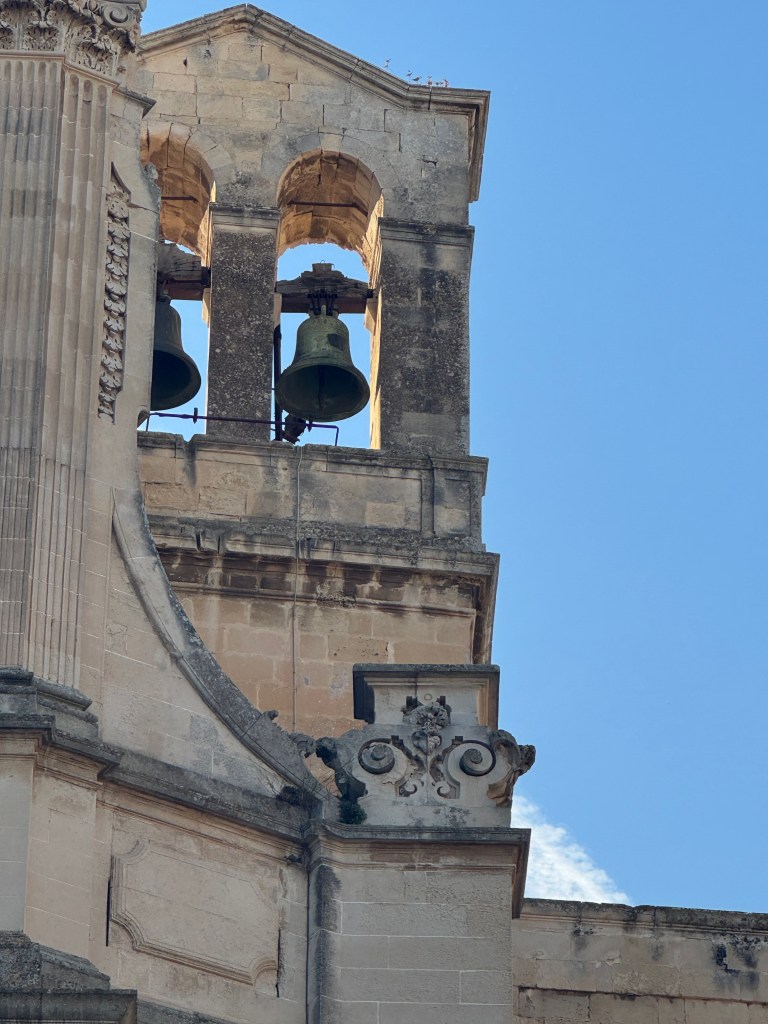
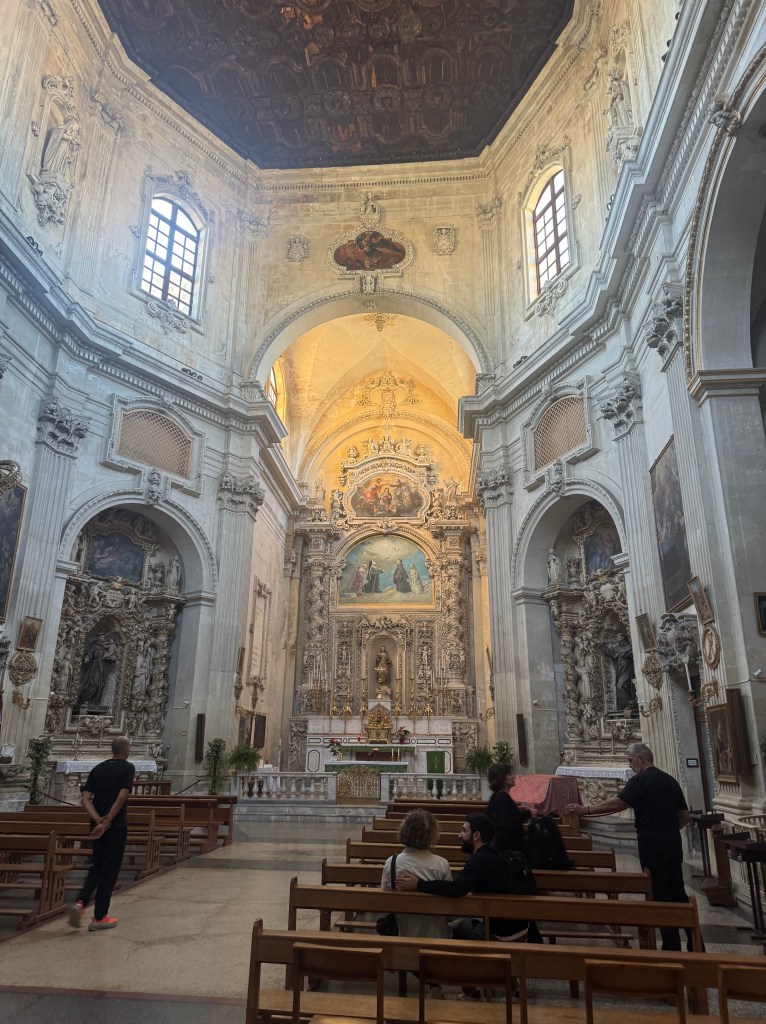
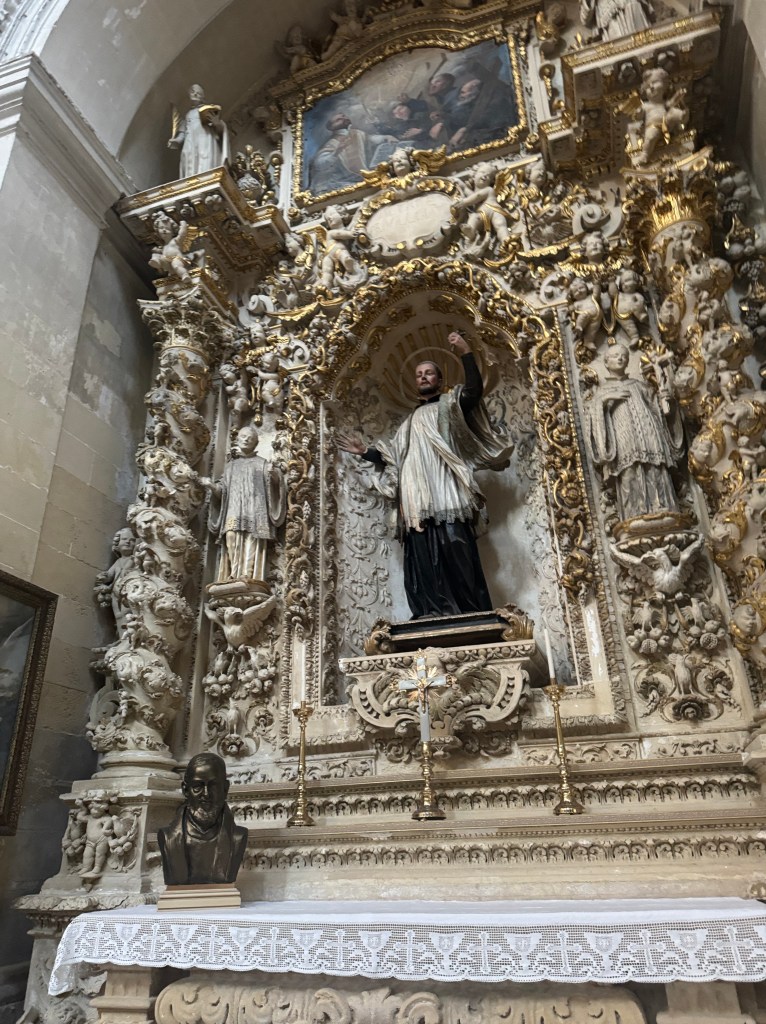
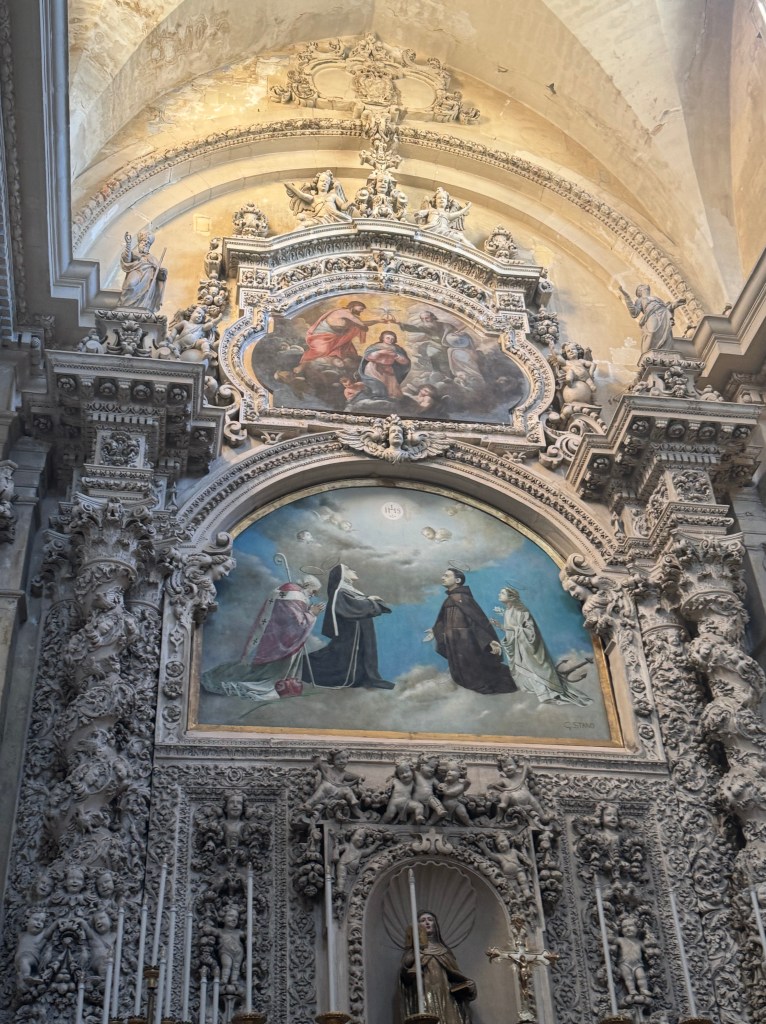
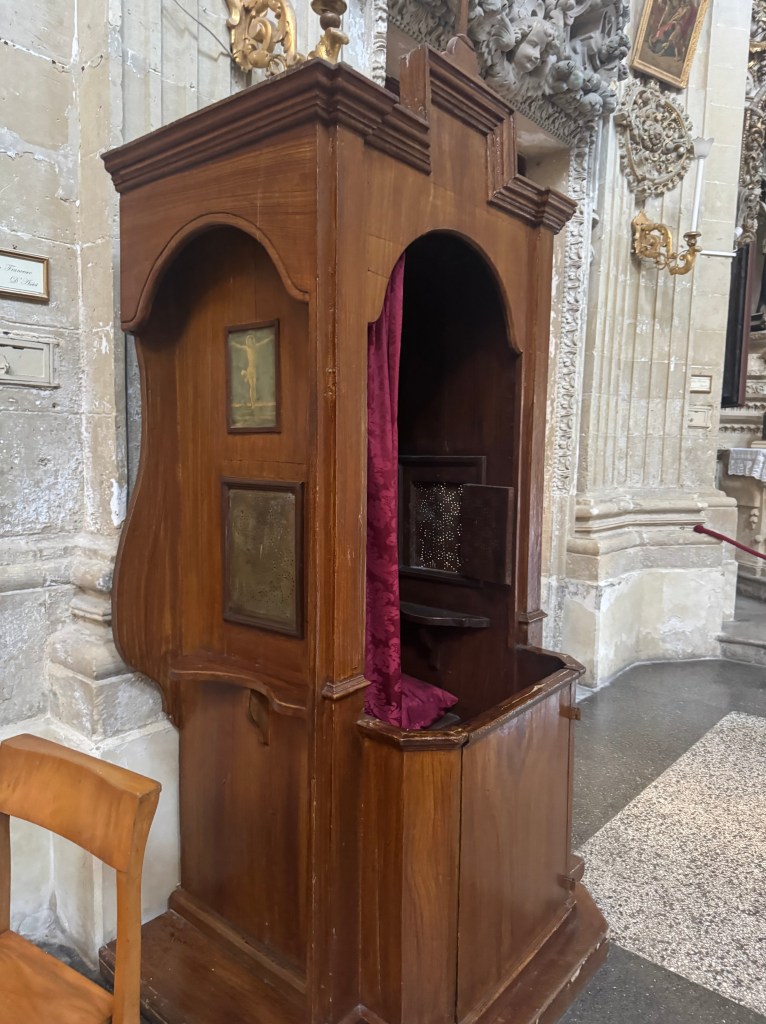
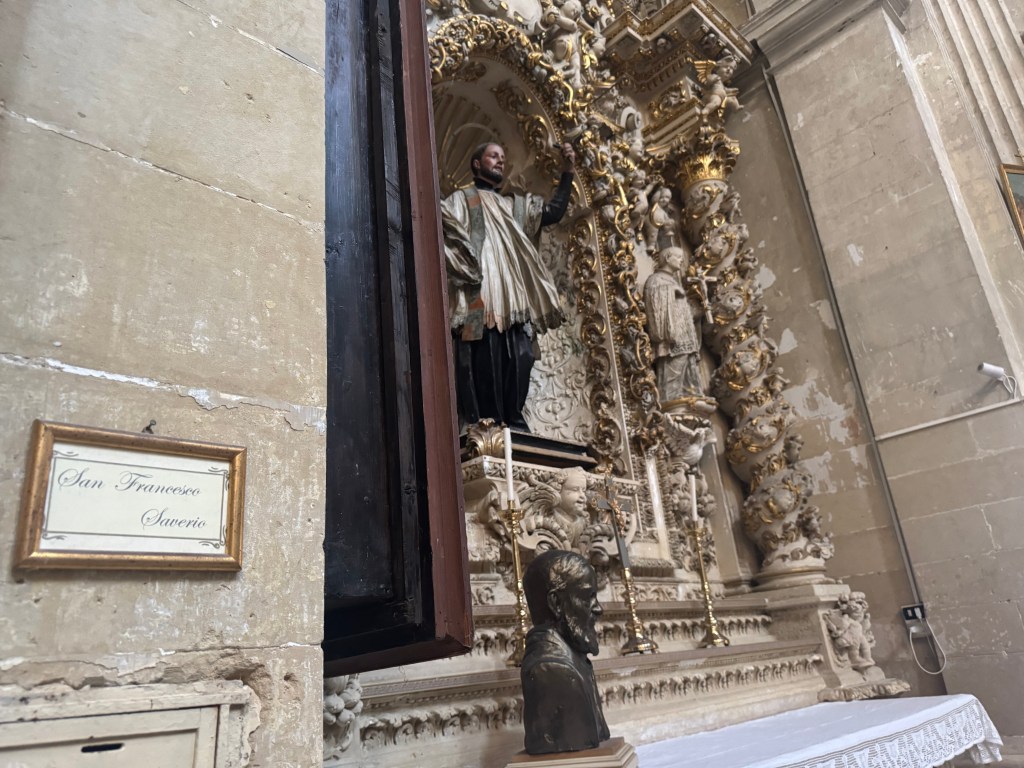
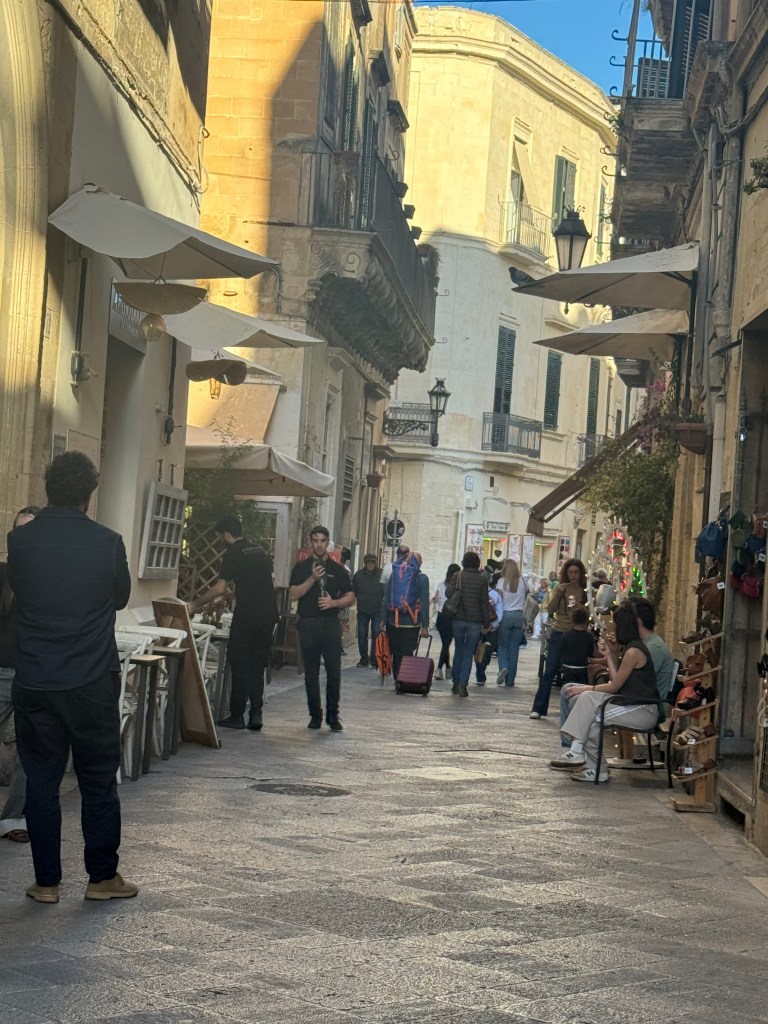
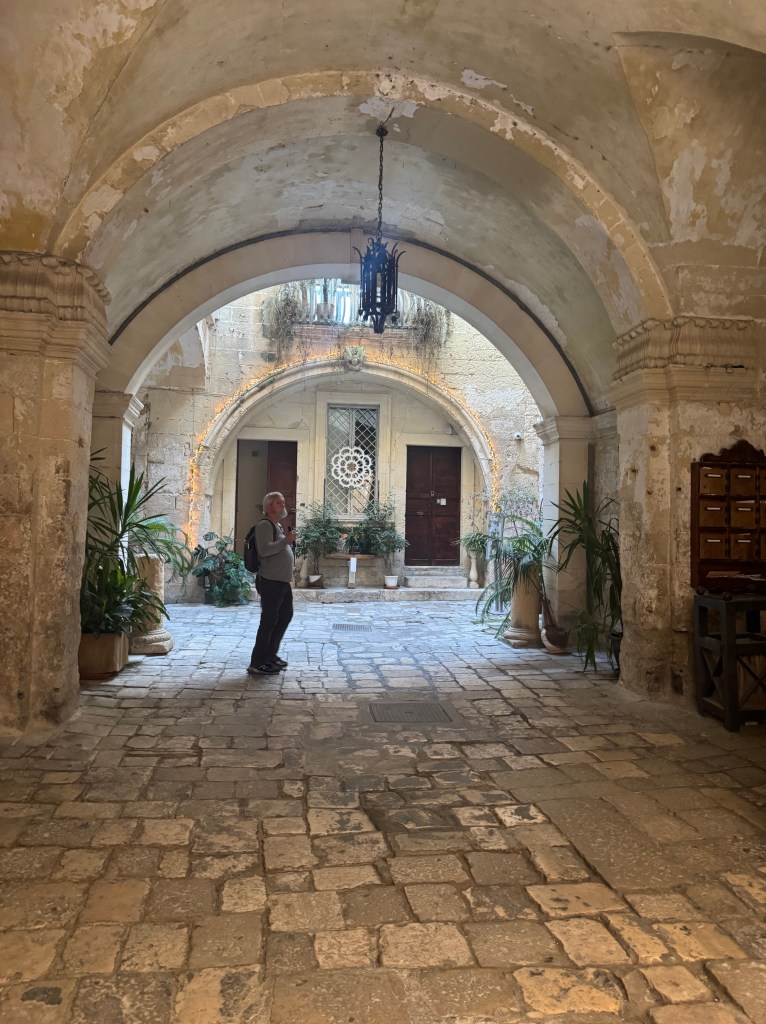
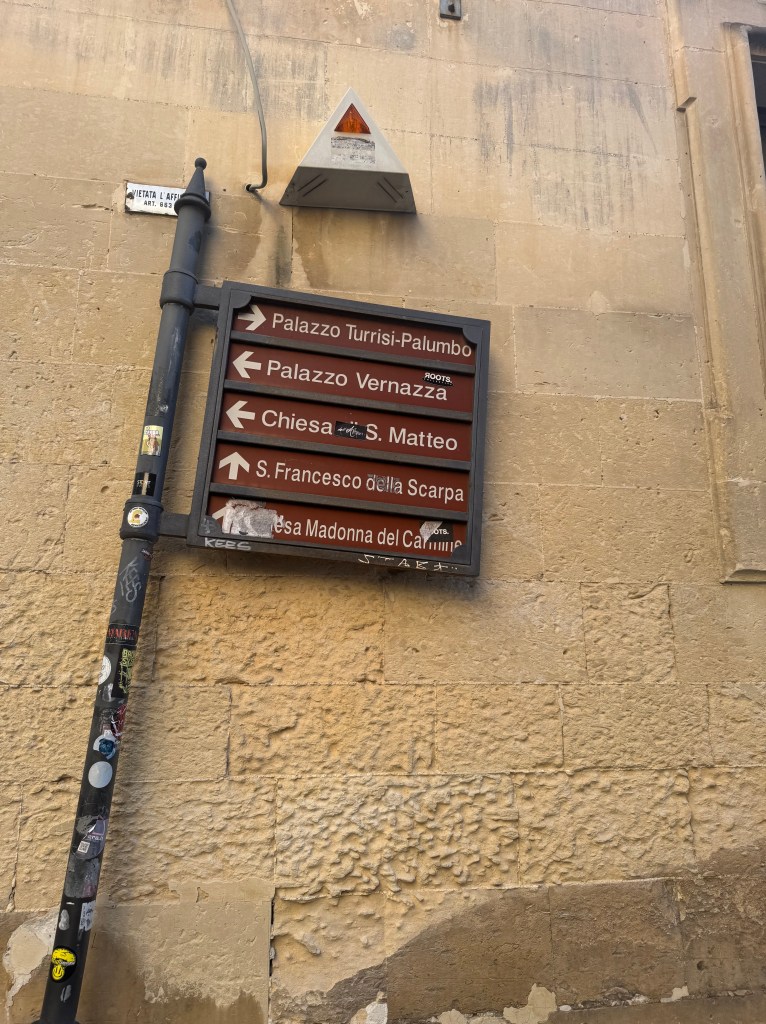
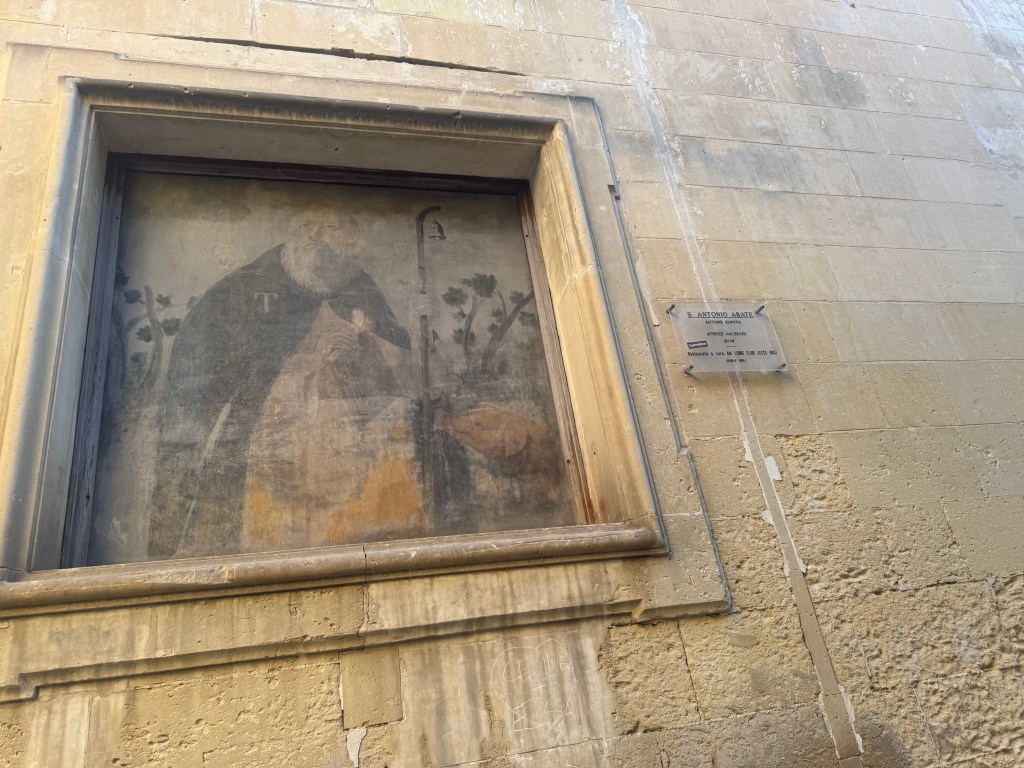
The streets of Lecce are beautiful. There’s a Cartapesta street with many artisans’ shops in close proximity, beautiful archways, and interesting churches:
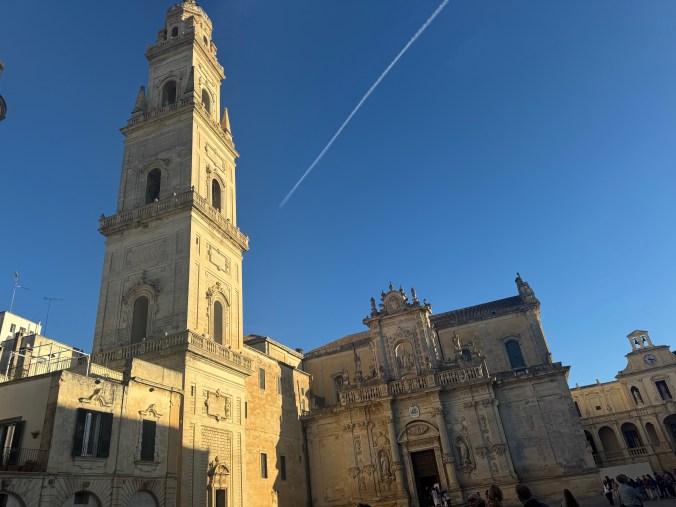
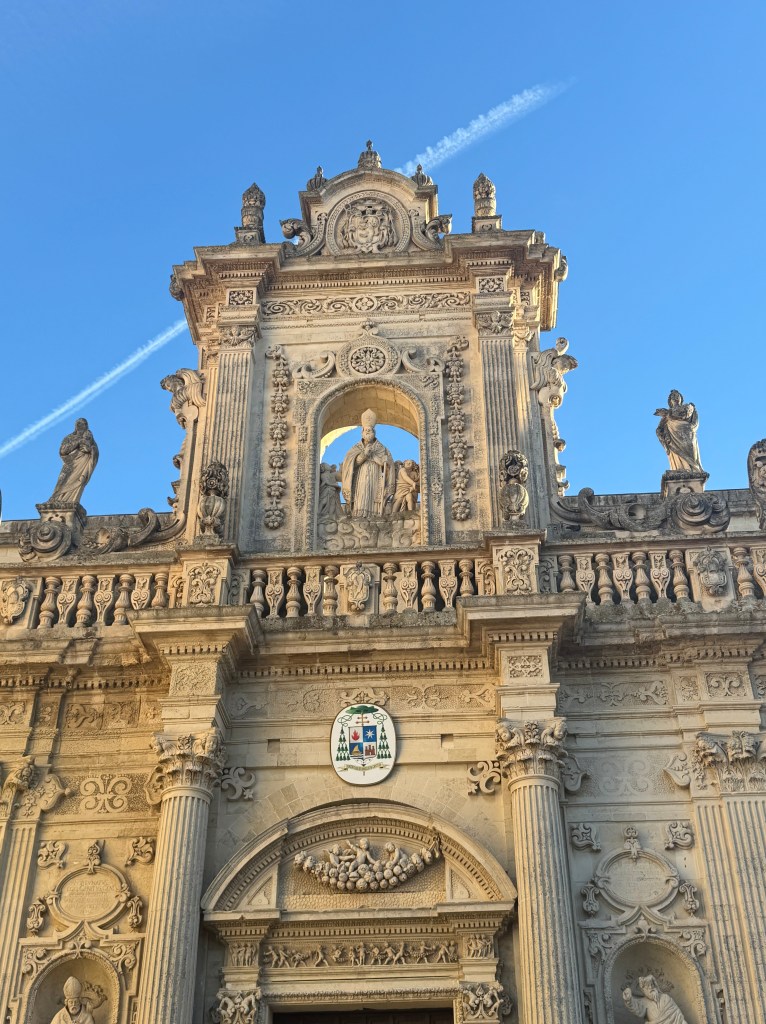
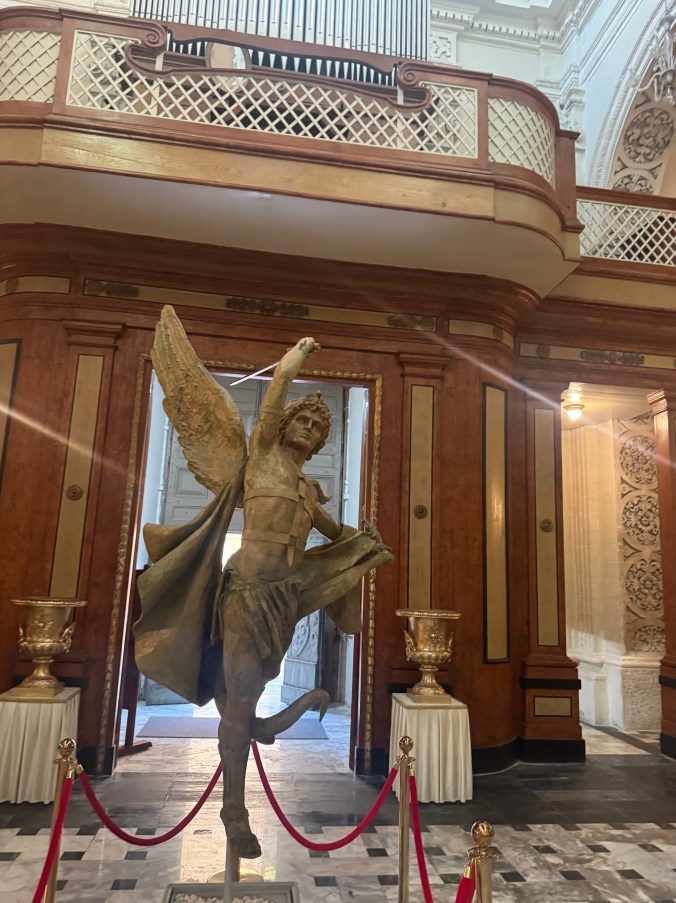
We saved Lecce Cathedral for last, and it was by far the most interesting!!! In Italian it is the Duomo Di Lecce: Cattedrale dell’Assunzione Della Virgine. It is dedicated to the Assumption of the Virgin Mary and is the seat of the Archbishop of Lecce. First built in 1144, it underwent repairs in 1230 and was re-built in 1659. The bishop who ordered the rebuilding, Luigi Pappacoda’s remains were kept in the altar here. The altar is dedicated to the Patron saint of the city, Orontius.
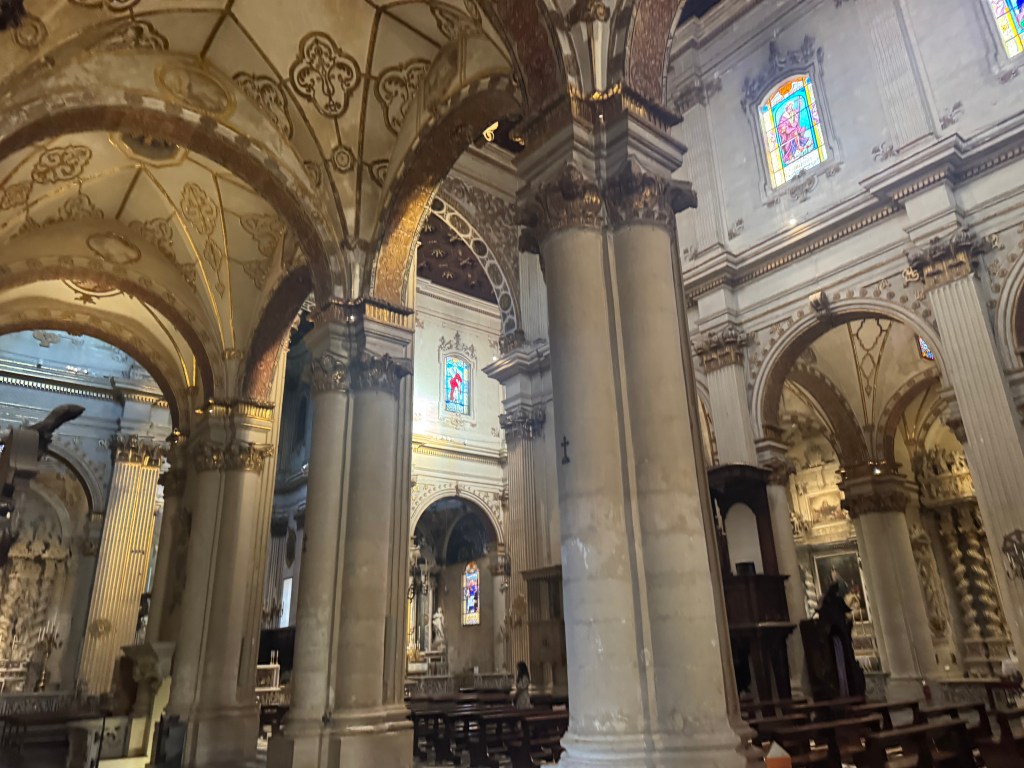
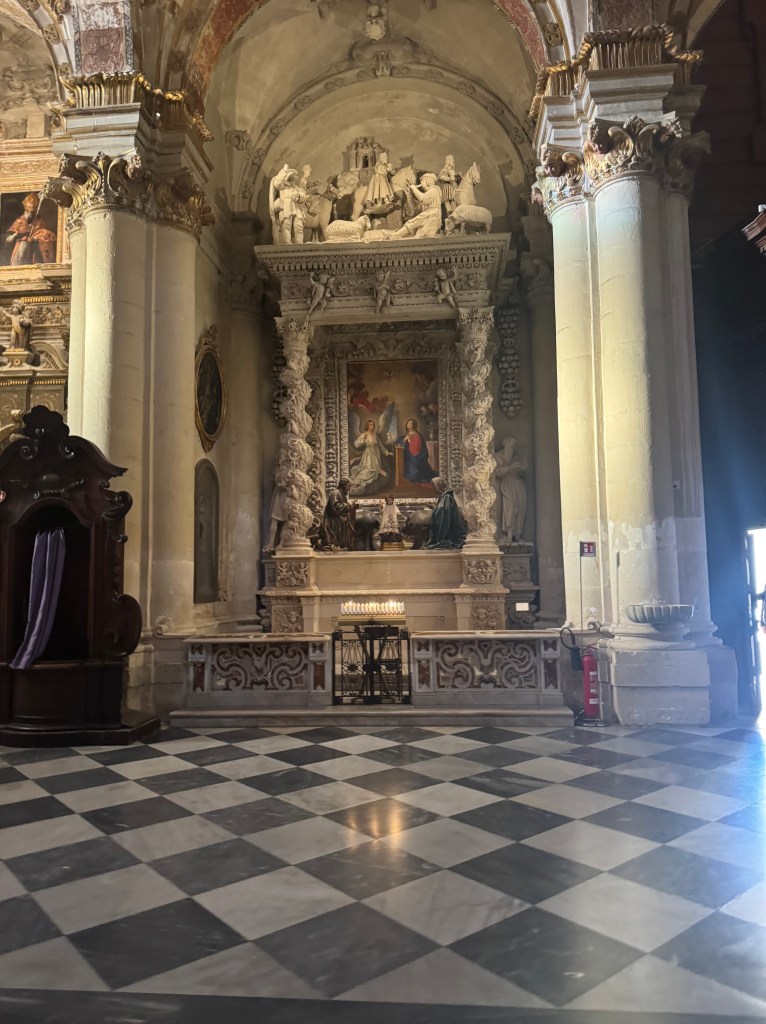
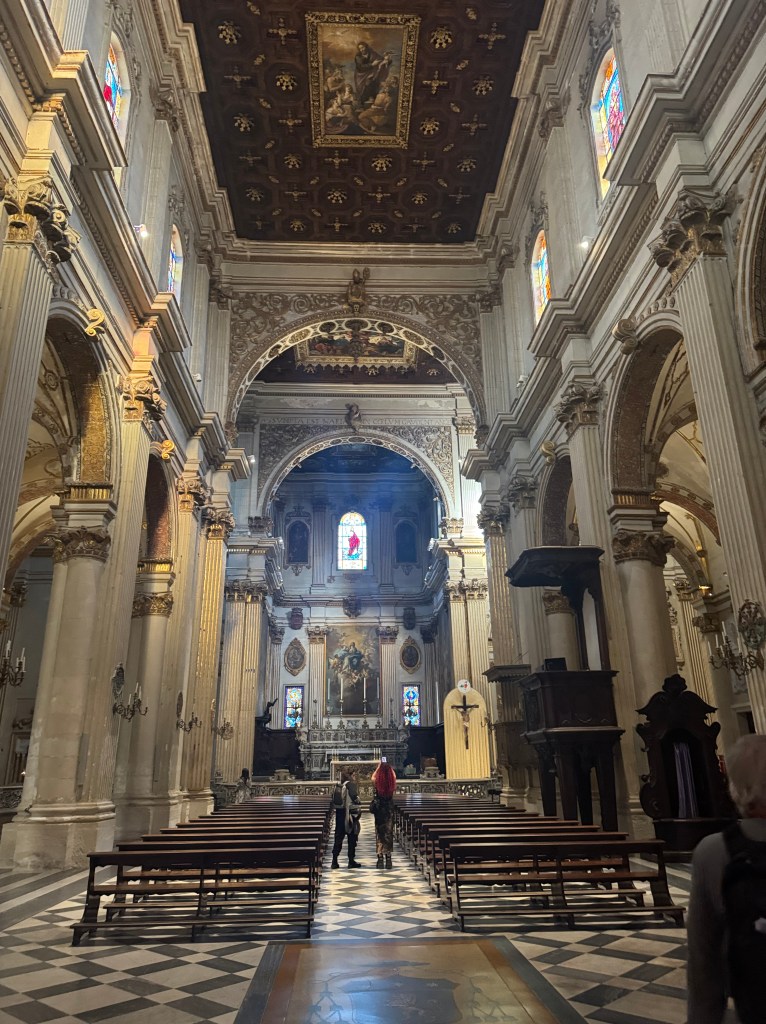
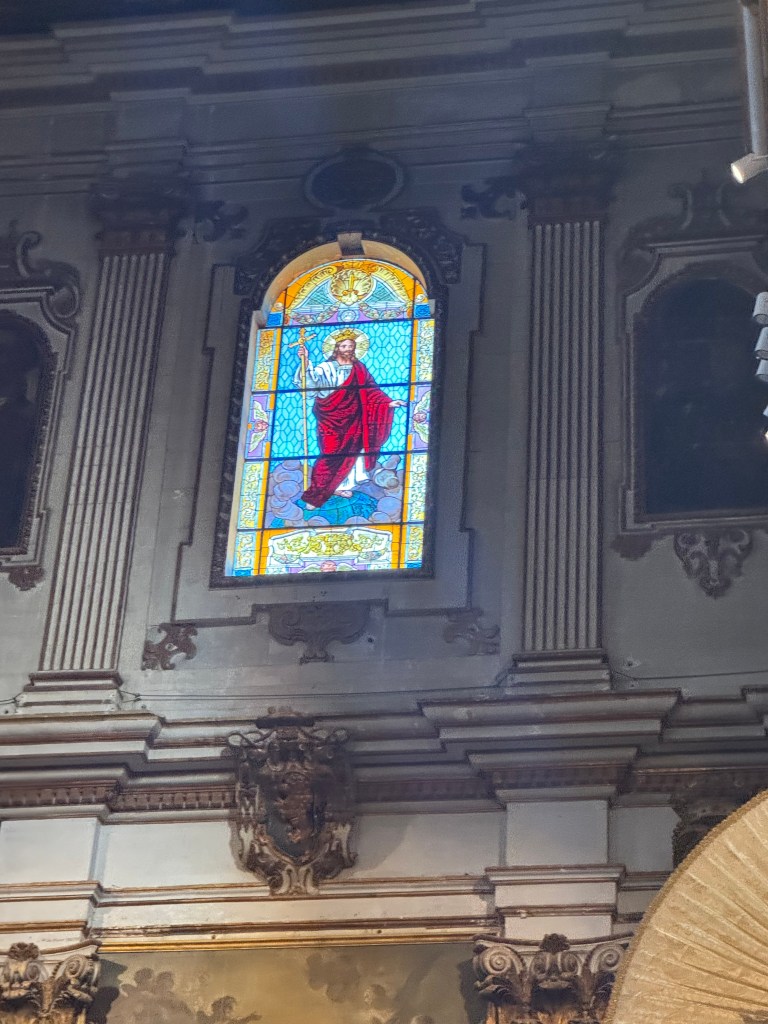
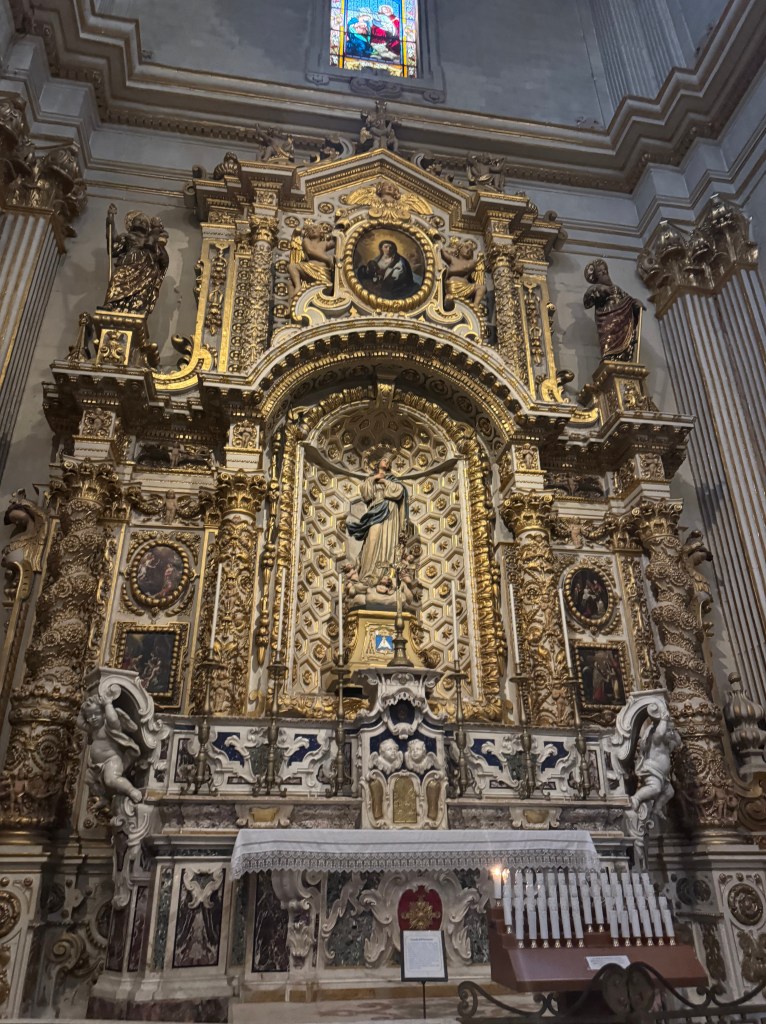
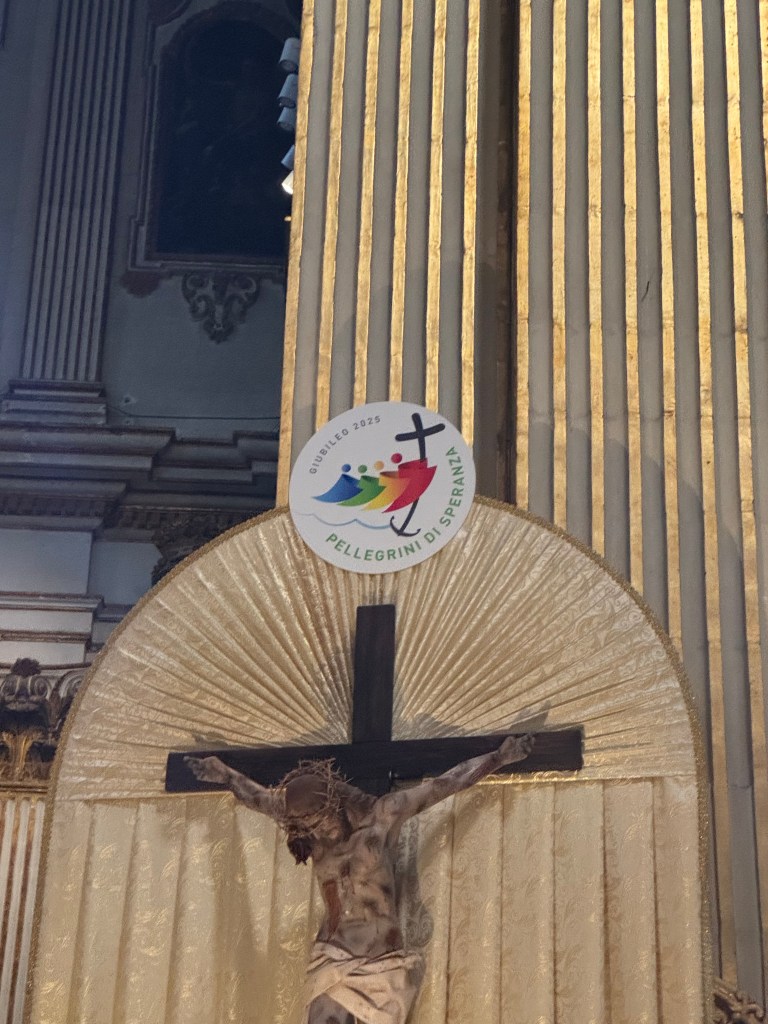
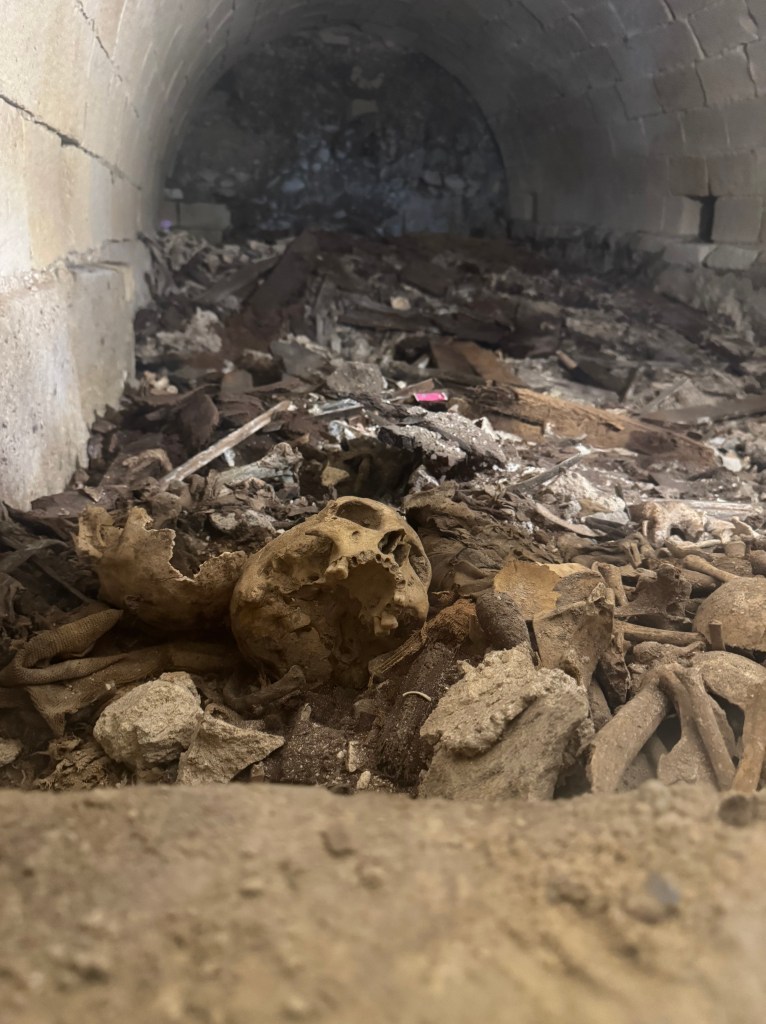
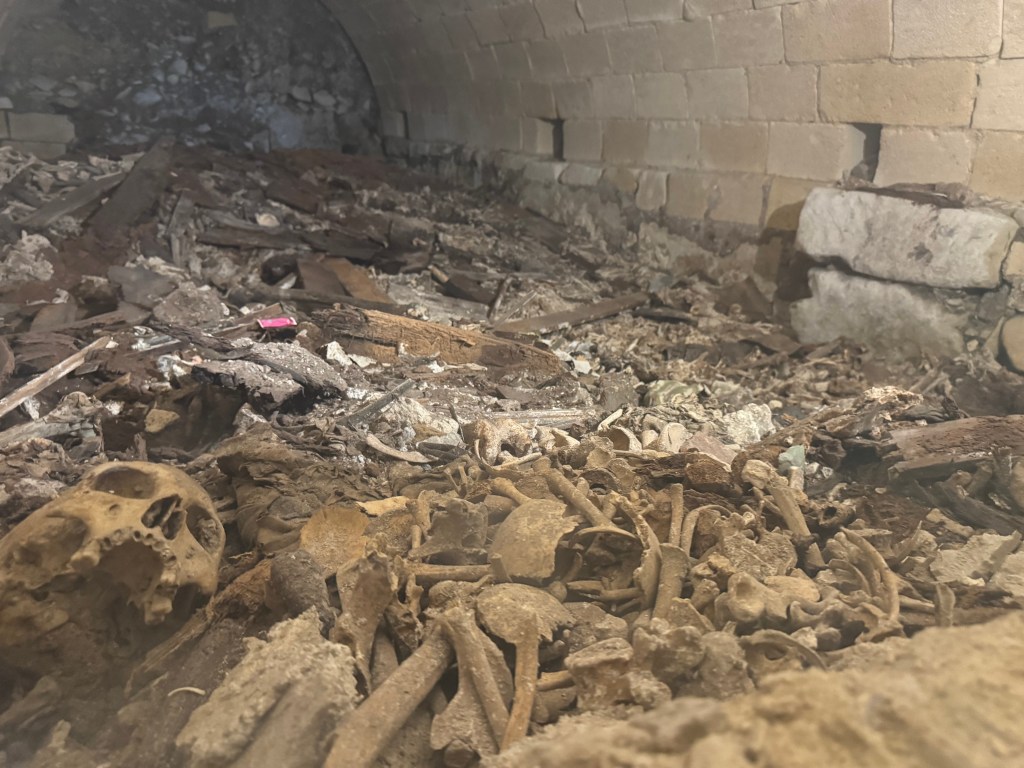
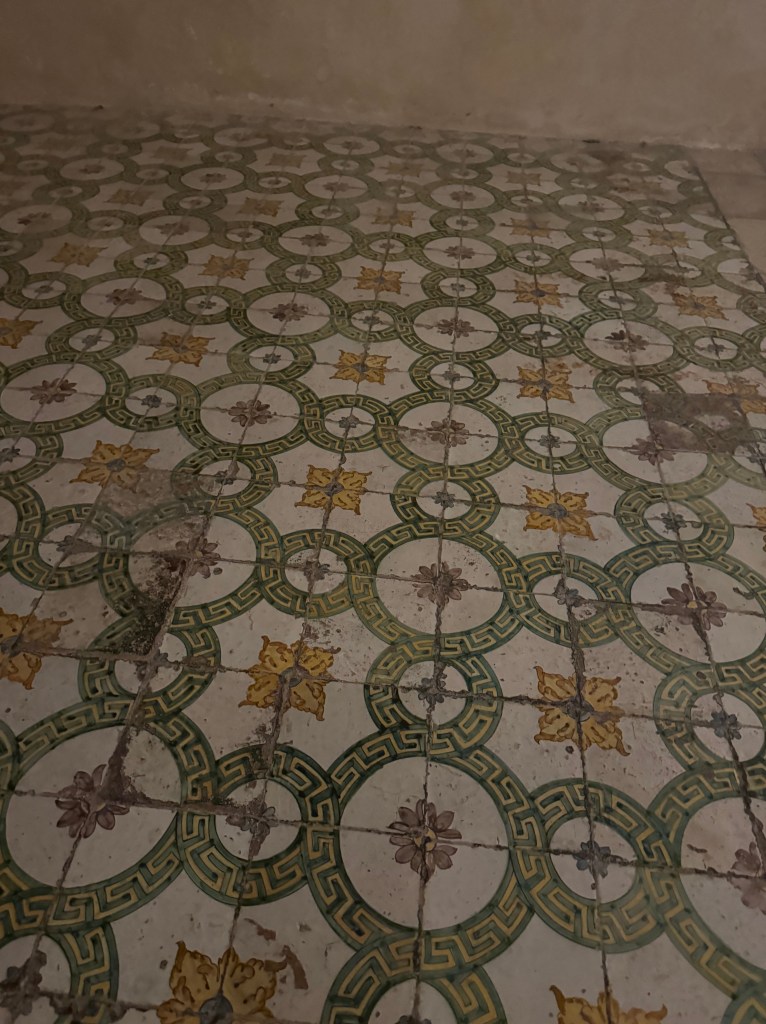
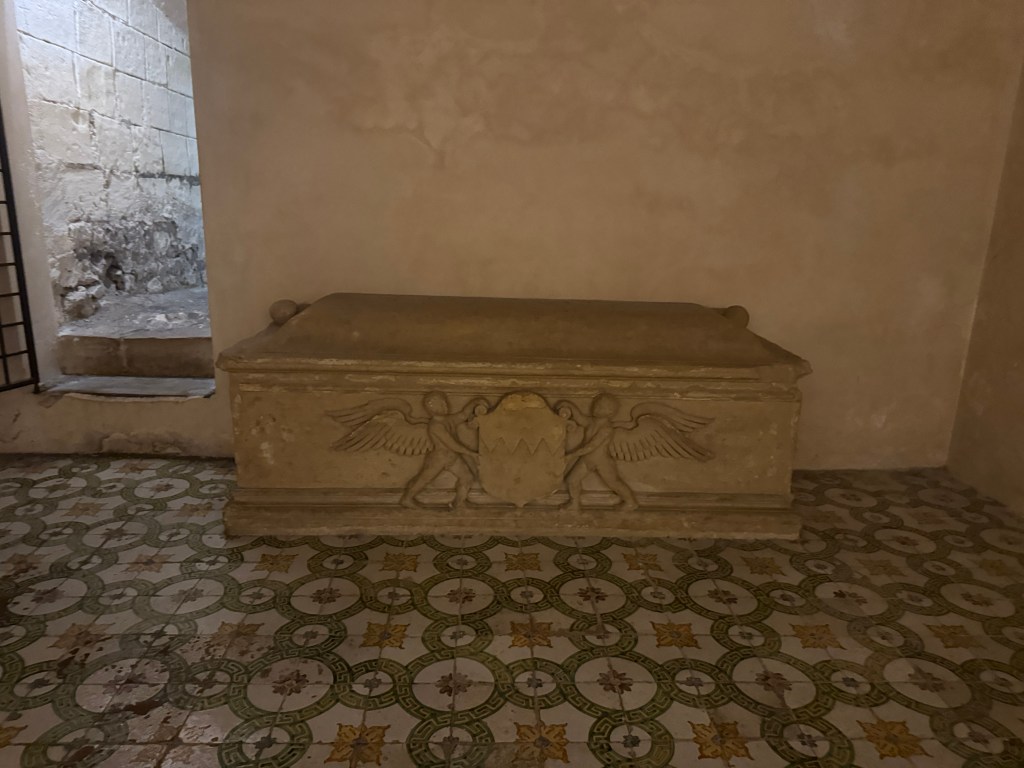
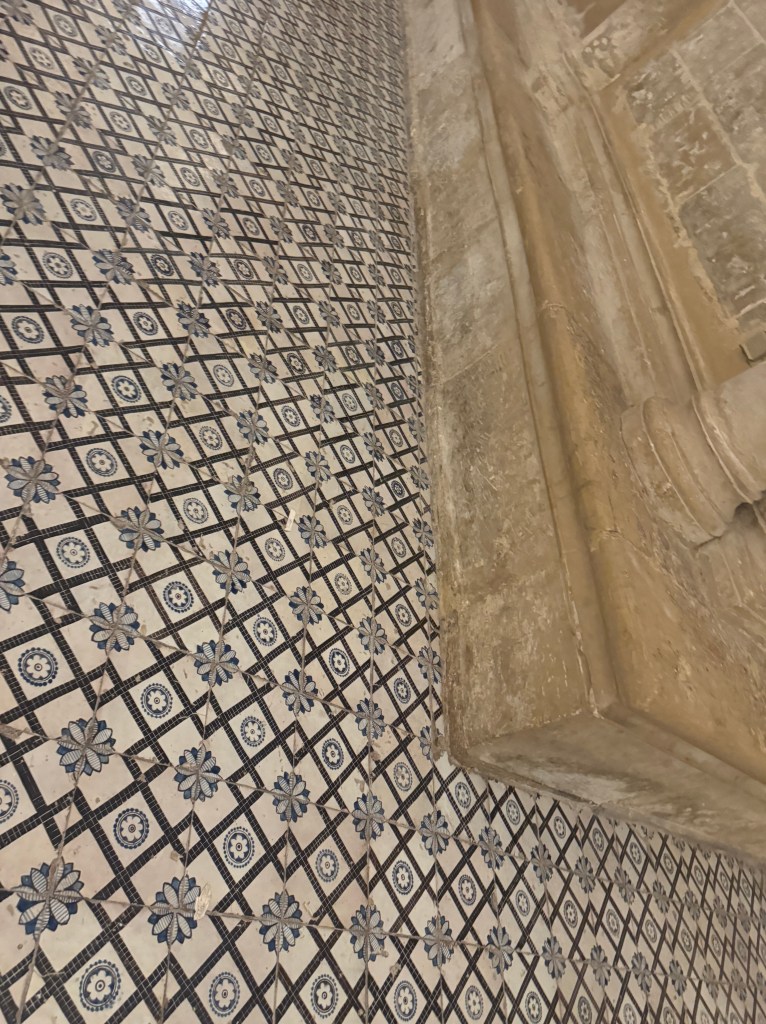
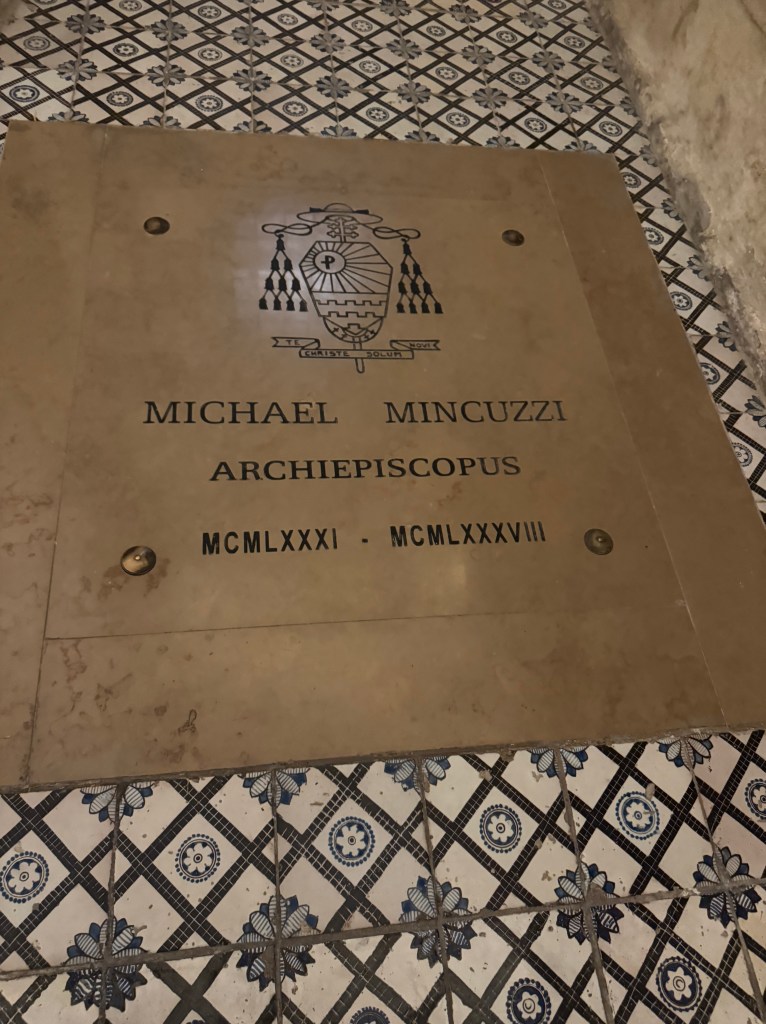
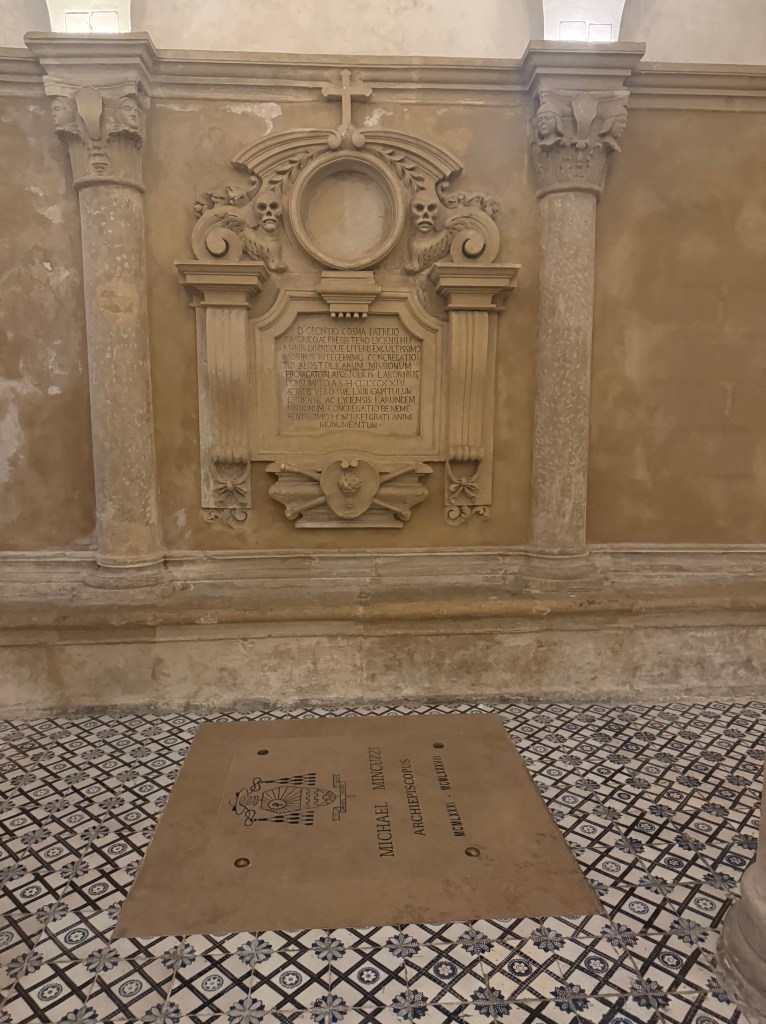
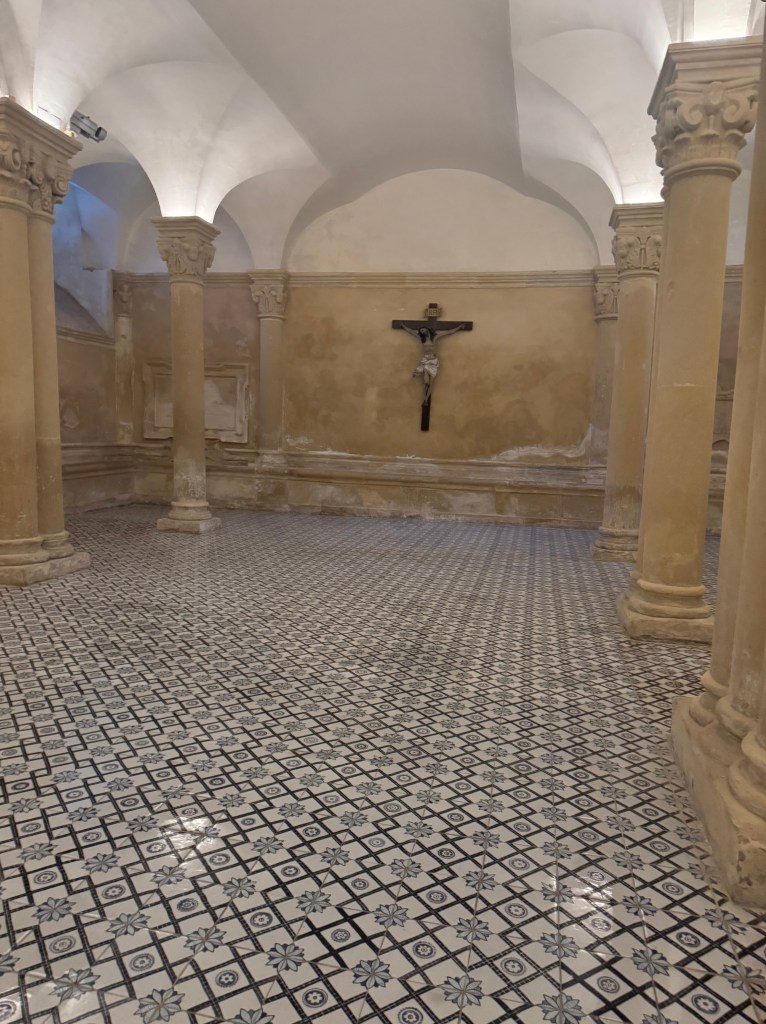
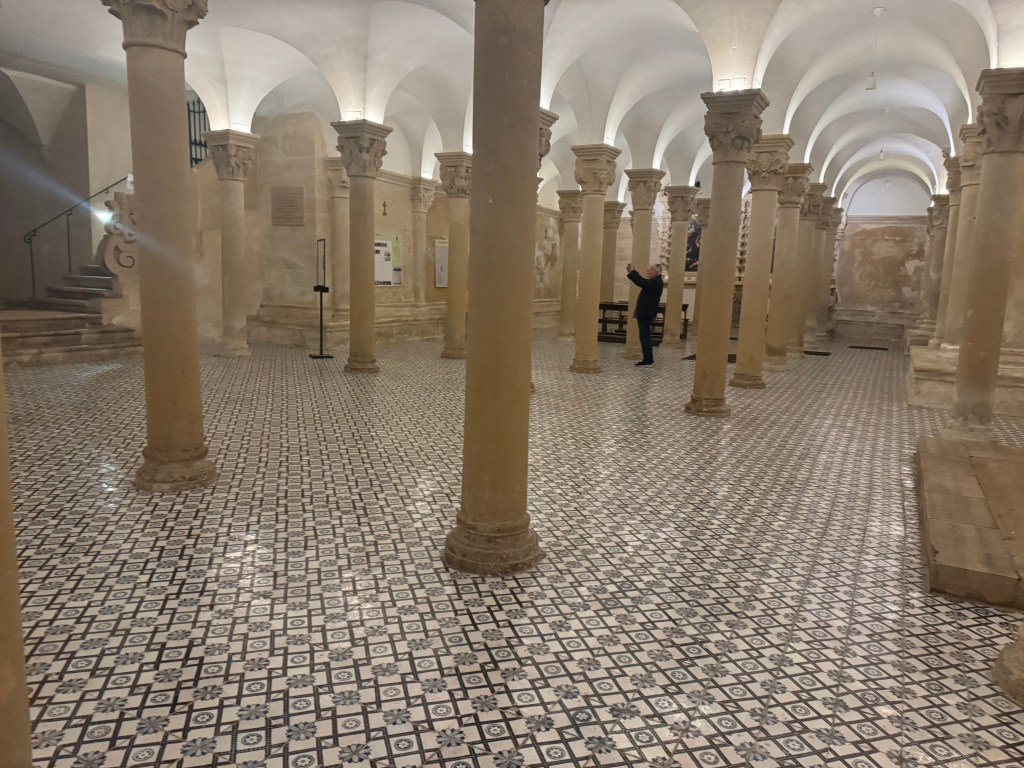
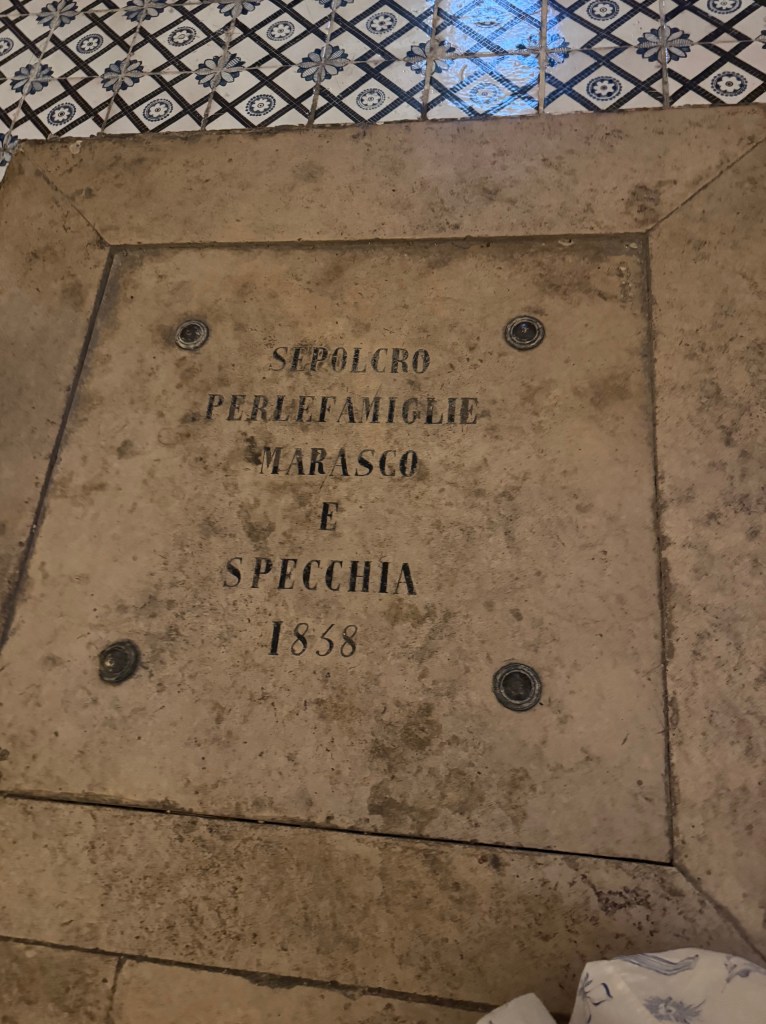
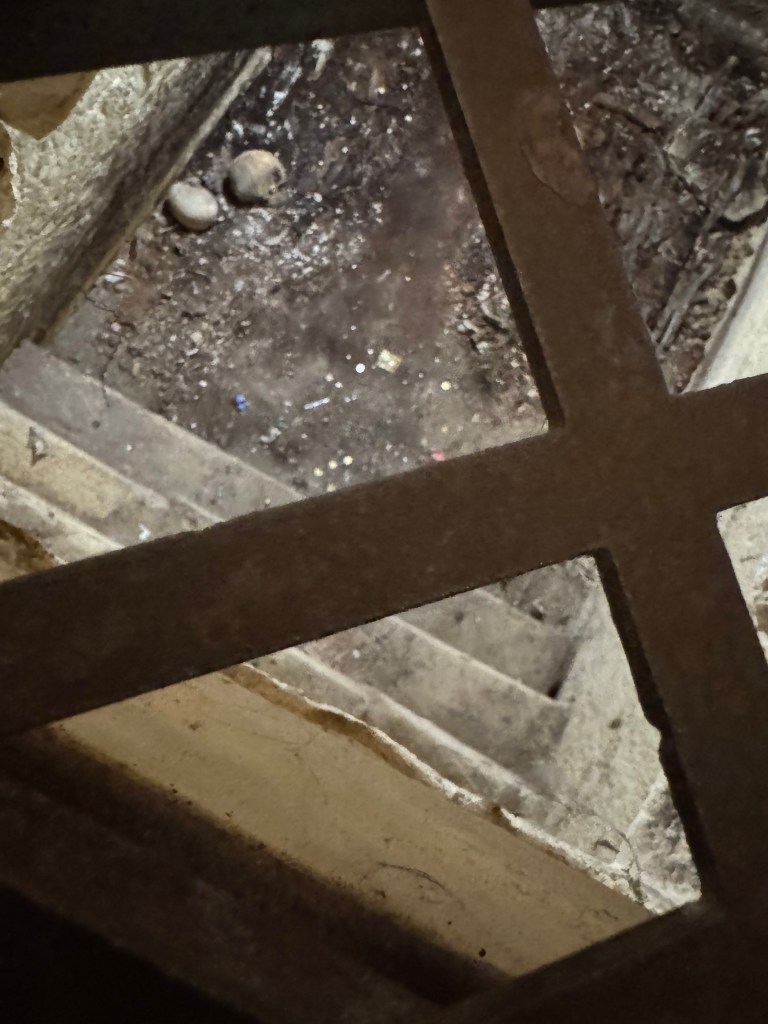
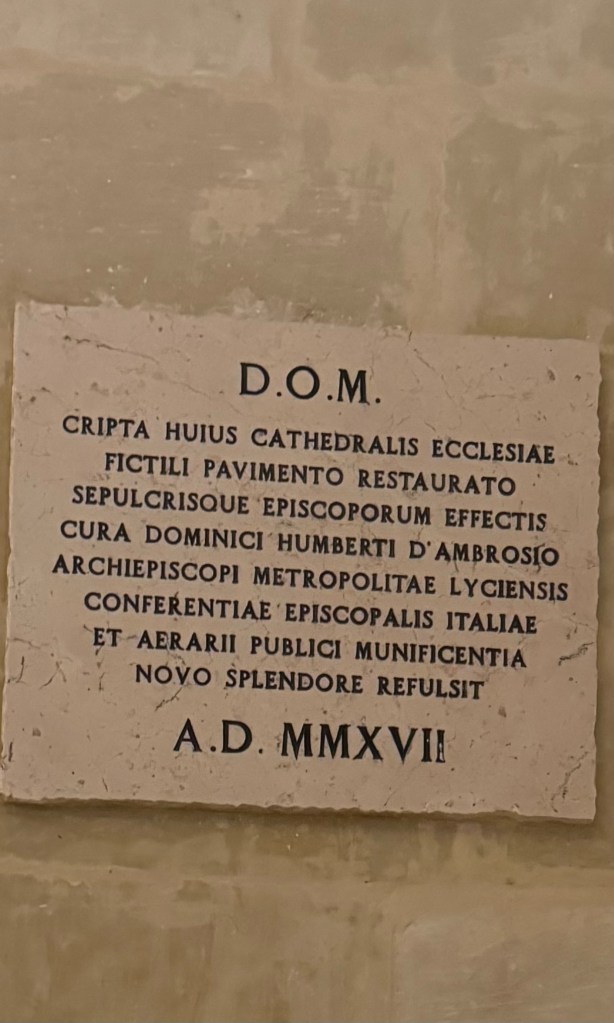
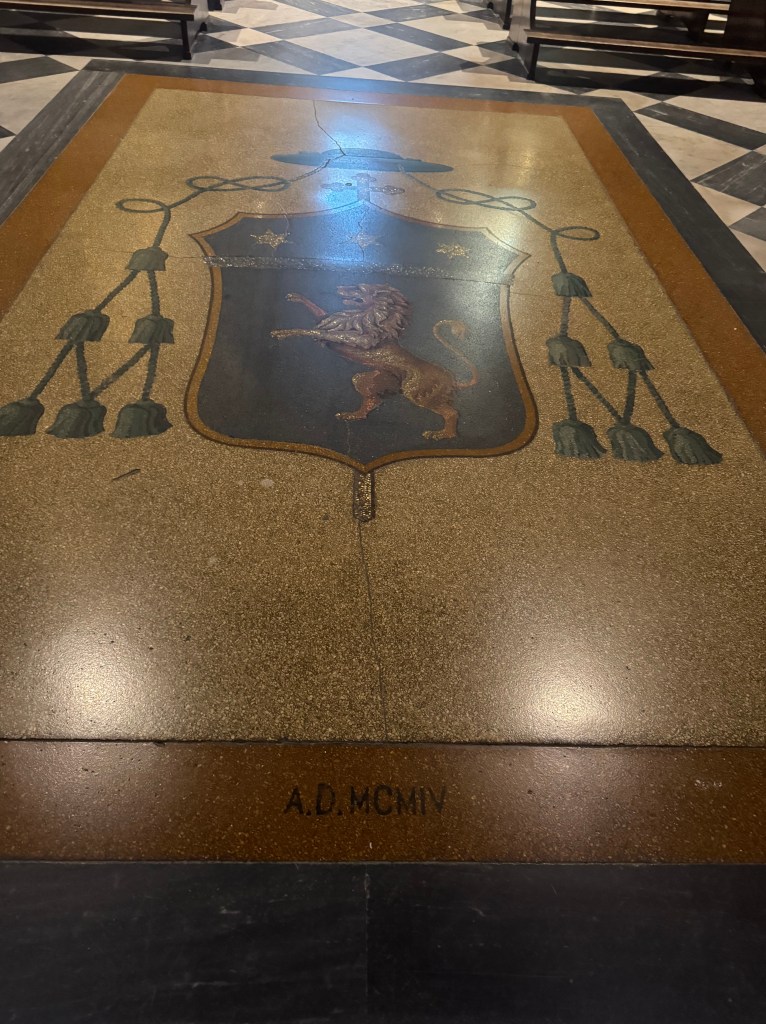
Housed below the Lecce Cathedral, is a crypt. I dug around on the internet to see if I could find out information about the human remains that are scattered around. What I found is that it contains ancient ossuaries (“little wells”) used for burials, alongside tombs of local historical figures and bishops. Recent surveys have revealed a complex, multi-layered burial structure beneath the floor. It seems that ground penetrating radar surveys have been used, and there are potential remnants of the earlier medieval church structure beneath the current floor. The amount of true American crime shows on Netflix and Prime in which detectives and forensic pathologists are constantly researching the remains of fictional victims made me want to clutch my pearls upon seeing this. But at the same time it made me extremely curious about the history and I started thinking about the thousands of years this place has existed. Although at first it presented as a lack of dignity for the departed, the people here are devoted to caring for the souls of the departed, and for this house of worship. I left feeling reverent, respectful, and grateful for the experience.
When we were planning our trip, we’d debated about potentially staying in Lecce. It is one of the larger towns and would be a reasonable hub location to take day trips from. As we didn’t end up staying here, the day trip was a perfect option, and we didn’t feel like we’d missed anything important.
From Lecce, we drove south to the beautiful coastal town of Otronto! It was worth the 35 mile, hour drive to go ahead and get there and our hotel in Otronto was one of my favorites of our trip! I’ll tell you all about that next!
 Heads East, Tails West
Lots of beautiful churches. The Roman amphitheater also looks really nice. Glad those construction workers stopped work on that bank!
LikeLike