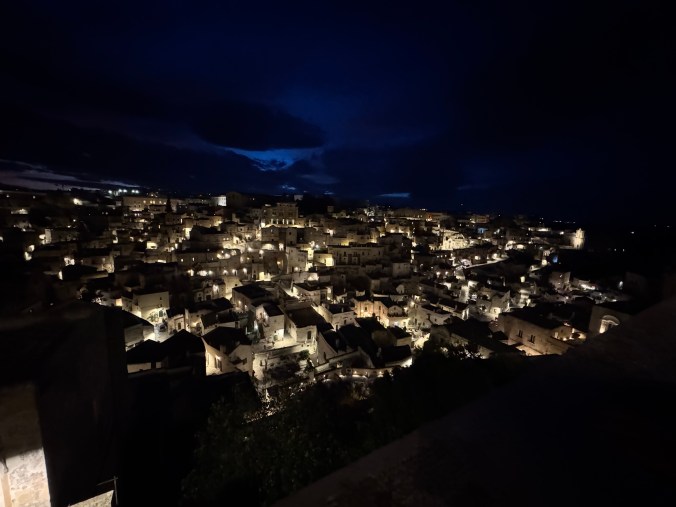
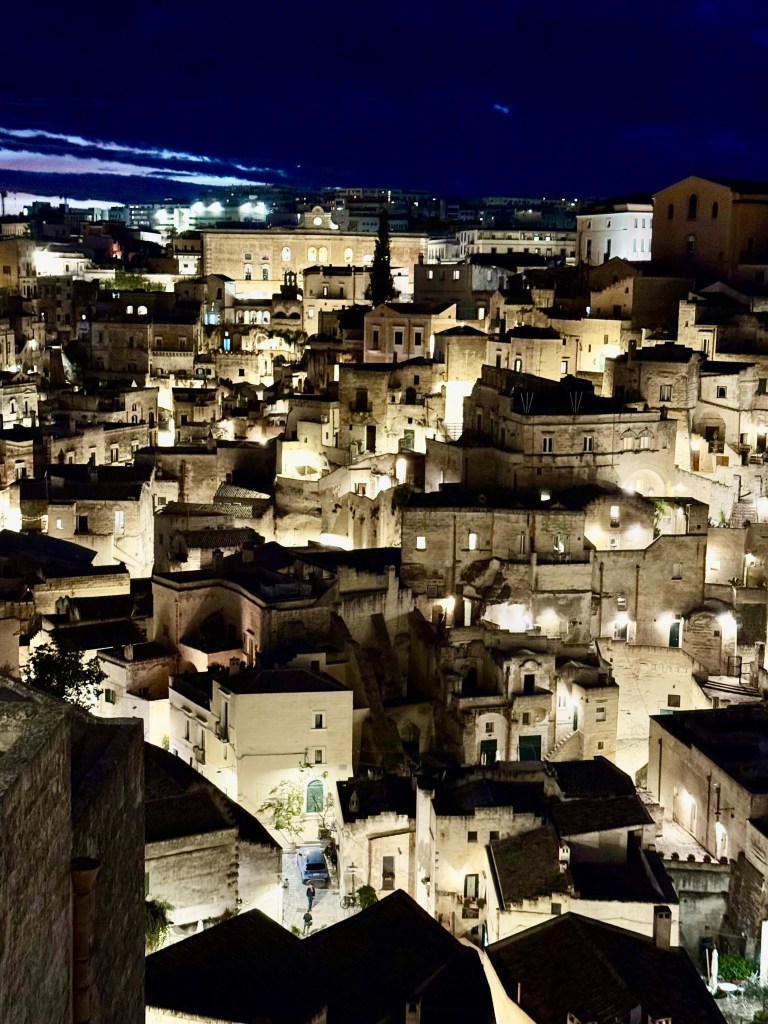
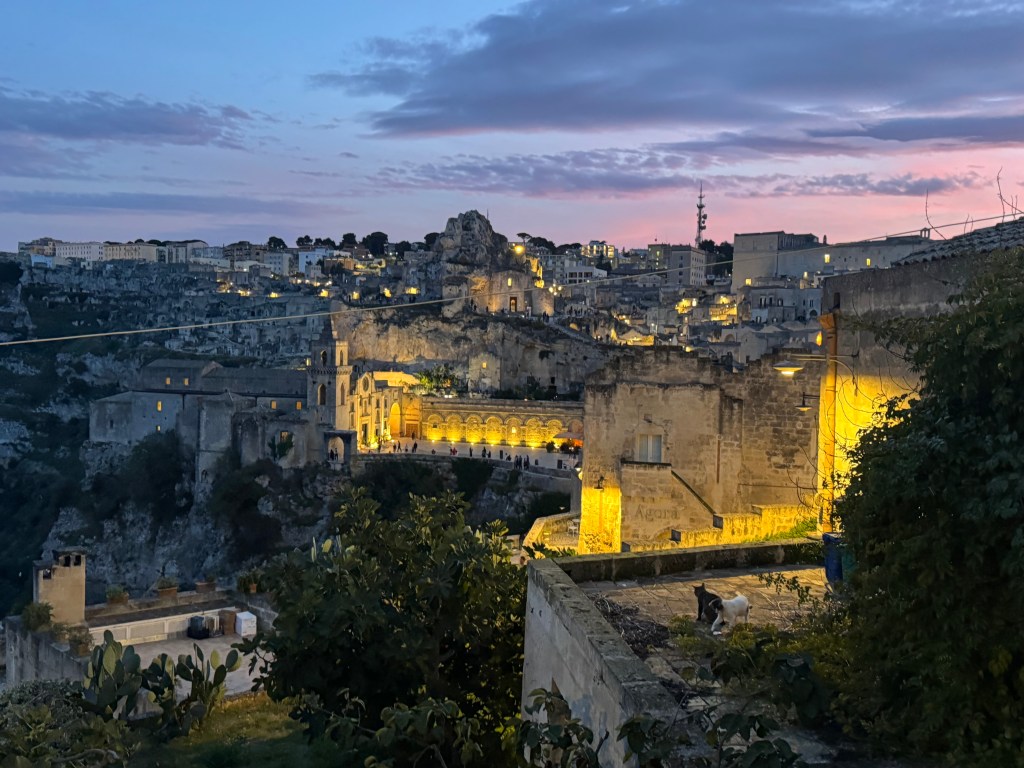
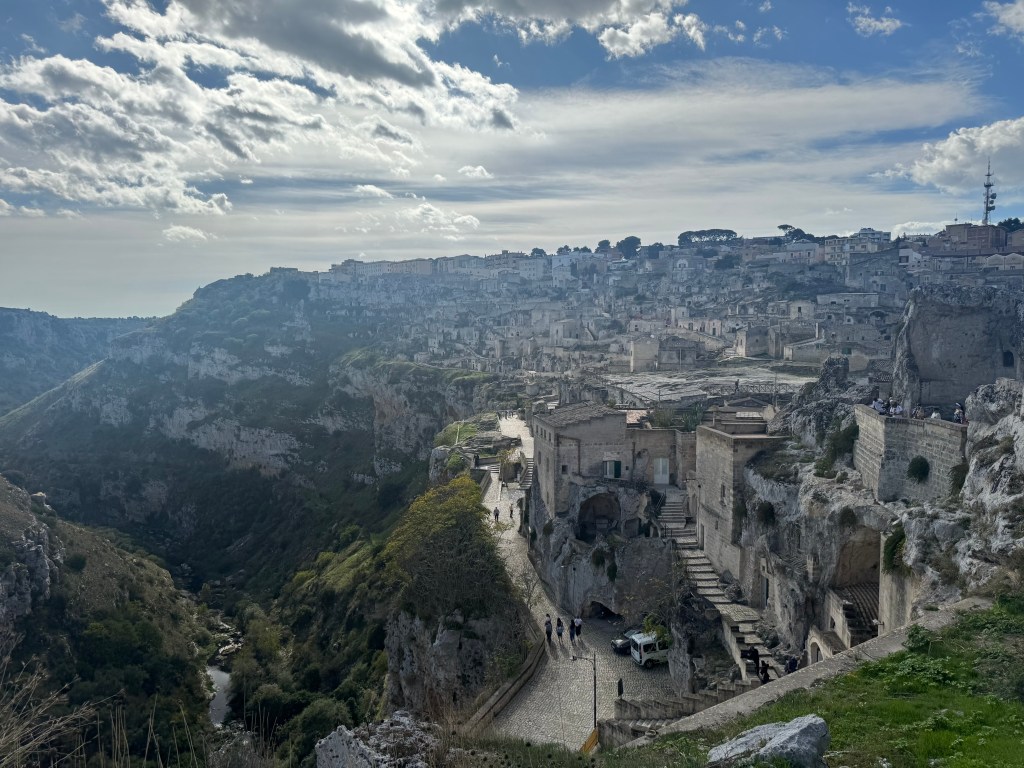
Matera, Italy is unlike anything we’ve ever seen. Not only is it absolutely beautiful, with stunning views at every turn, but it is rich in history like nothing else. It is the 3rd oldest continually inhabited city in Europe. An ancient city, which evolved from prehistoric caves dating back more than 10,000 years. These iconic cave dwellings Called “Sassi”, became a symbol of poverty, and “the shame of Italy” in the early 1900’s. In the 1950’s, with extreme poverty, and disease (malaria, cholera from families living together with animals in the cave), the government forced the inhabitants to relocate to modern government housing. About 30 years later, in the 1980’s it began experiencing a re-birth, and as of 1993 is now a UNESCO World Heritage Site. It has now fully transformed from Italy’s shame into a globally recognized cultural treasure. Here’s a bit more if you’re interested: https://www.materaprivatetours.com/matera/history-of-matera/

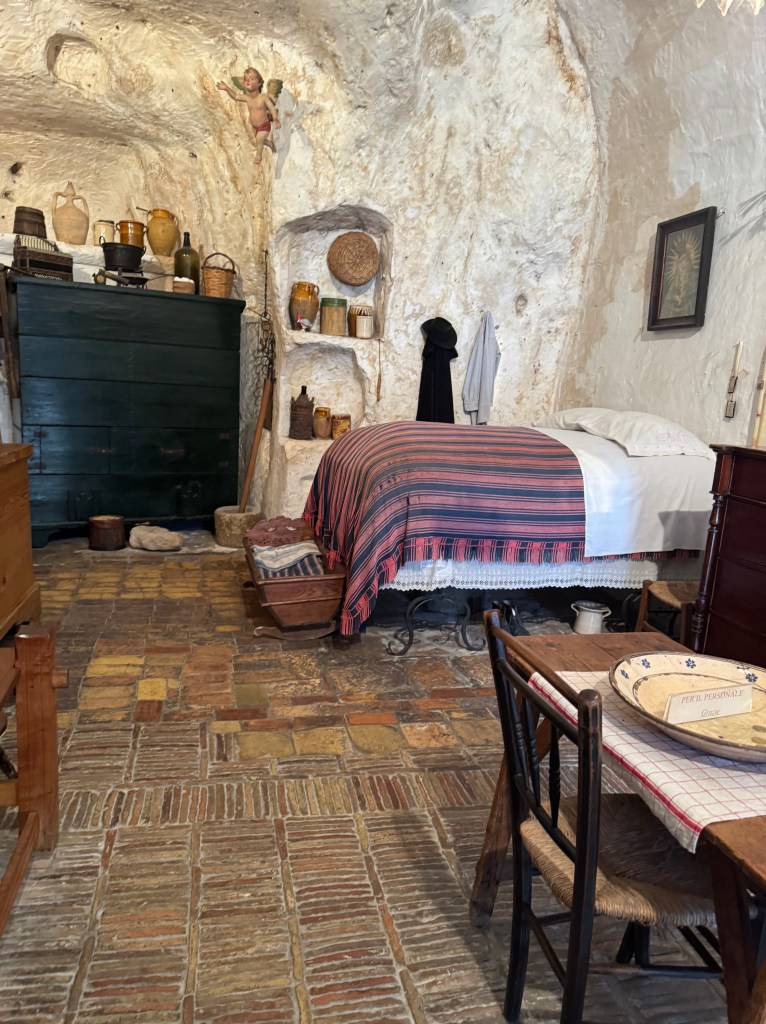
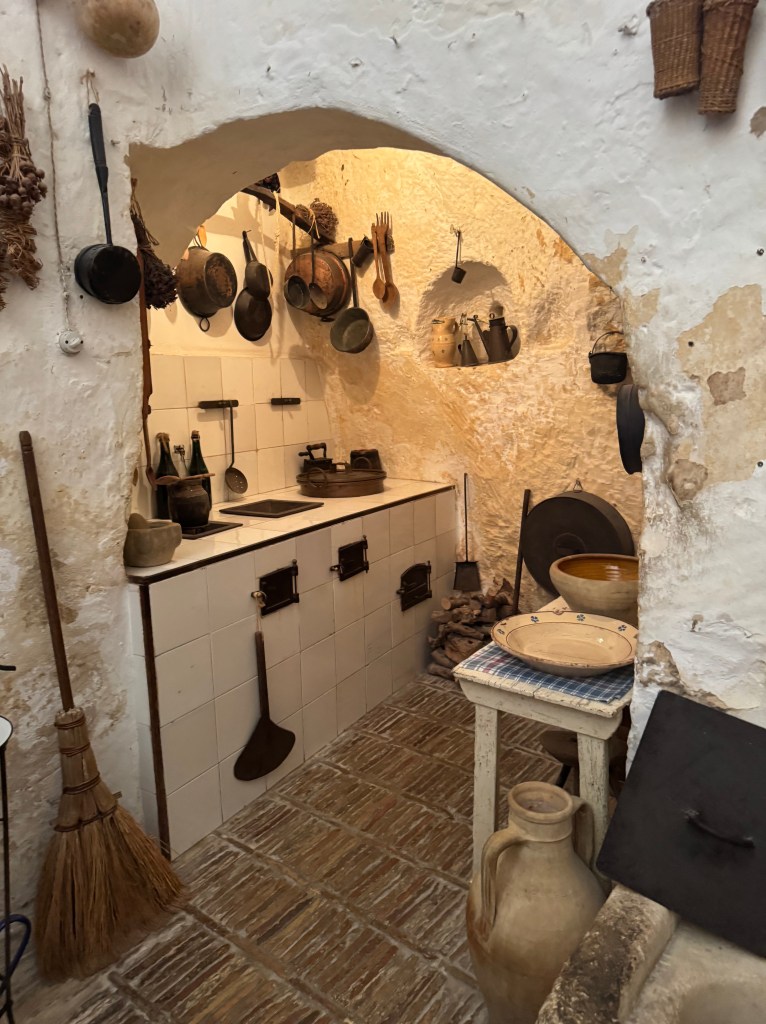
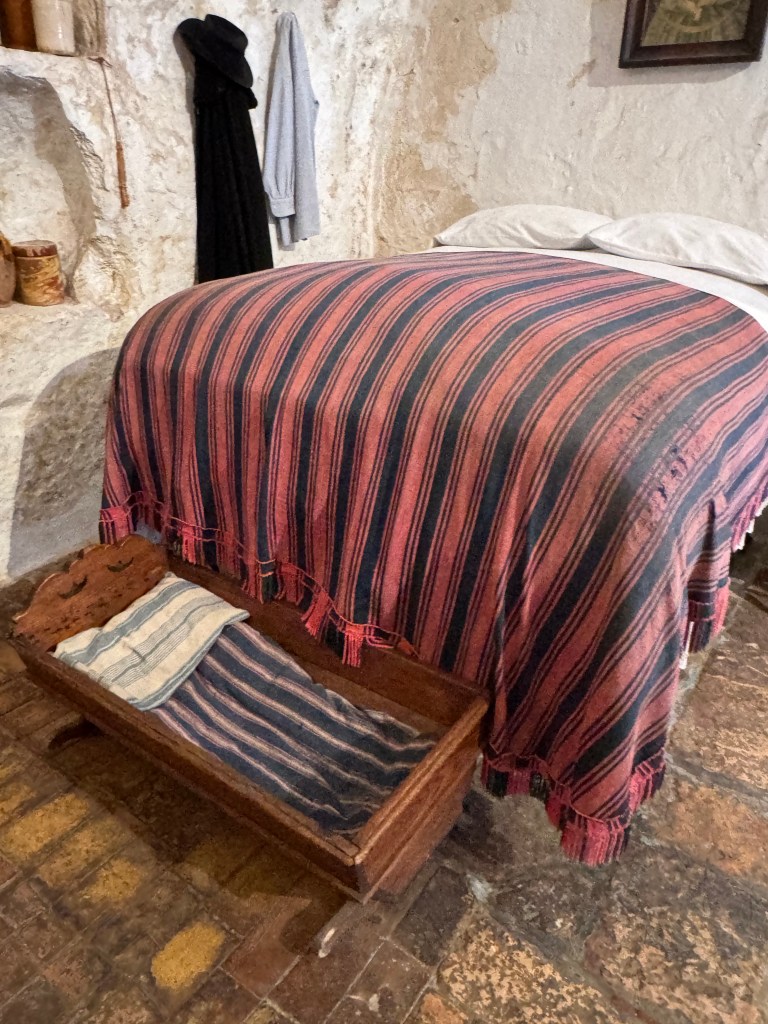
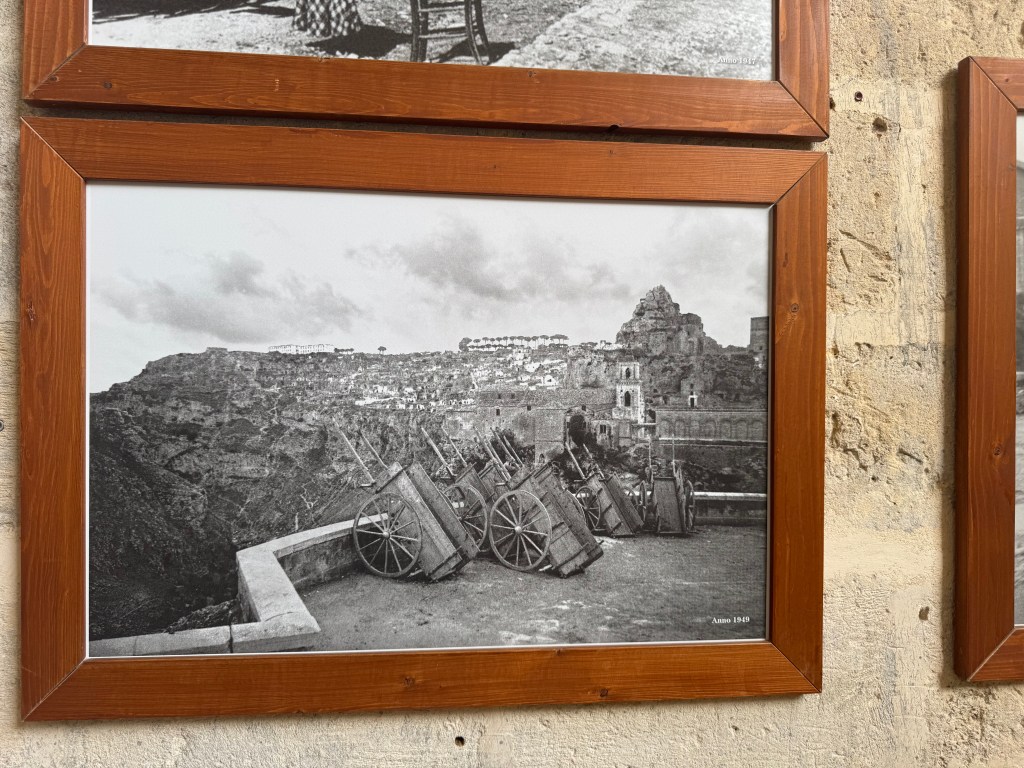
Wanting to get a good look at what Matera may have been like a few hundred years ago, before the conditions deteriorated, we visited the Casa Grotta di Vico Solatario, (Cave house of Solitary alley). It is a museum that depicts what real peasant sassi dwellings were like when in use. I didn’t get a good photo of the animal stalls, which were within the same structure as the people who lived there, some in back of the dwelling, and some within the same area.

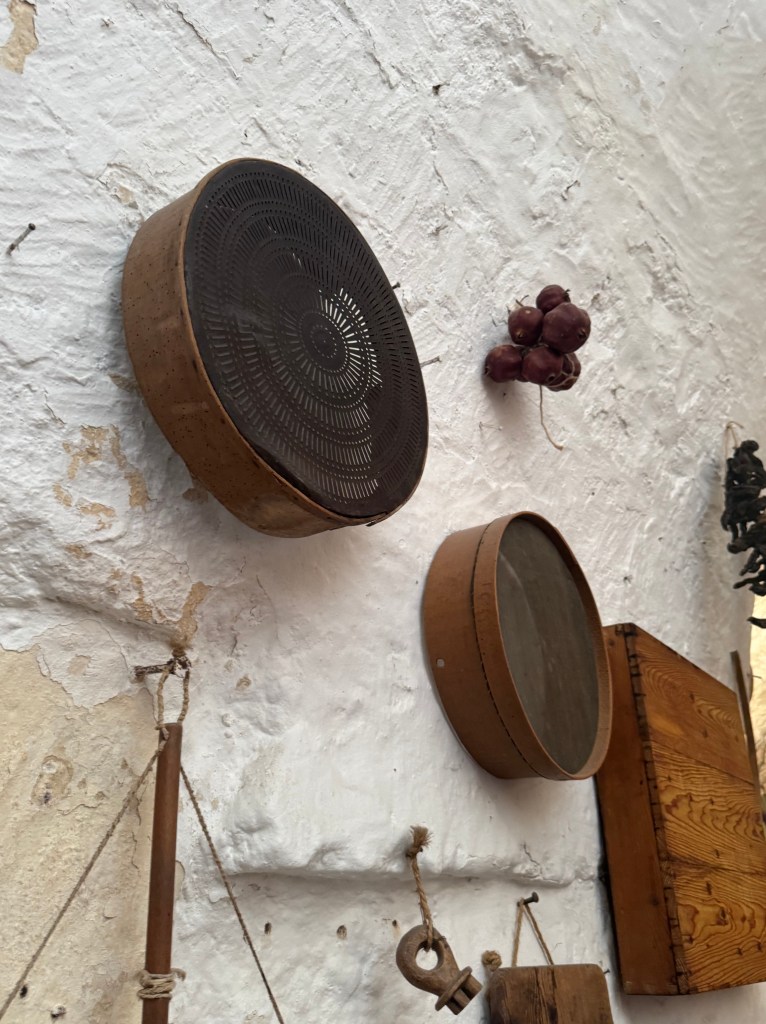
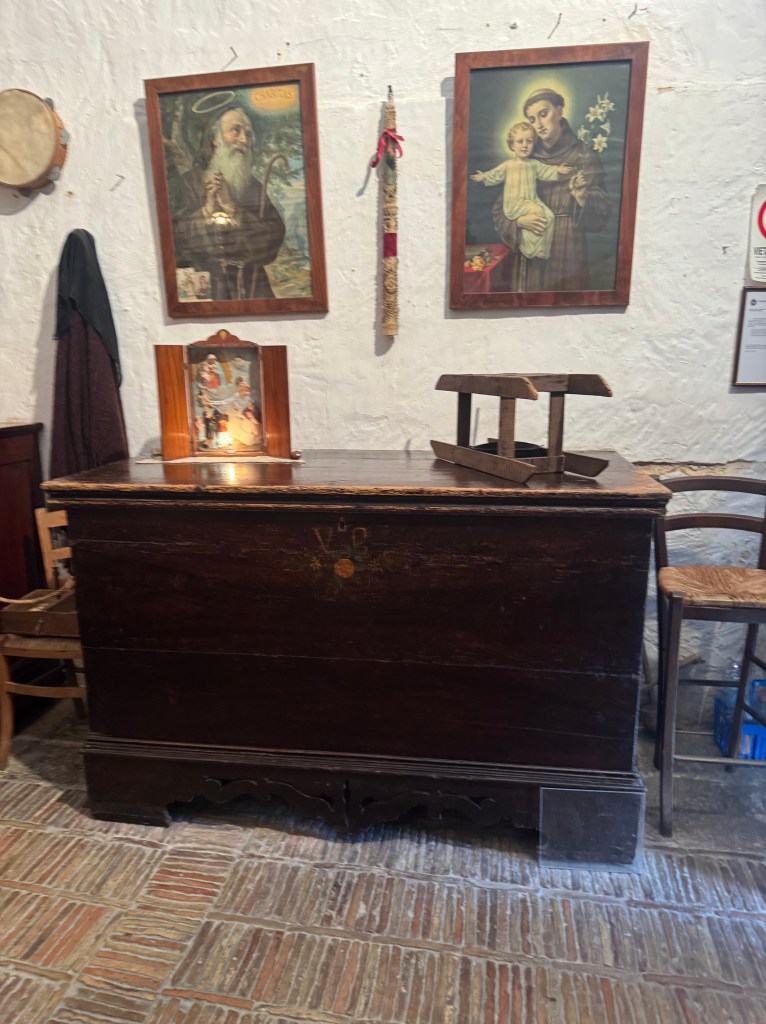
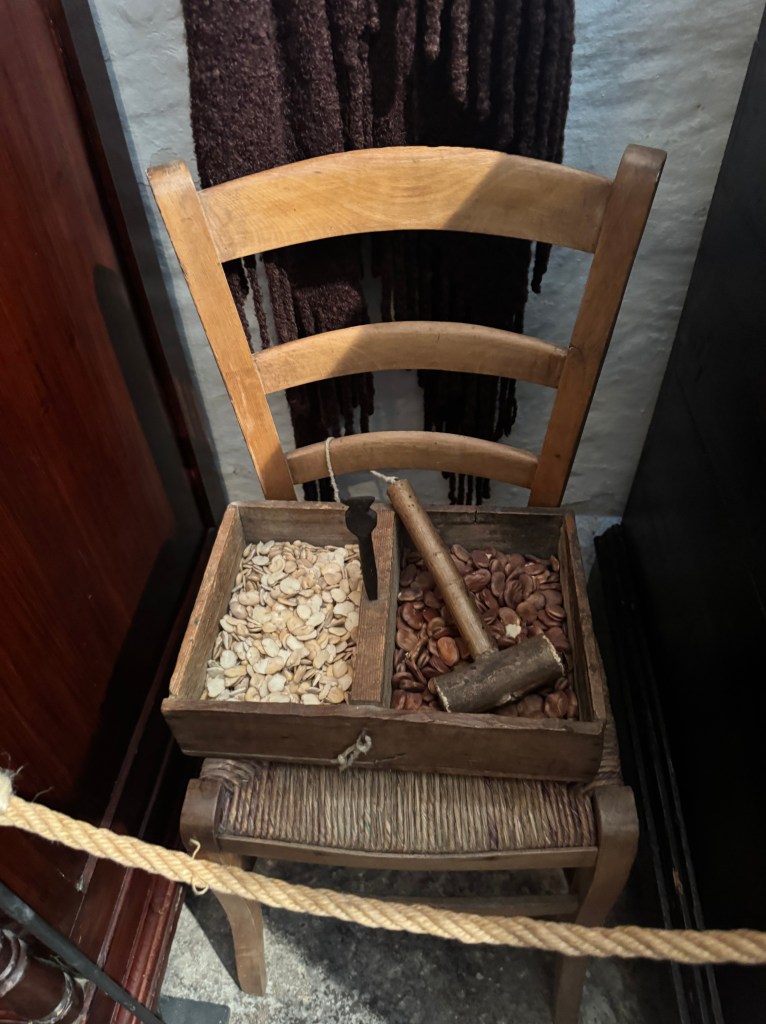
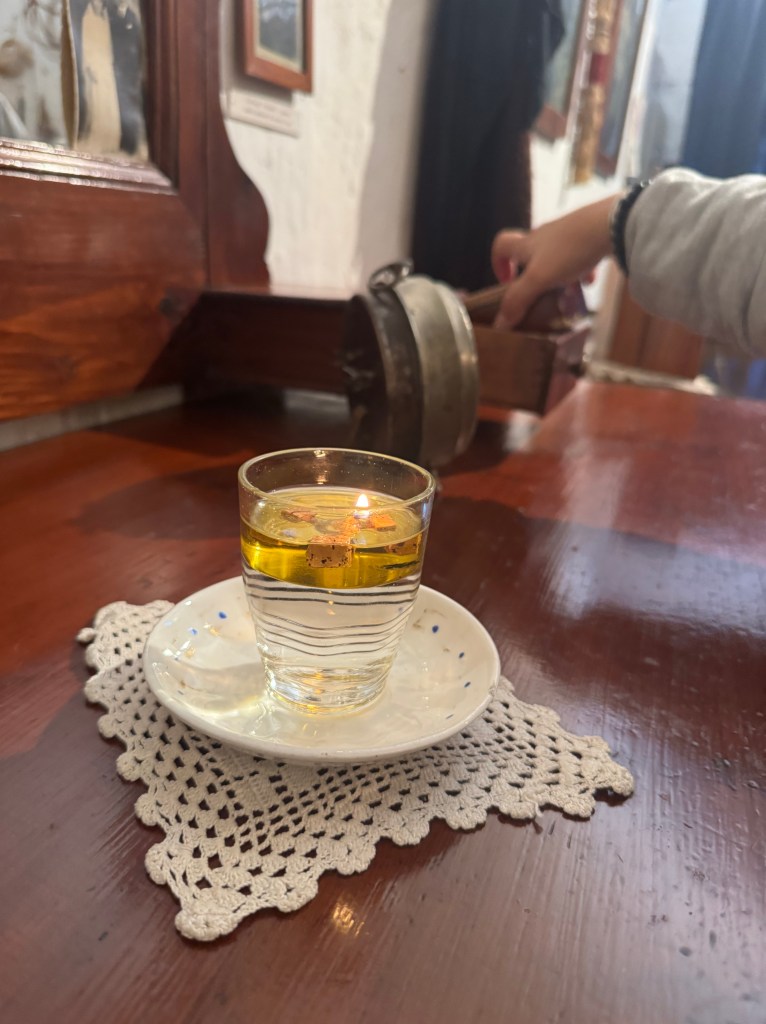
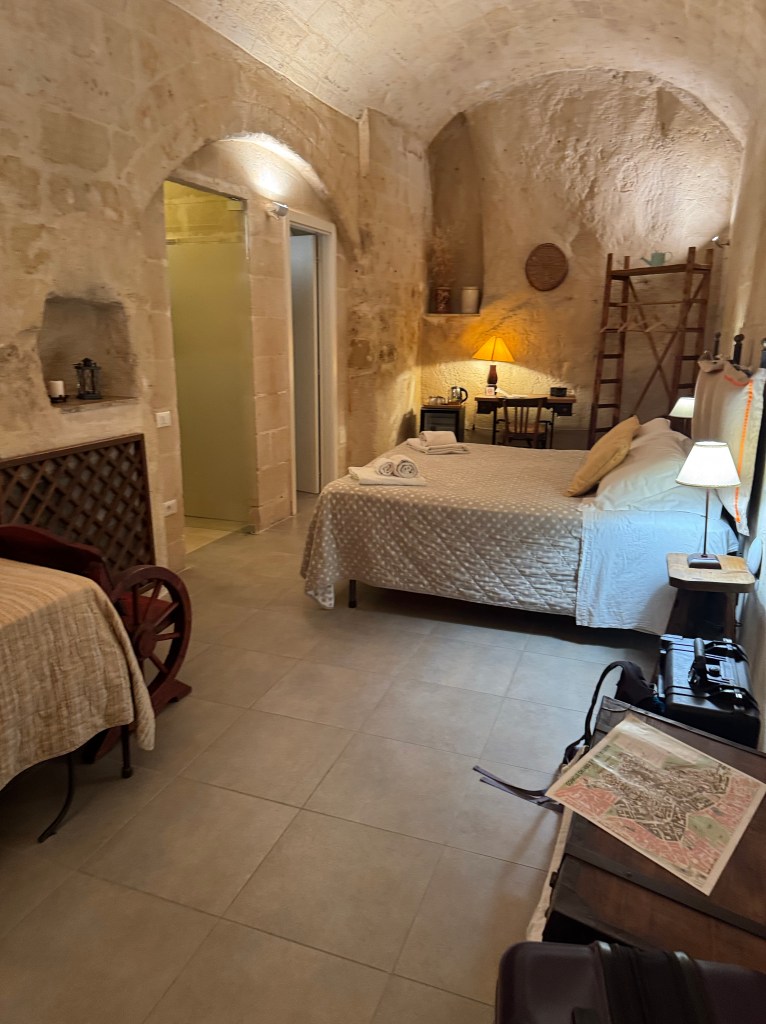
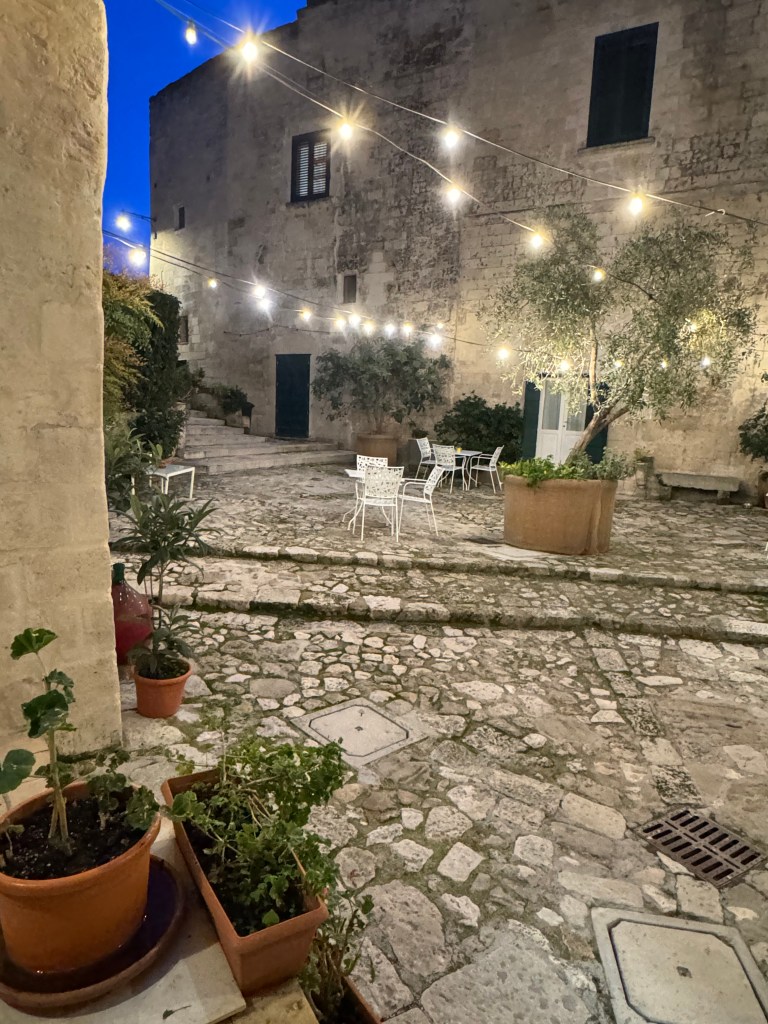
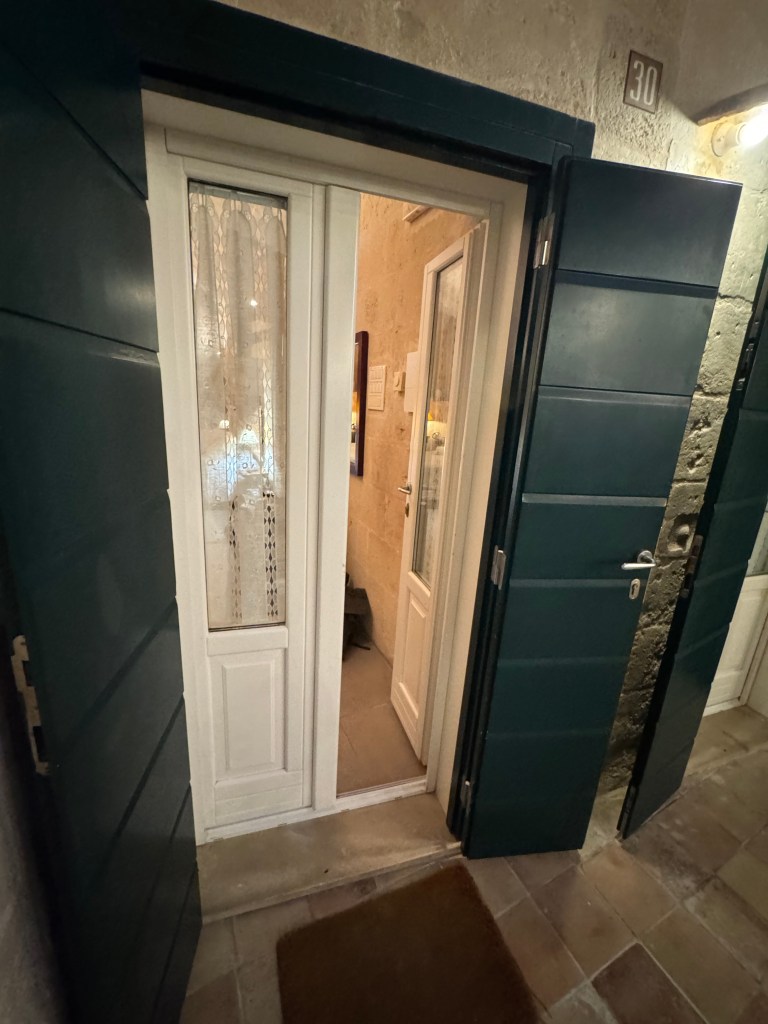
Shannon knew that I really wanted to stay at one of the new boutique hotels made within the sassi. He found a fantastic one that we absolutely loved!! It was called Le Dodici Lune (12 Moons) and it was excellent in every way. We had a gorgeous room with an adorable courtyard (complete with olive trees and string lights), a wonderful host named Alexandra that was very happy to help us find things and make recommendations, and an incredible breakfast each morning!
- Side note – you’ll notice that there are no cars allowed in the Centro Storico (old town) of Matera. This is the case in most of the towns we visited. In this case, Shannon had arranged for us to park in a parking deck, about a mile away, for the 3 days we were visiting, and he’d arranged for a shuttle to take us from the parking deck, to as close as possible to our hotel. When the shuttle dropped us off, it was still a bit of a trek over cobblestone sidewalks, carrying our luggage. We’d done enough research to know to expect this, and packed as lightly as we possibly could for our 2 weeks here. Here’s a video of part of that walk:
And our hotel room at the Dodici Lune:
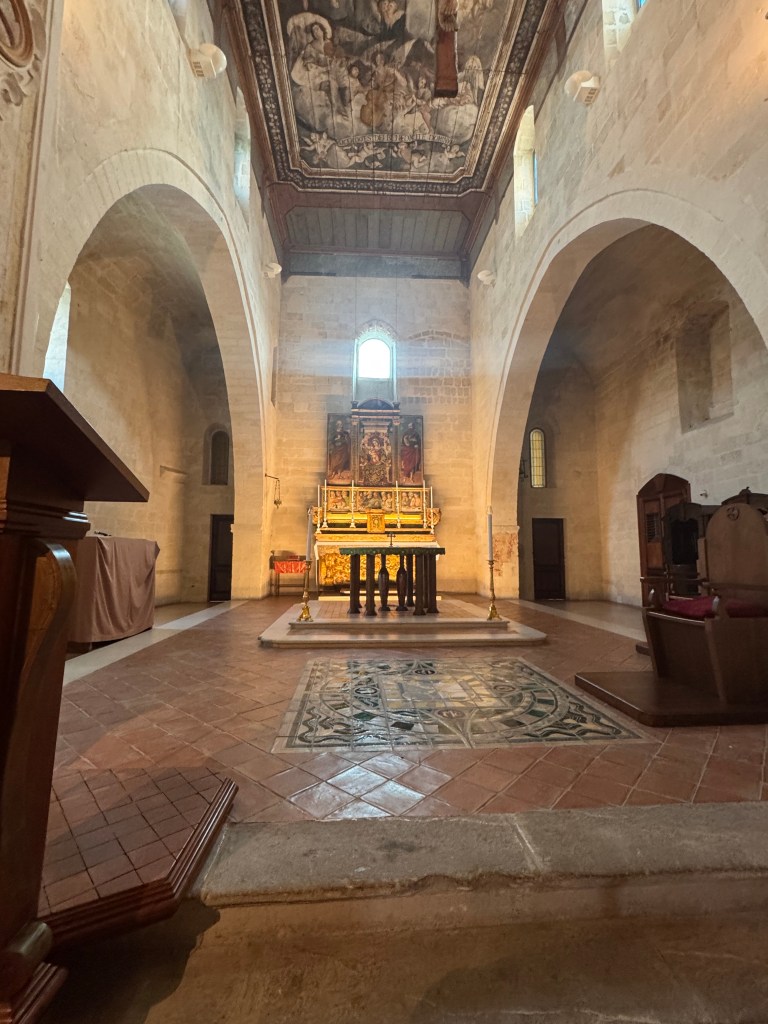
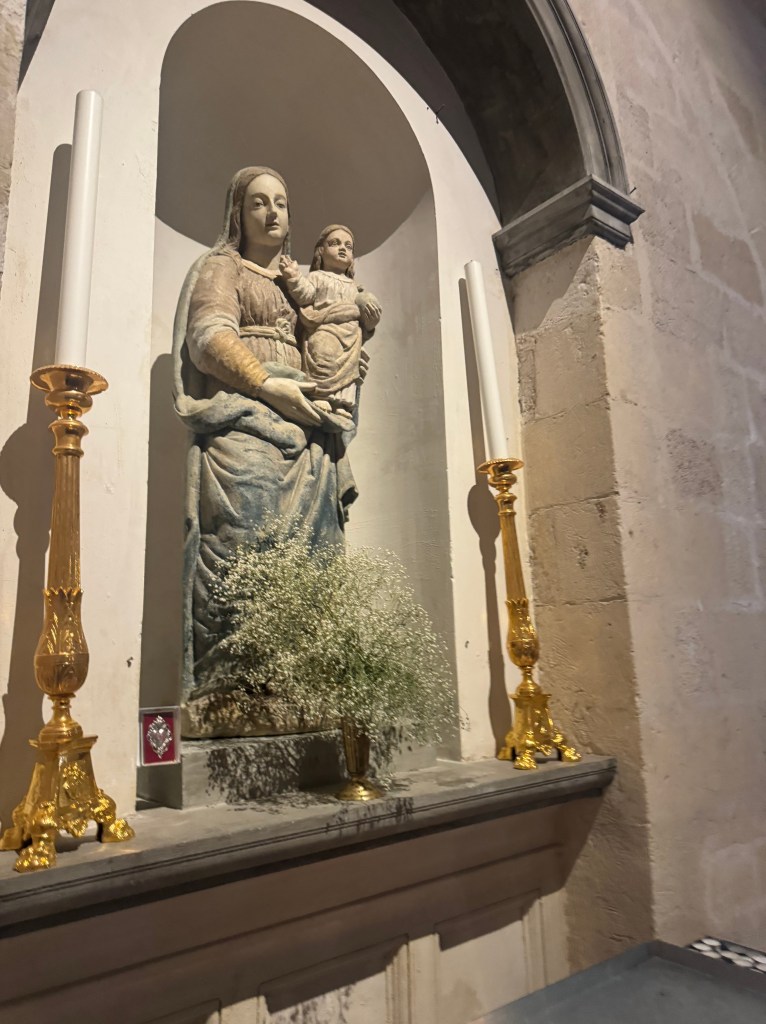
There are some incredible churches in Matera. My personal favorite was San Pietro Caveoso, also known as “Saint Peter and Saint Paul Church”. The baroque style front of the church gives way to 3 doors, and over each, is a niche with statues; The Madonna of the mercy, Saint Peter, and Saint Paul. There is also a bell tower. The alter has something called a polyptych (Greek word for work of art, usually a panel painting) dating back to 1540, and painted by an anonymous artist from Matera. In one of the chapels is a baptismal font from the 13th century. There’s also an incredible view surrounding it on 3 sides:
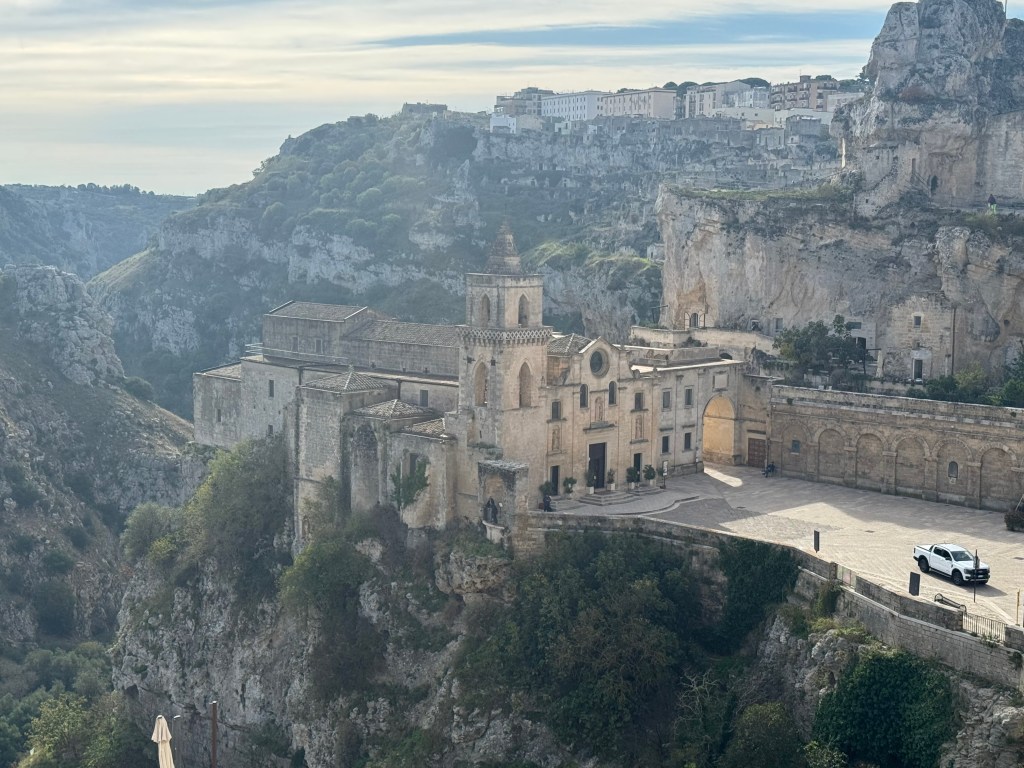
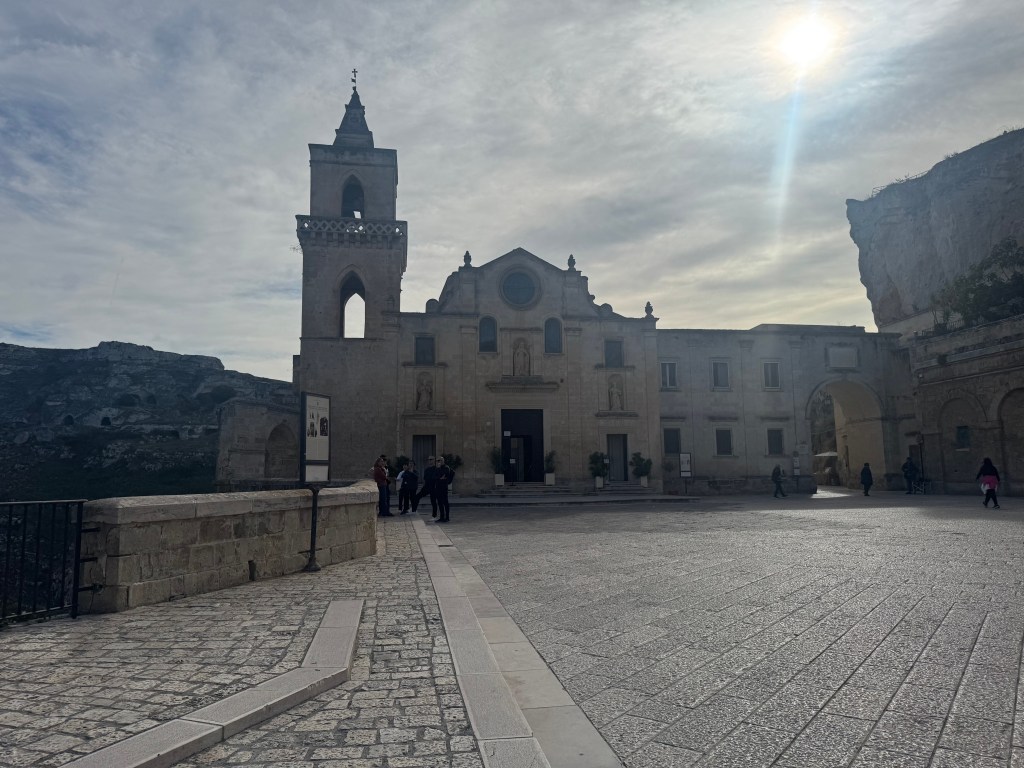
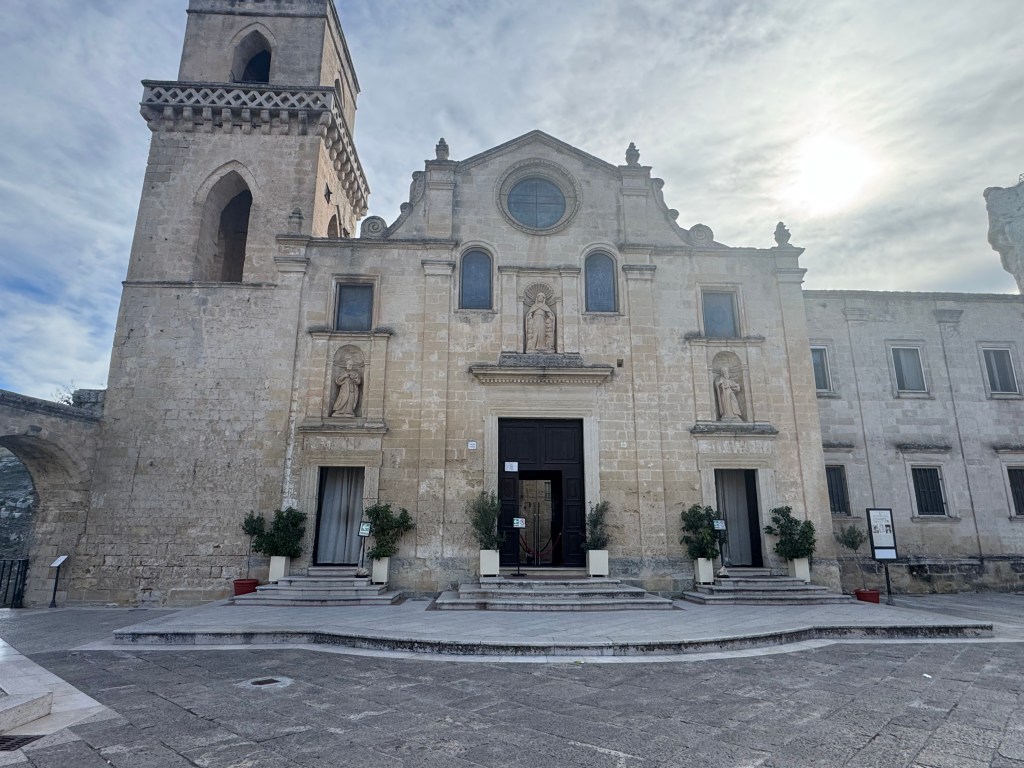

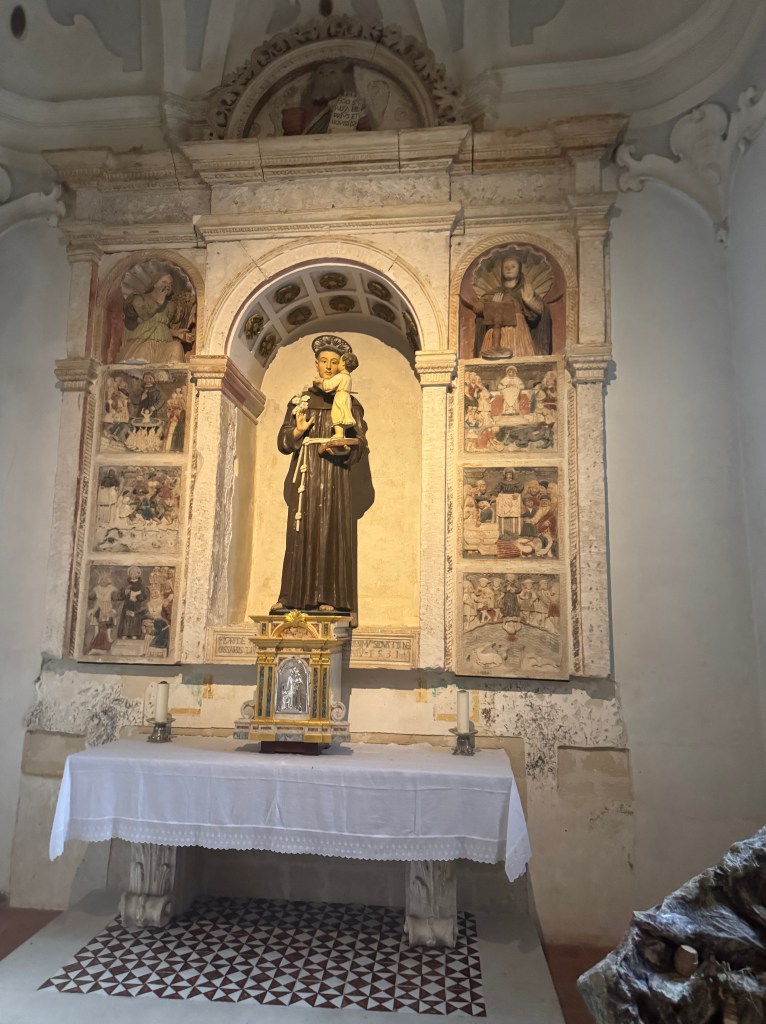
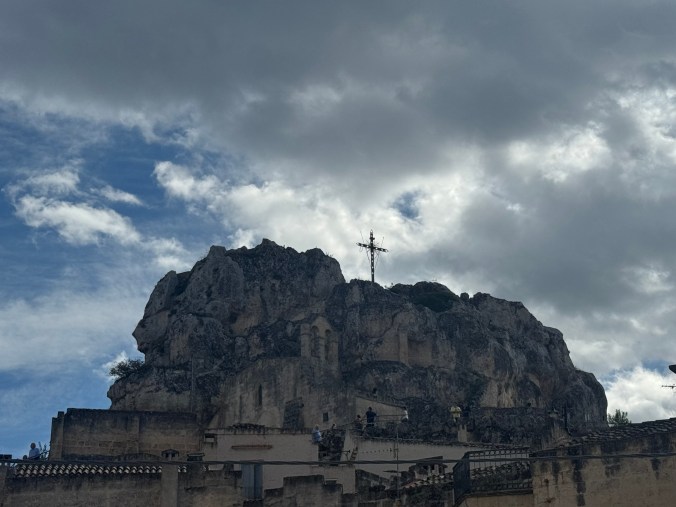
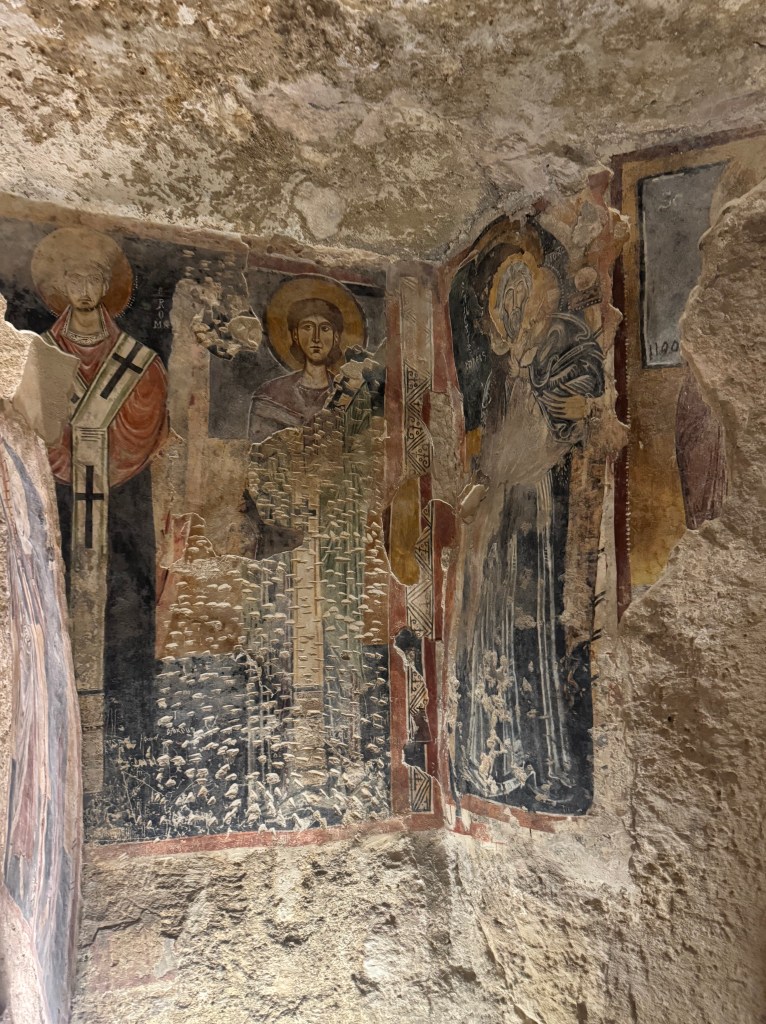
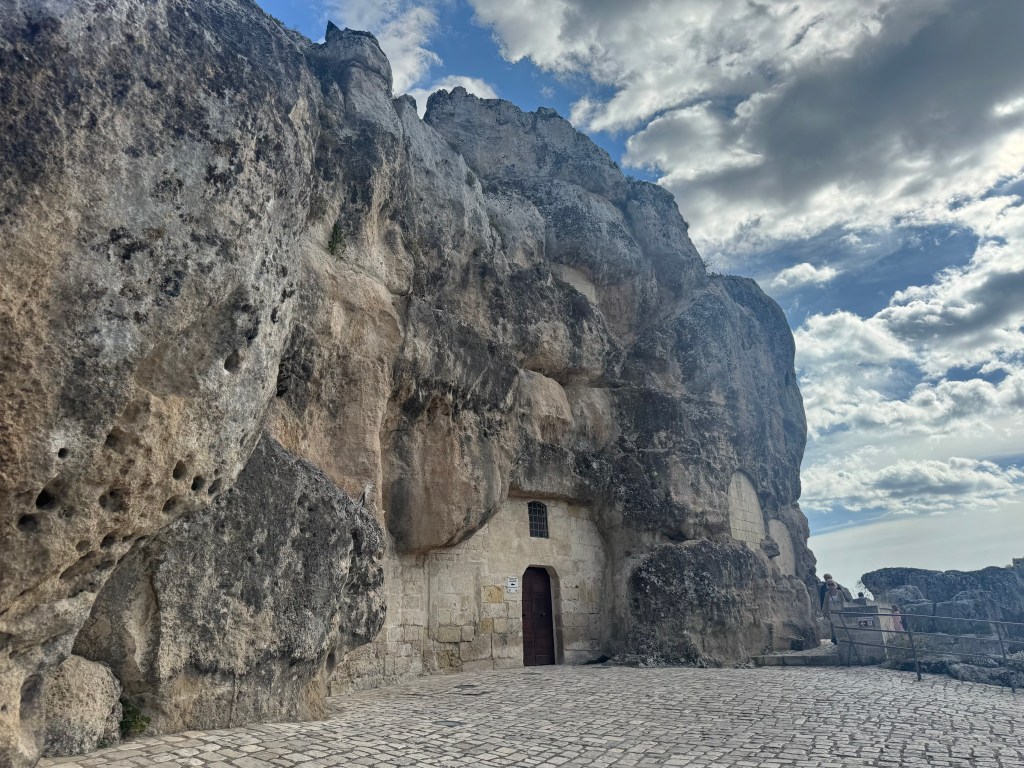
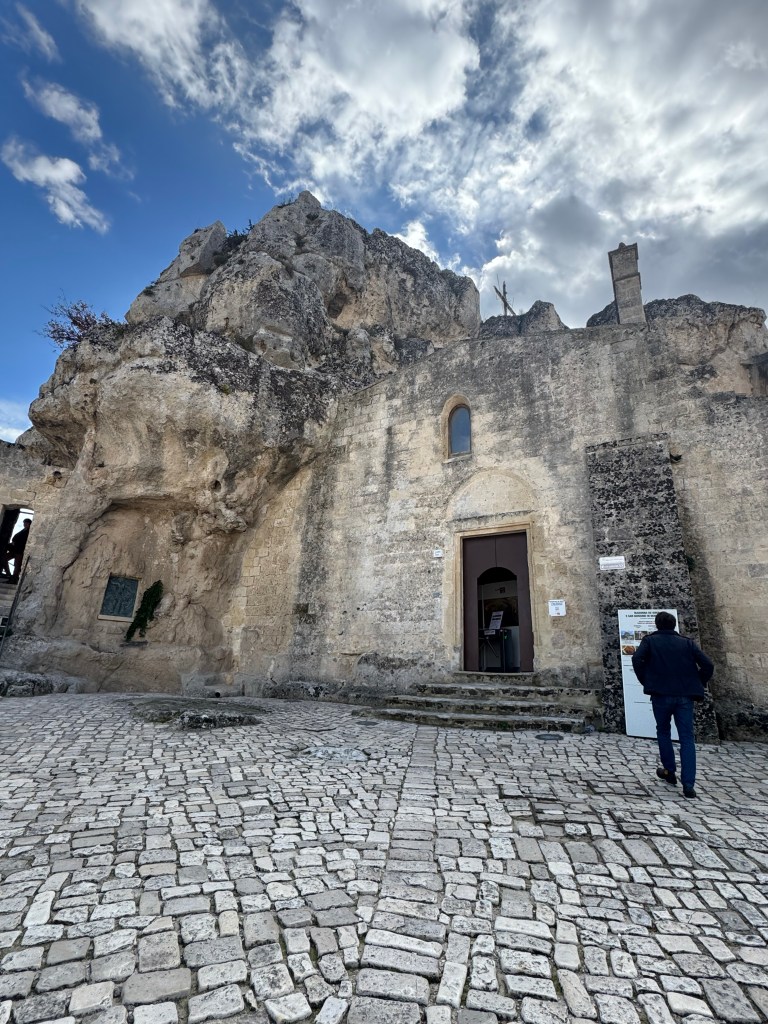
Santa Maria de Idris San Giovanni in Monterrone, is one of the Rupestrian Churches of Matera. I had to look up the word Rupestrian – and it refers to things made, found, or existing on or in rock, especially cave walls, often involving ancient rock art.
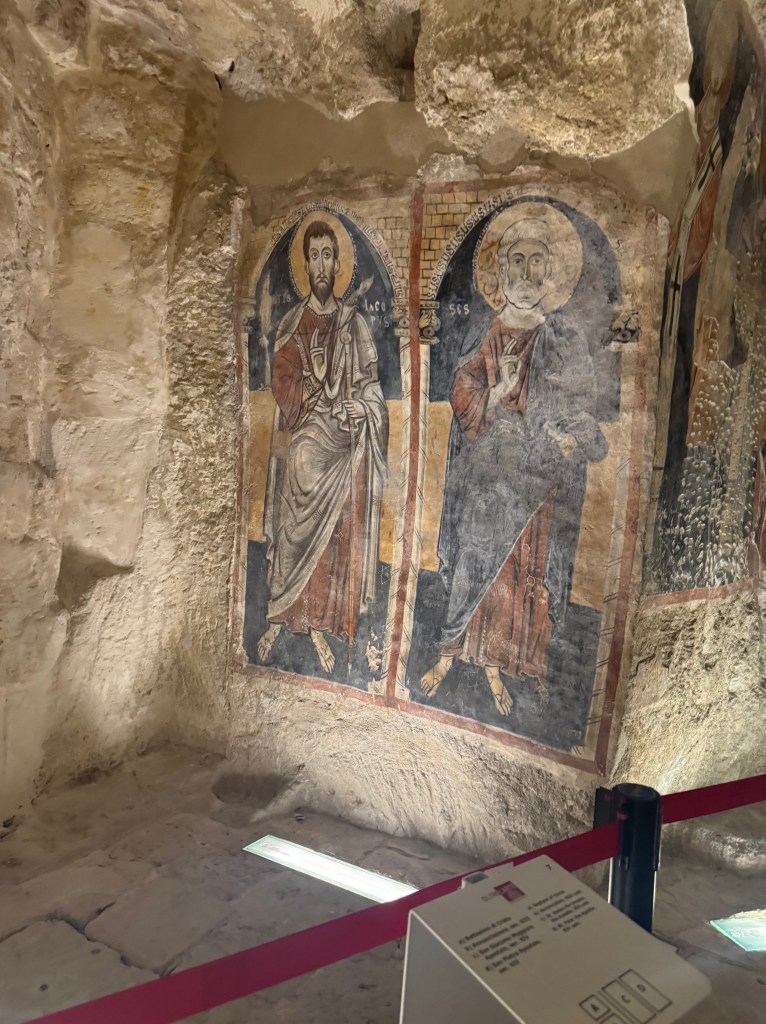
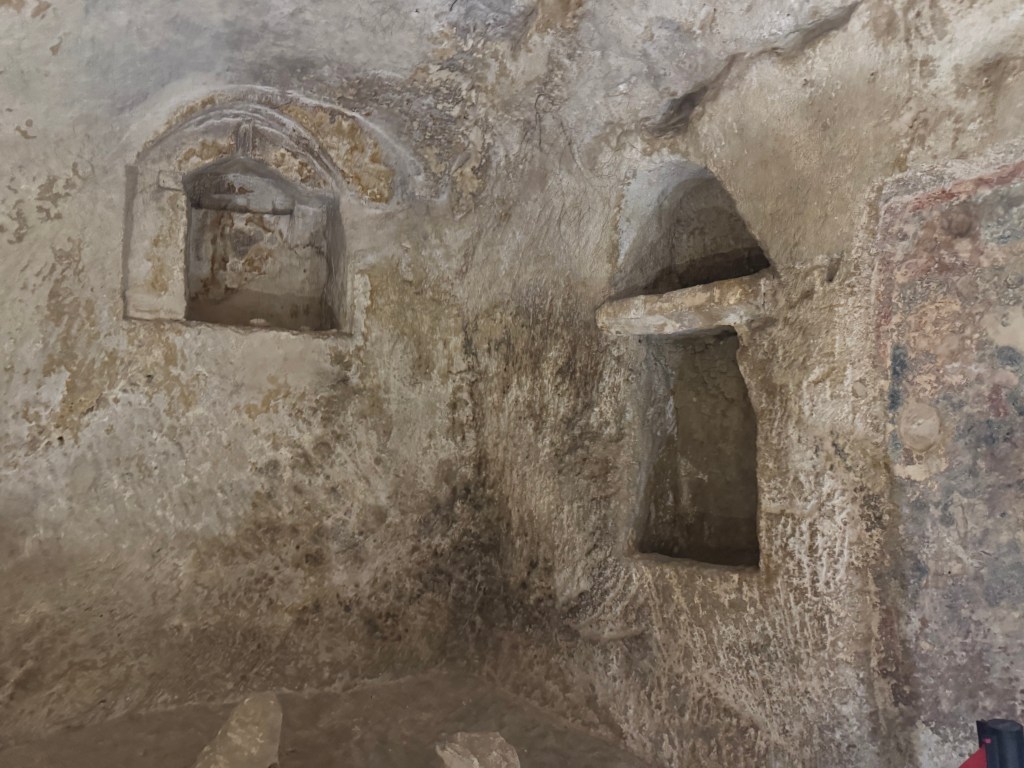
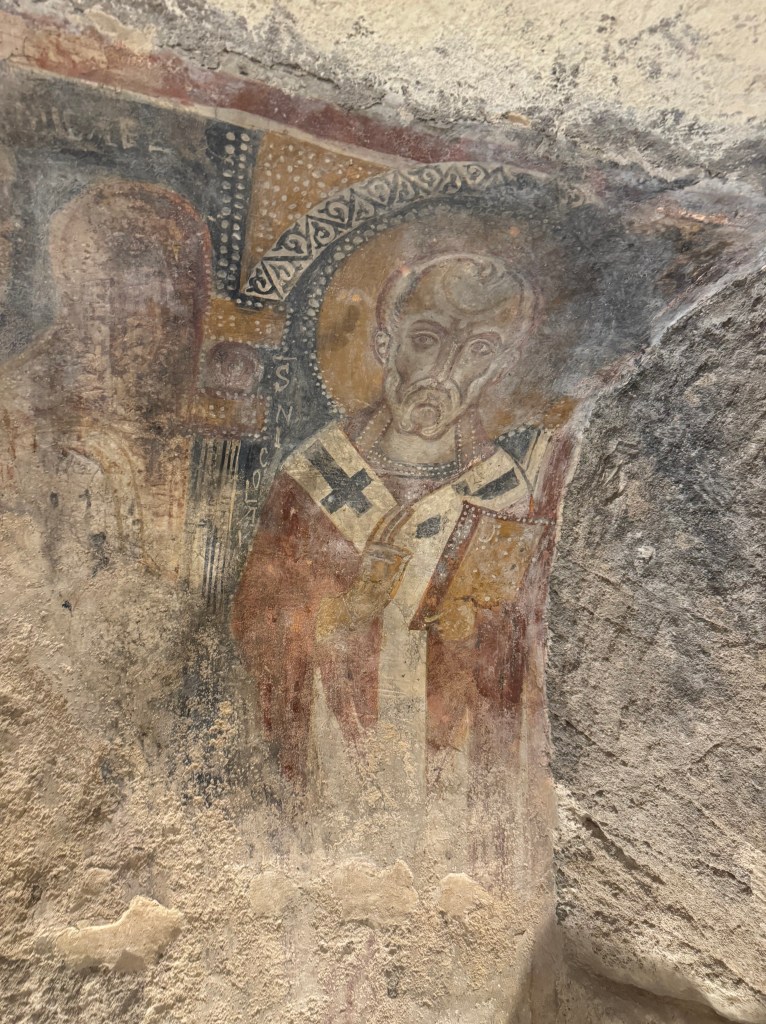
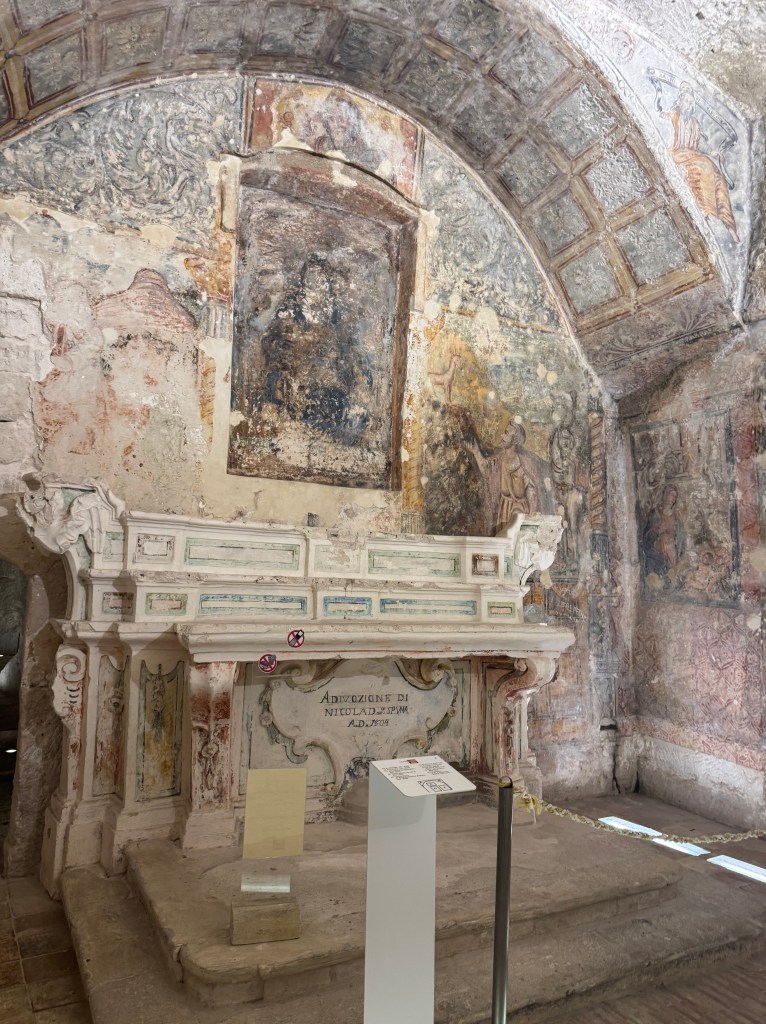
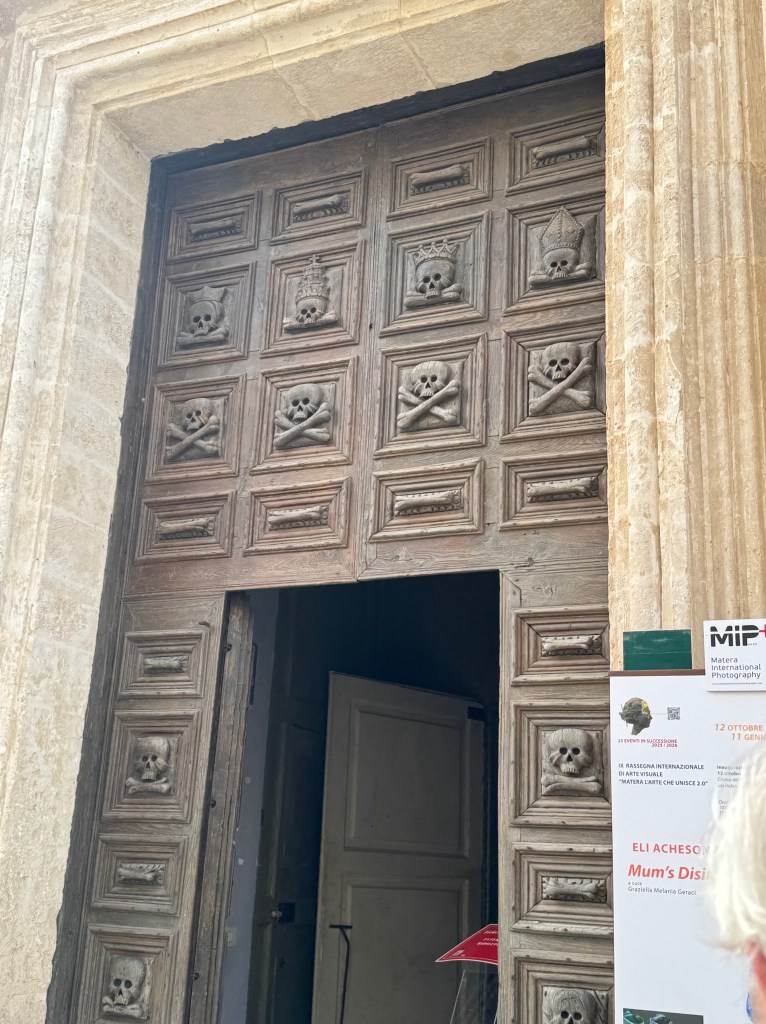
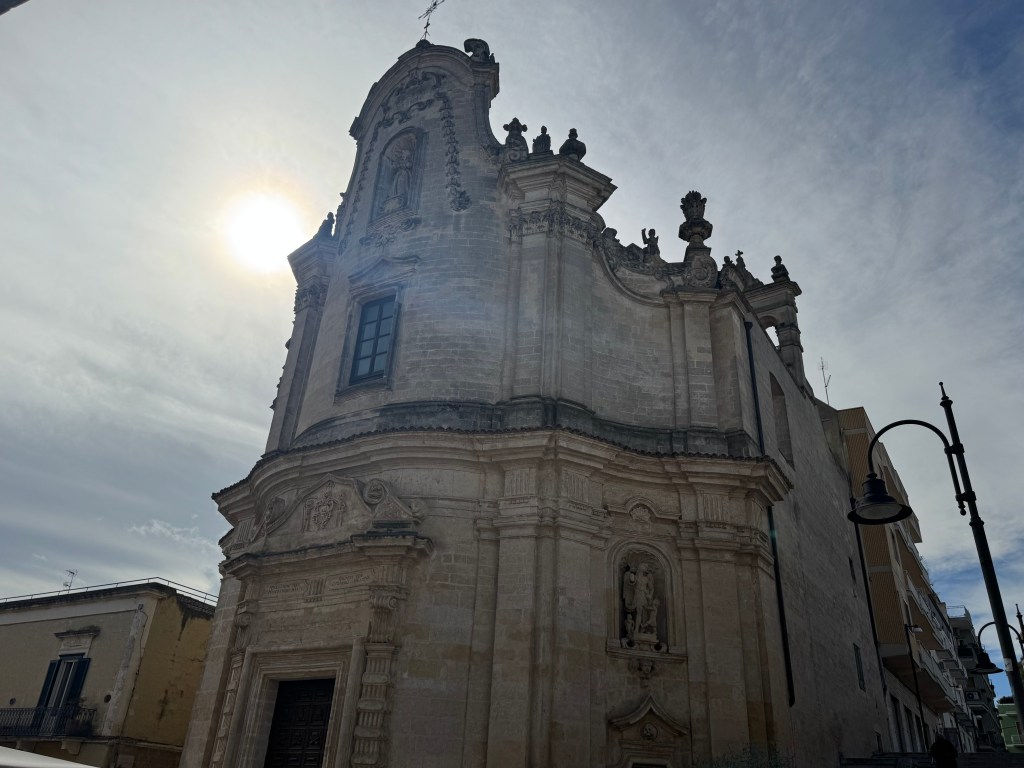
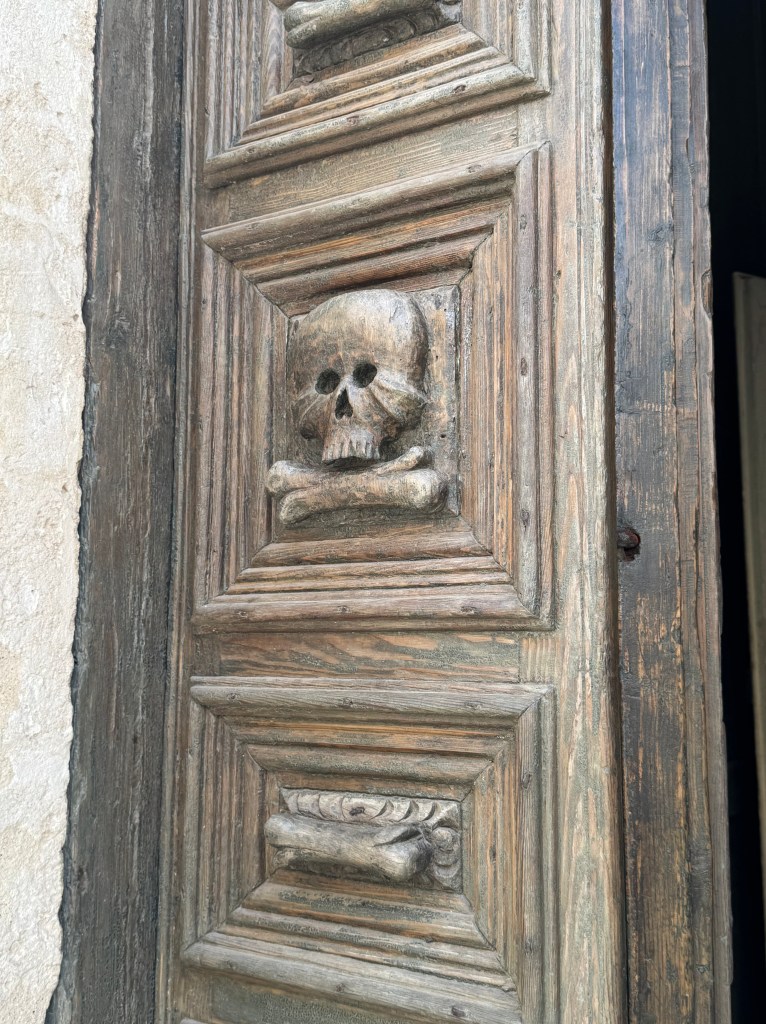
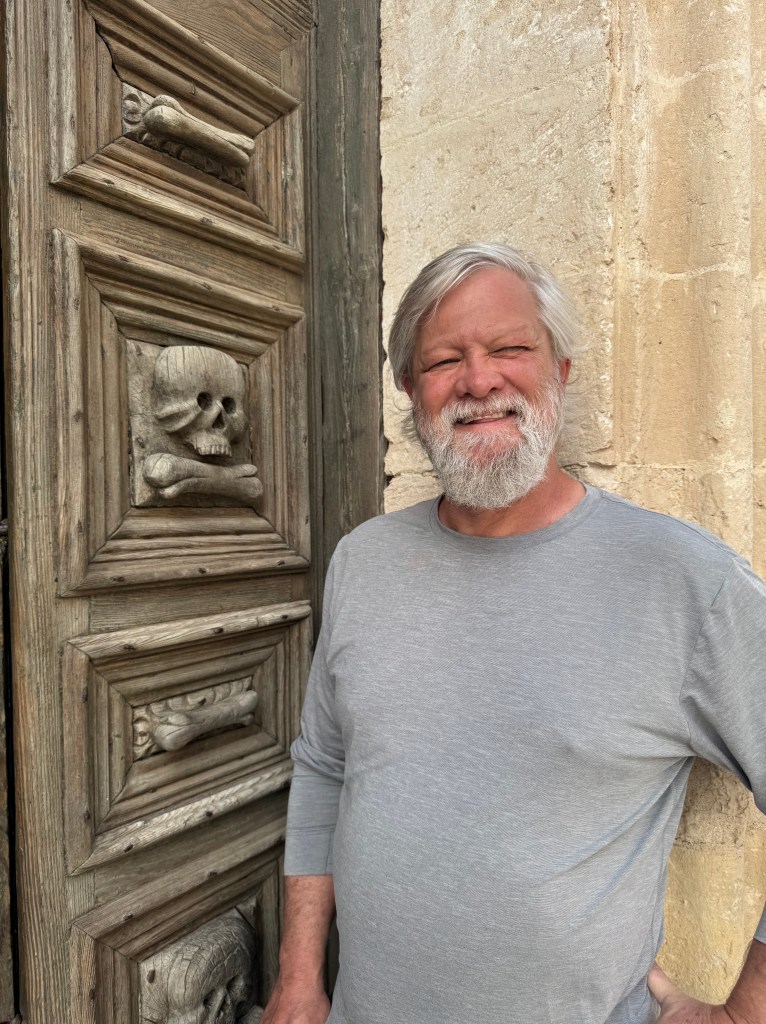
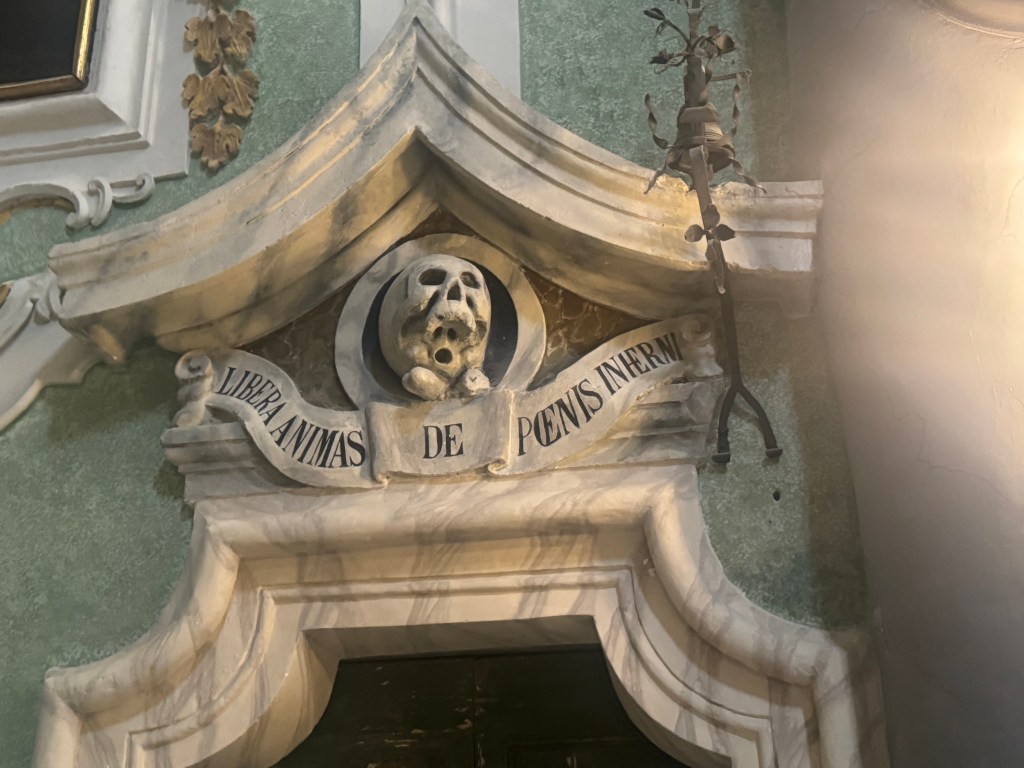
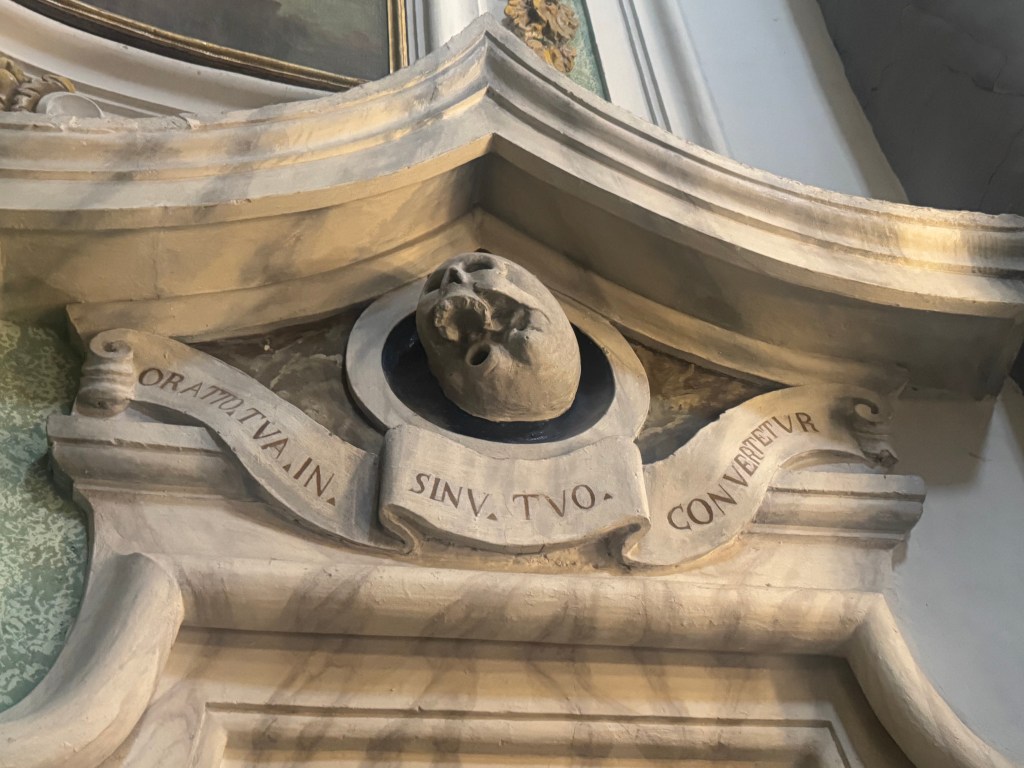
Chiesa del pergatorio – From the website below “ Skulls and skeletons are omnipresent in this church dedicated to souls trapped in purgatory. This church is located just outside of the Sassi di Matera. It is an 18th century baroque church, adorned with skulls and skeletons and other death-related decor.” Here’s more if you’re interested :https://www.atlasobscura.com/places/chiesa-del-purgatorio
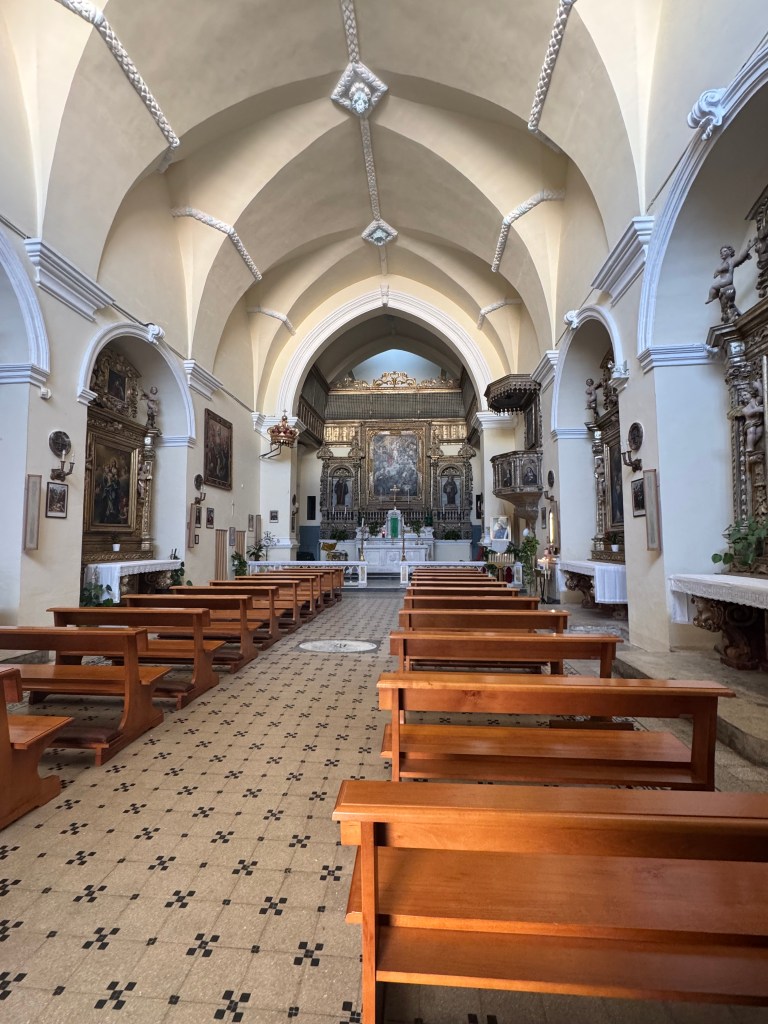
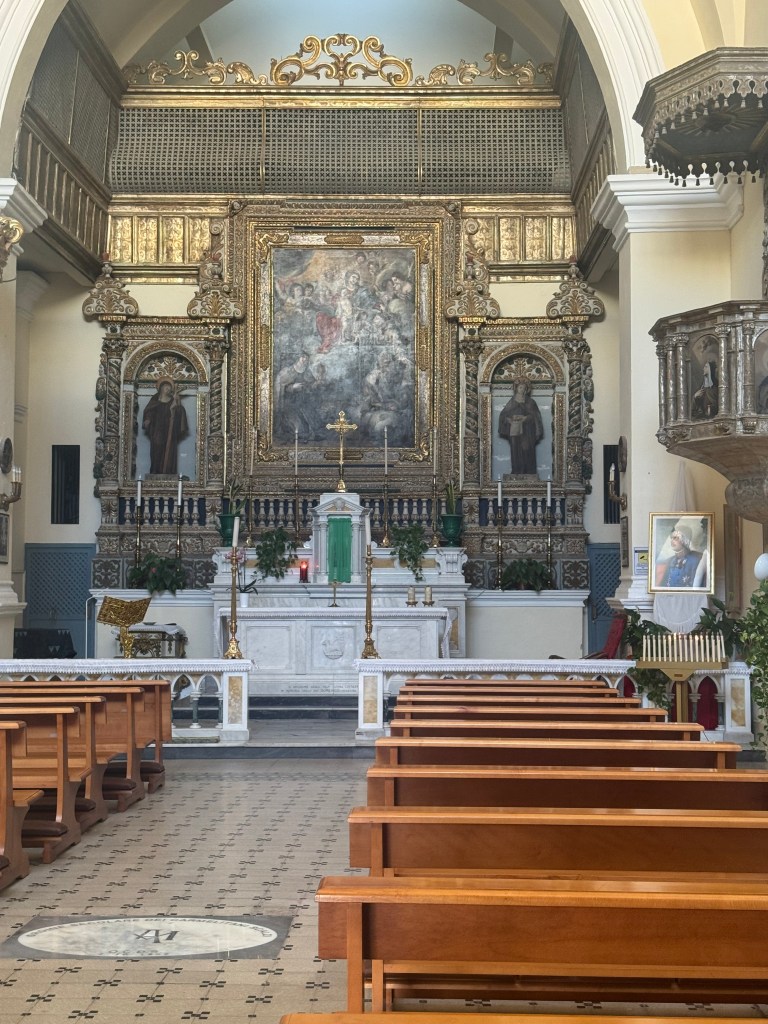
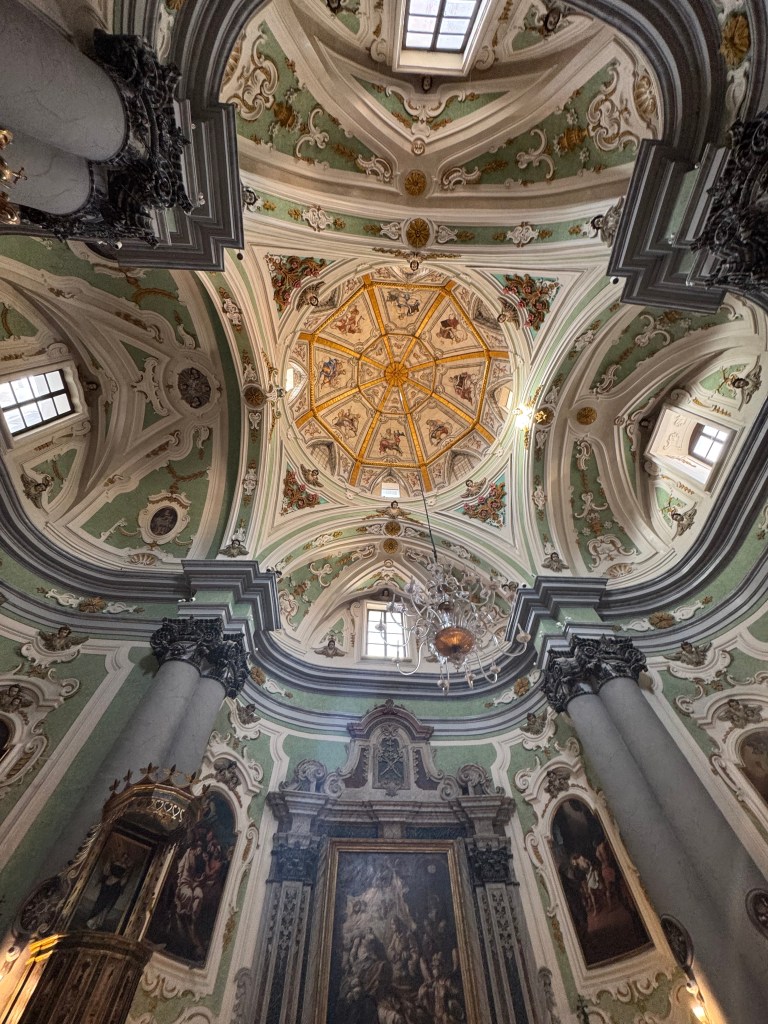
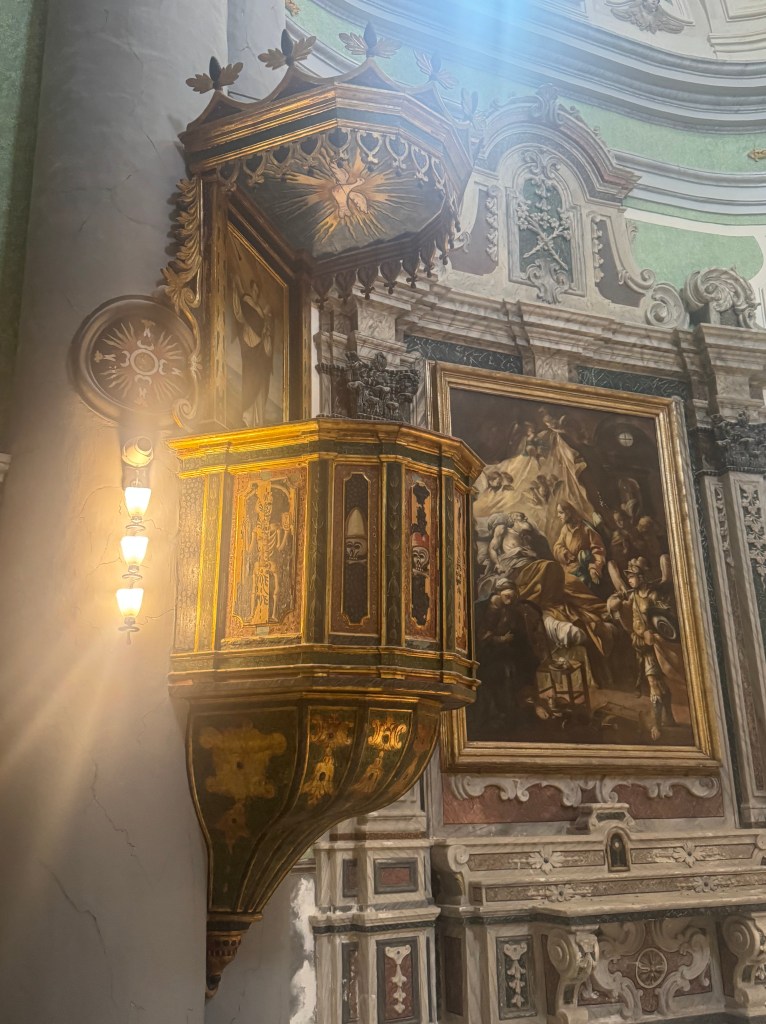
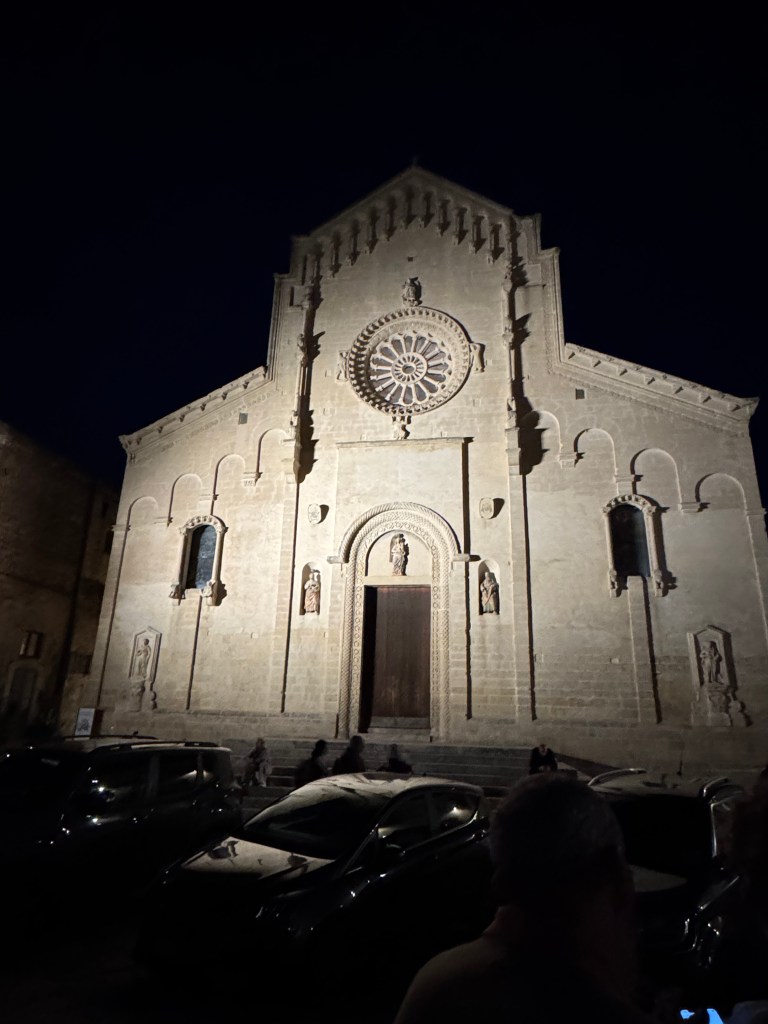
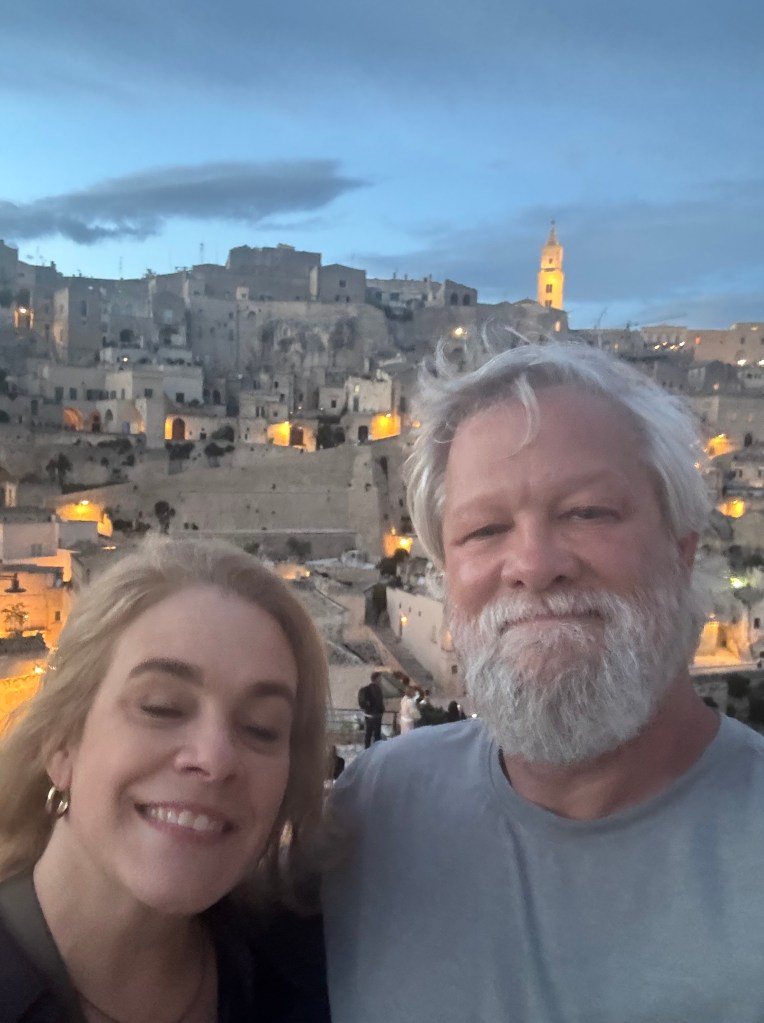
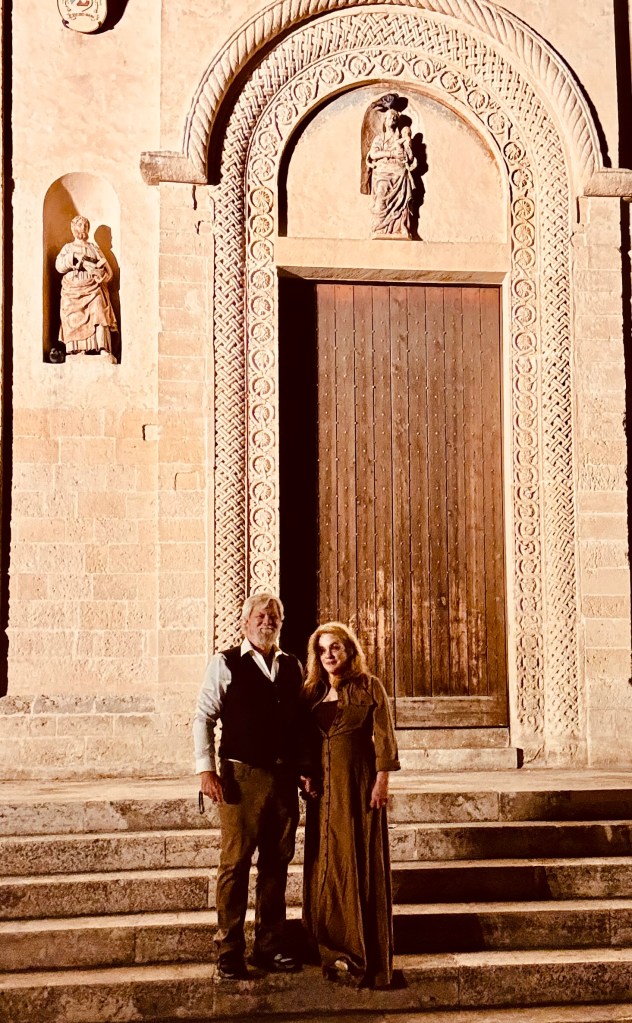
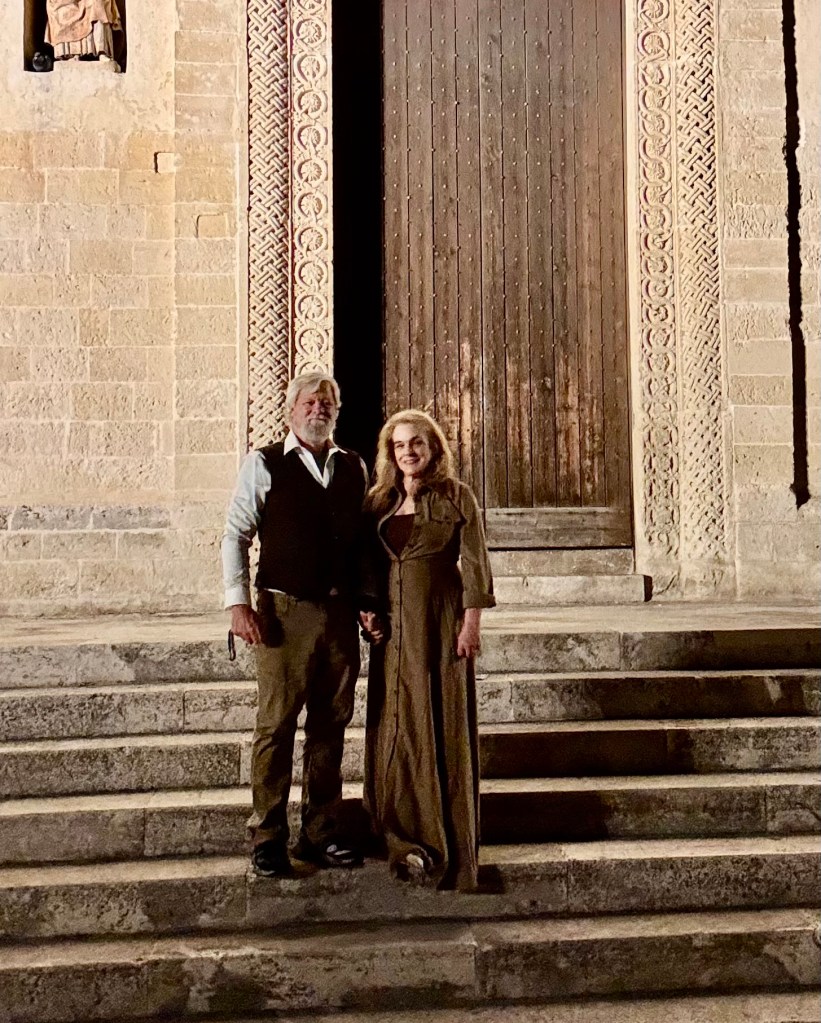
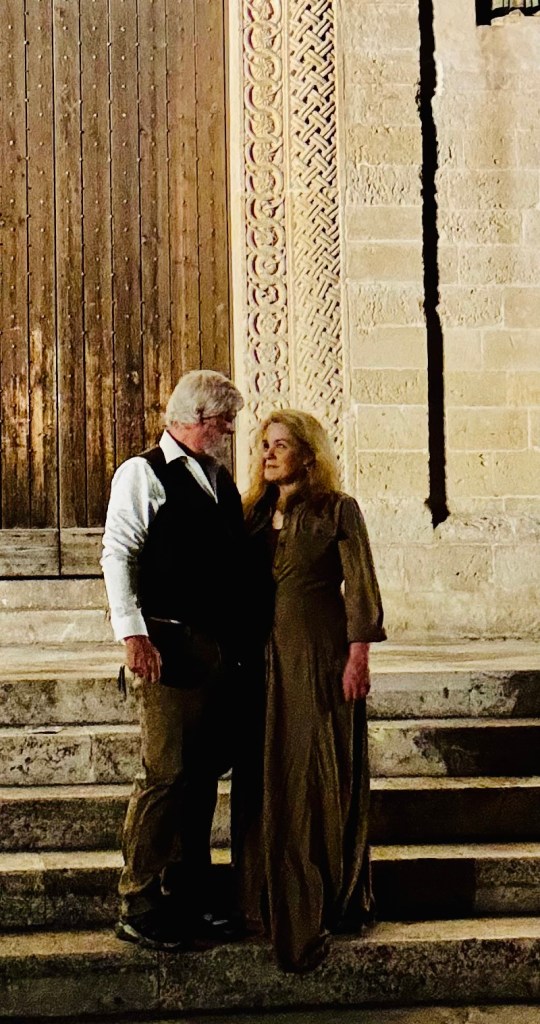
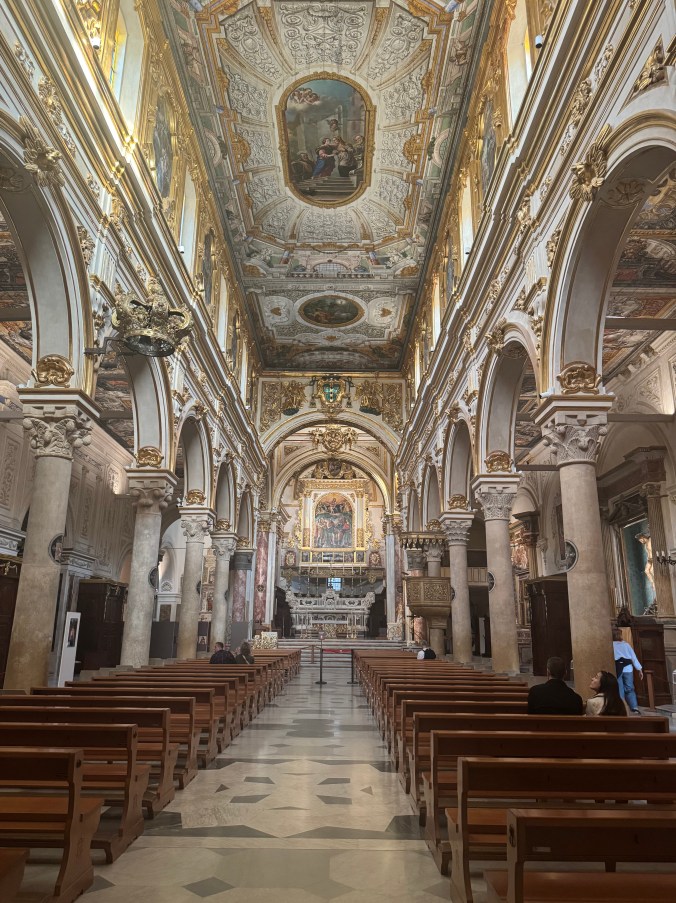
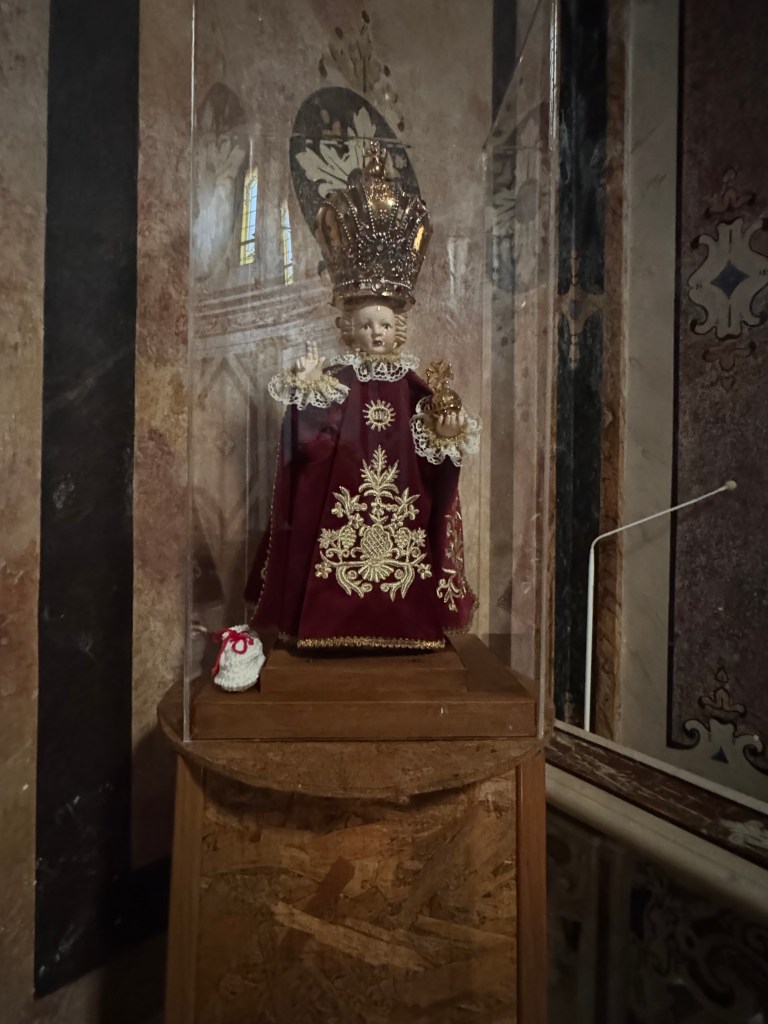
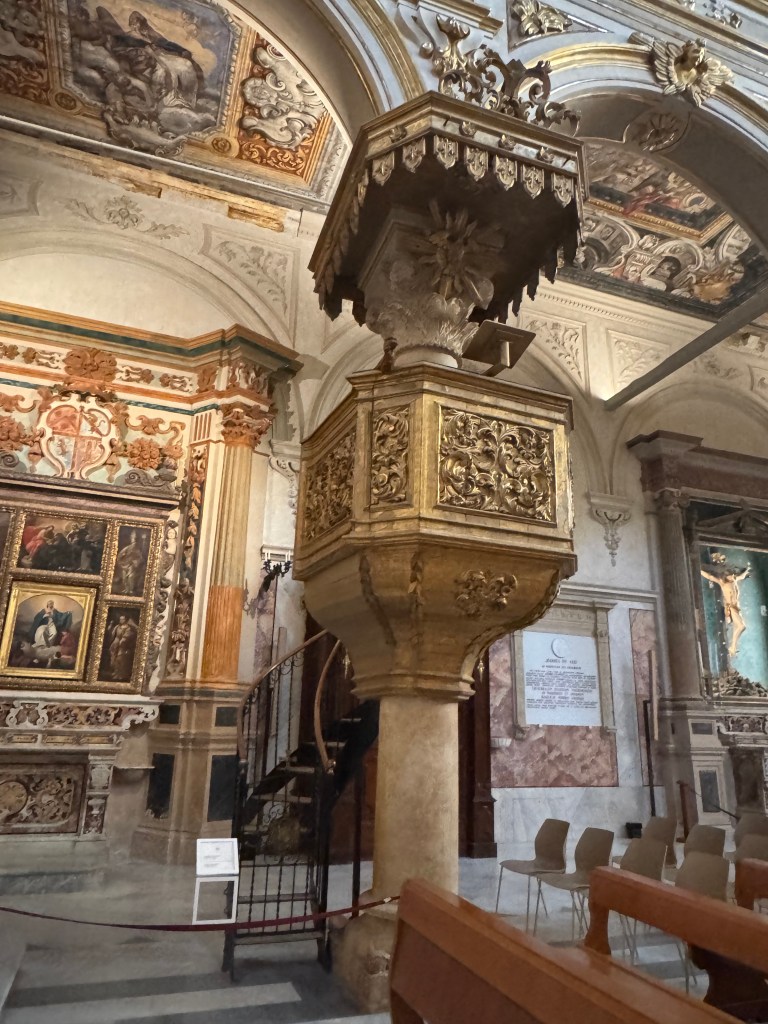
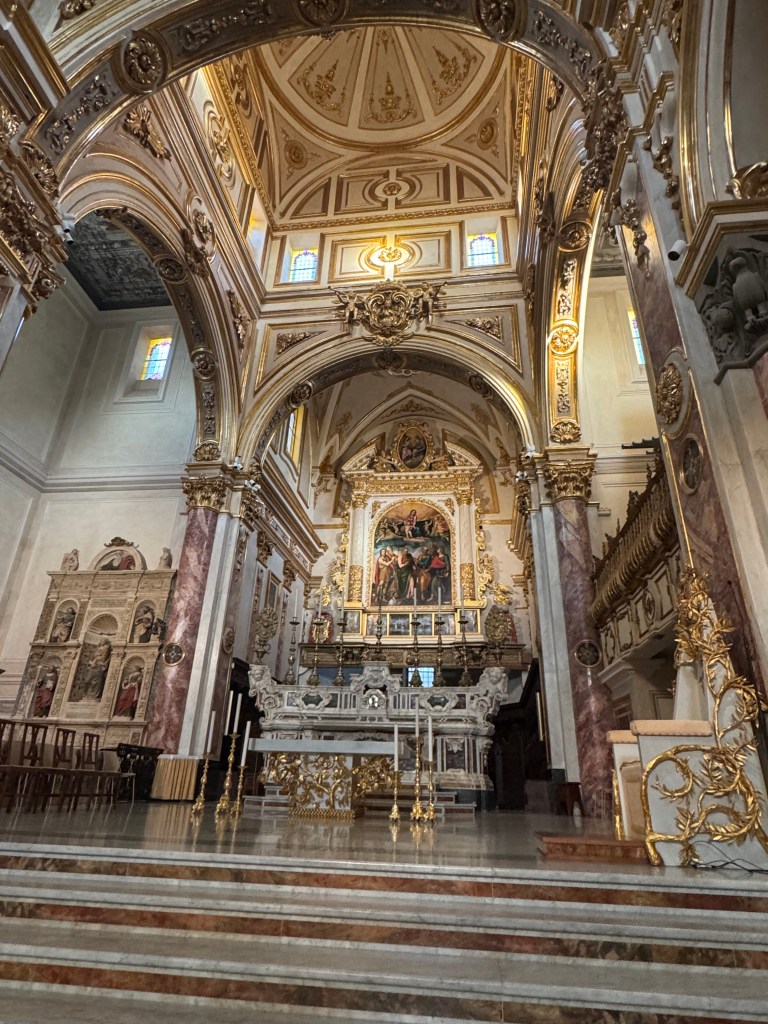
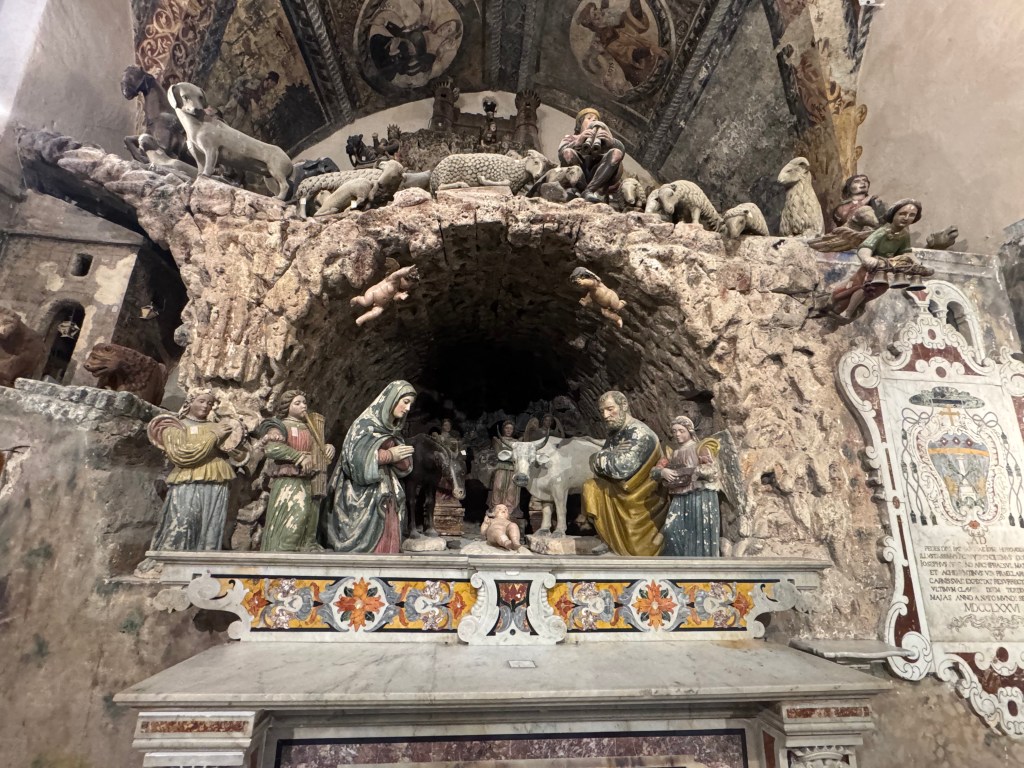
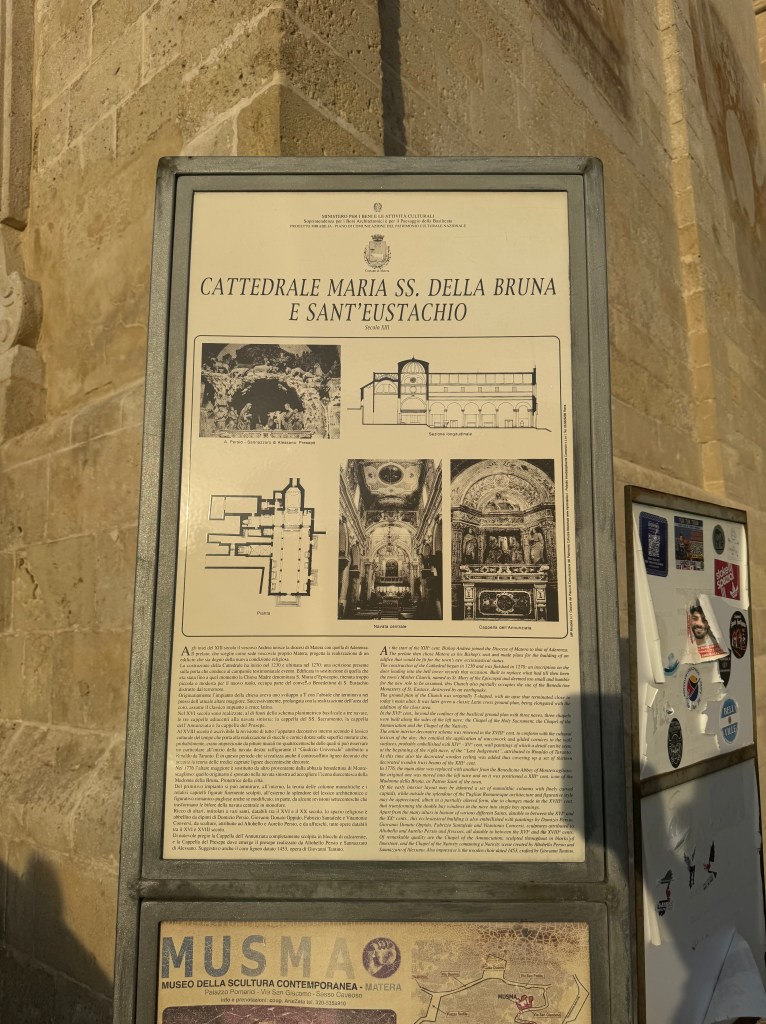
We also decided to go inside the Duomo piazza church, The Cathedral of Matera, which has the official name of – “the Cattedrale Maria SS Della Bruna E Sant’Eustachio”. This church is said to be the main catholic place of worship of Matera, the mother church of the archdiocese of Matera-Irsina. We are not catholic, so I’m not entirely sure what all of that means. It was built in the Romanesque Apulian style in the 13th century. Building was begun on the current cathedral in 1230, and completed in 1270. This church was absolutely stunning! I was particularly taken by what I’d call the life-sized nativity scene! First, here are a few of our wedding photos, from around midnight on 10/25/25, on the steps of this Cathedral:
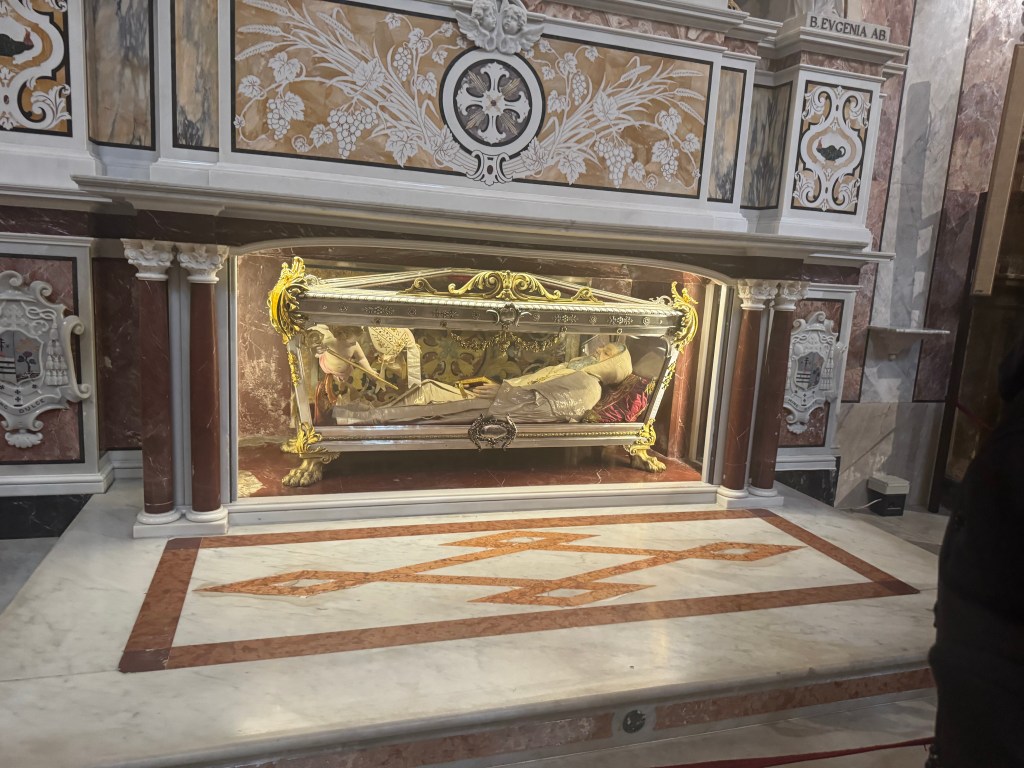
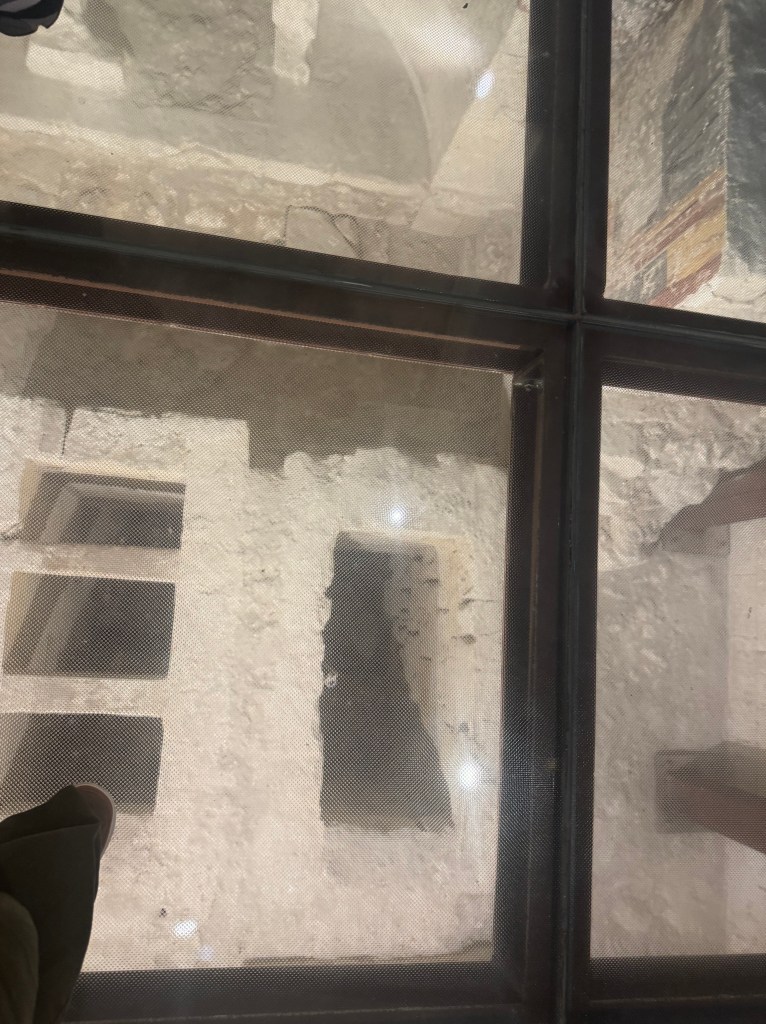
And here are some photos of the inside, which we explored a few days later:


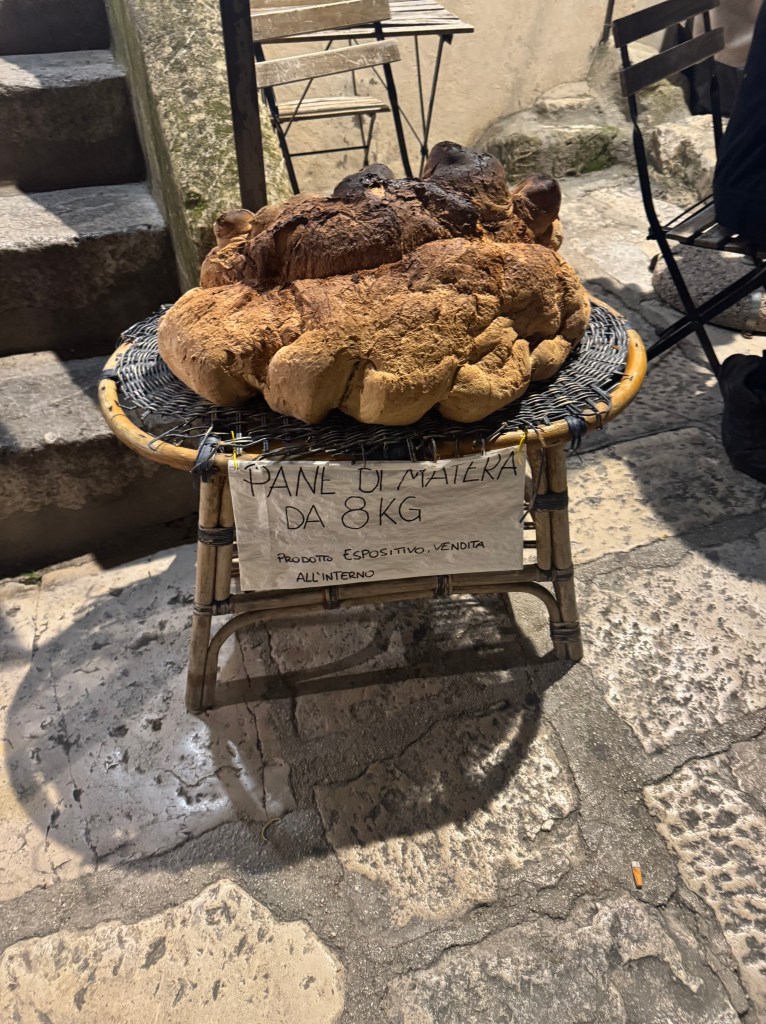
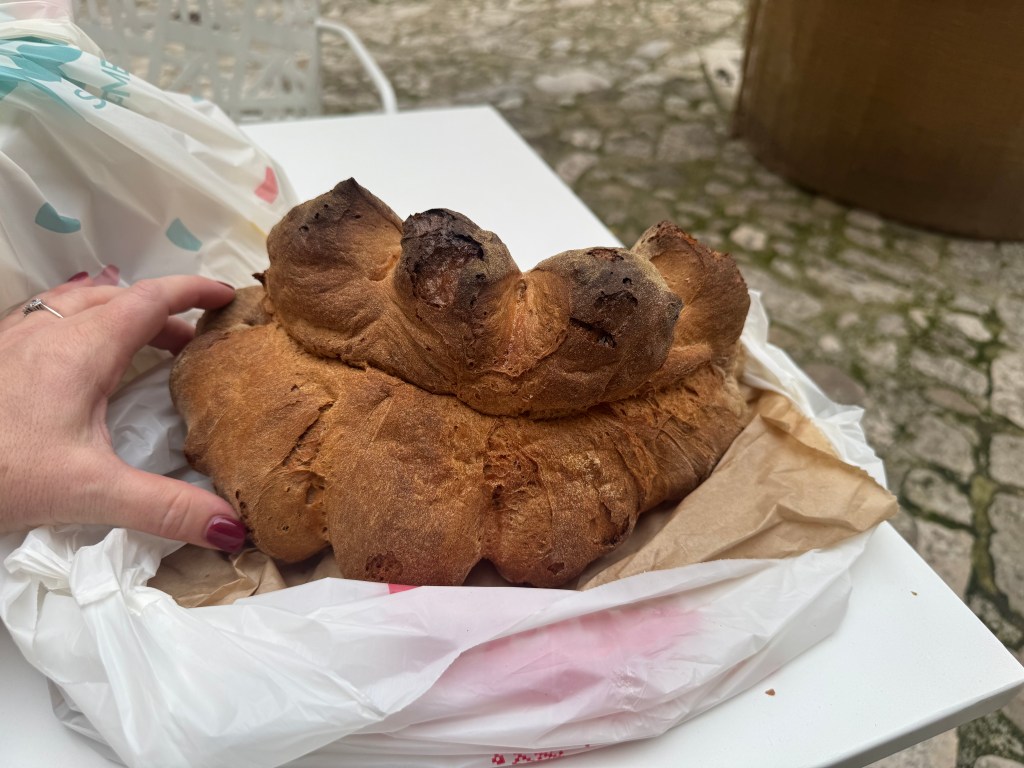
There’s a type of bread that Matera is known for, called Pane di Matera. It is an ancient bread that has been made here for thousands of years. Our hotel hostess, Alexandra, is the one who told us about it. She told us that everyone in the city, even outside of the old town, makes and eats this bread routinely. She told us that her family enjoys slicing it thin, right out of the oven, and eating it plain, without olive oil added. Upon doing a little research, I’ve learned that the amazing bread is based on a longstanding tradition. Many of the strains of wheat used to make the flour for it are unique to Italy and have been cultivated by local farmers for thousands of years. No other type of bread in this region is as highly regarded as the ancient Pane di Matera.
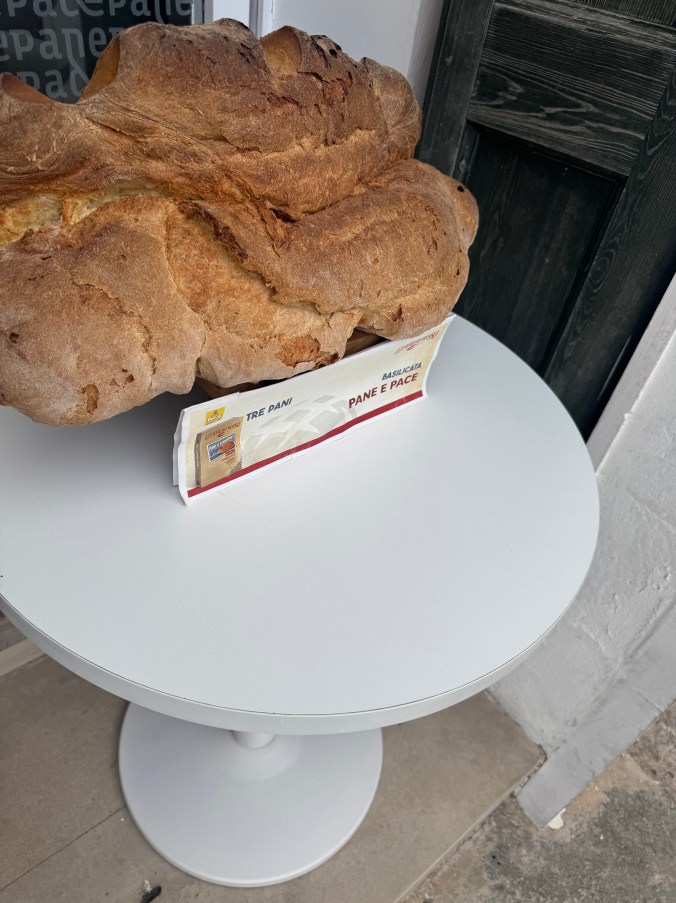
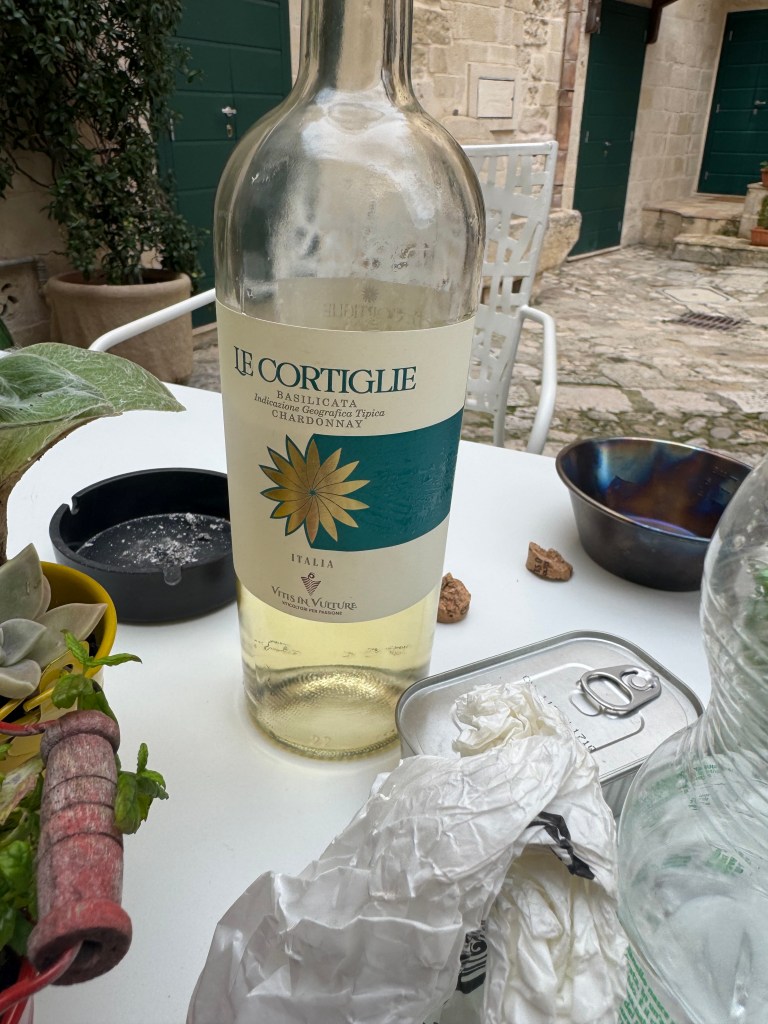
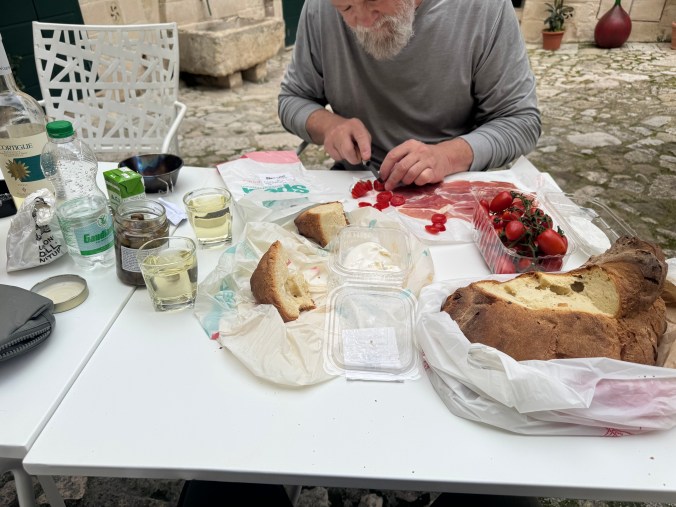
On the surface it may not seem like much, as it’s flour, water, yeast, and salt – basic ingredients that make up lots of other types of bread. This bread is entirely different from anything else we’ve had. It has a hard, dark brown crust on the outside, and a pale yellow inside. Alexandra told us that the rough conical shape is said to resemble the harsh nearby mountains. It has a flavor much like sourdough, but a little stronger and maybe a little sweeter. We decided to go to a bakery nearby and get a loaf to make into lunch. The photo above is from the display outside the bakery. We added a few things from the local market (buffalo mozzarella, tomatoes, olives, and white wine) – and got to fully enjoy and experience the pane di Matera! It was delicious and interesting due to it’s uniqueness.
Have you ever had a caper berry? Maybe we’re just really late to the caper berry party – but nobody we’ve asked since we’ve been back has heard of them either. No, I’m not talking about capers. These are about the size of a green olive, and are on a stem. They’re pickled like capers, but they’re much larger. One of our favorite things we ate on this trip was those caper berries! On our last night in Matera, we set out to find a fun rooftop bar, and we happened in to the Zipa Cafe (www.zipacafe.com). They seated us on a cool rooftop on small beanbag type chairs, and a beanbag table, overlooking the valley below Matera. It was such a fun vibe, a beautiful view, and we loved it.
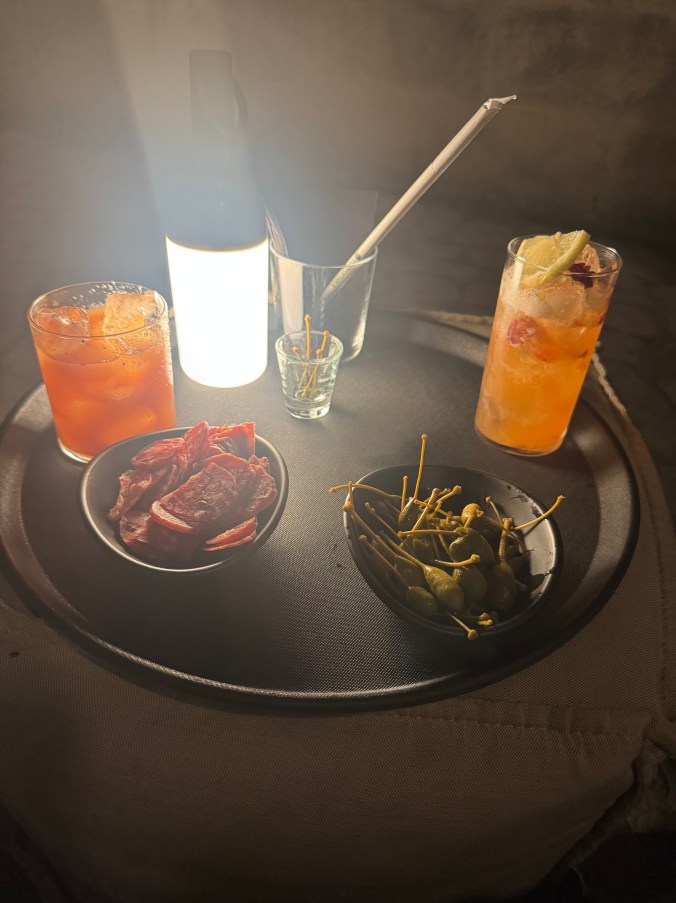
It was a fun way to end our visit to Matera! We looked all over Italy for some of those caperberries to bring home with us, and share with our family and friends. We could not find them anywhere! Once we got home Shannon found some on Amazon, so there’s a jar in our fridge if you want to come try one!
Since our trip to Italy began in Rome, I’m going to go back to the beginning and tell you about our visit to Rome and Vatican City next!
 Heads East, Tails West
We haven’t been to Matera before. Thanks for show us a glimpse of its history and beauty. The cave dwellings are fascinating. And no, I’ve never heard of caper berry either.
LikeLiked by 1 person
Haha well at least we are not too out of the loop!! Thank you for your response- and for the read 🙂
LikeLiked by 1 person
LikeLiked by 1 person
Thank you for reading!!! 🙂
LikeLike