
Ever heard of the Eleven Point River? Neither had we! When Shannon started looking at somewhere for us to go to see the Eclipse in the Path of Totality, this river was directly in the path. If you go to that link and look, you’ll see that it was predicted to be visible over most of eastern Arkansas and a small corner of southeastern Missouri. At first, we thought we’d go back to the Buffalo River where we’d been before and loved (I linked the post there in case you missed it and are interested), but the Buffalo River is widely known and we were concerned about a large amount of other people. Also, when Shannon had called the outfitter for the Buffalo River, they hadn’t really known if they’d be “running shuttles” due to the uncertainty of the water levels on April 8. We’d also looked at the Jack’s Fork River, and The Current, and a few more but ultimately decided on this one for many reasons:
From : https://www.fs.usda.gov/recarea/mtnf/recarea/?recid=21676 “The Eleven Point National Wild and Scenic River was established in 1968 as a 44-mile scenic river, free of impoundments with a largely undeveloped shoreline and watershed. This portion of the river between Thomasville, Missouri and the Highway 142 bridge is near Gatewood, Missouri. It became one of the 8 initial units of the National Wild and Scenic River system in 1968.The Eleven Point National Wild and Scenic River meanders through the picturesque Ozark hills of southern Missouri. Its course is cut in the shadows of steep bluffs, through sloping forested valleys, and low-lying riparian ecosystems. Barely more than a small stream at its upper reaches near Thomasville, it gains considerable width and depth as its proceeds south-eastward.“
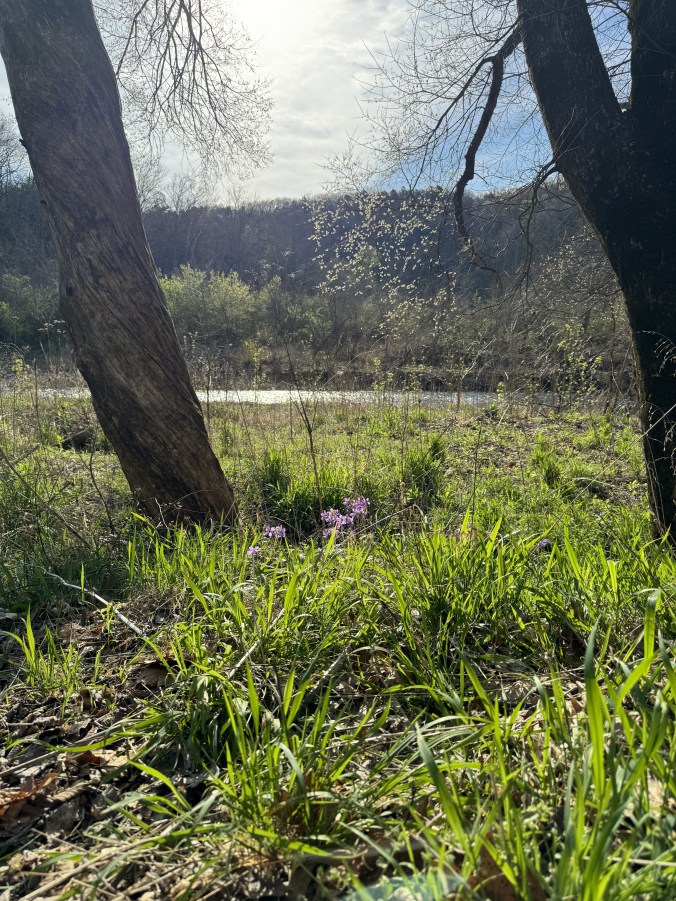
Shannon did some research and found Hufstedler’s canoe Rental and Campground in Alton, Missouri. It says Riverton on the sign out front – and the Riverton canoe access is right across the street. The new owner told us he’d purchased the place a few months ago and is really trying to clean it up and get it in top shape. We spent the first night in one of his tent campsites, and took full advantage of the bath house on site. As we’d trailered our own canoes here, we’d set up with Hufstedler’s to be our shuttle service, and retrieve Shannon’s truck and trailer from our put-in at Cane Bluff.

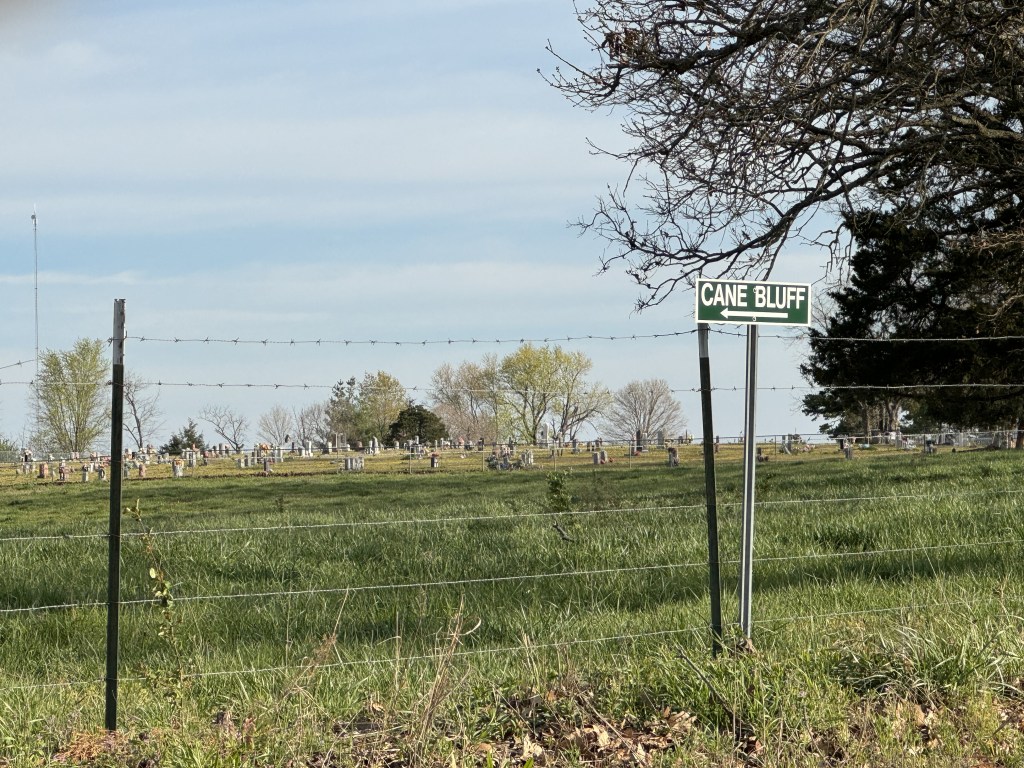
We set out early on Saturday morning, April 6 and had no trouble at all finding the put in at Cane Bluff. We made a quick pit stop for a few last minute items and saw an Amish gentlemen in his horse and buggy. Not something we are used to seeing and I genuinely hope he wasn’t offended at my immediate grab for my phone and a photo….. couldn’t help myself


The Cane Bluff put-in was about a 40 minute drive from Hufstedler’s, and we got to the put-in around 8:30am. Here’s a mile-by-mile guide of the River if you’re interested. Cane Bluff starts at mile 9.3 of the 49 mile River. I had envisioned hundreds of people trying to get there to get canoes in and battle for campsites for eclipse viewing, but it wasn’t quite that way. Also, I should mention that we were thrilled to have Shannon’s cousin Lee King with us on this trip! Shannon’s Mother and Lee’s father are brother and sister. It was great to have her along with us!!

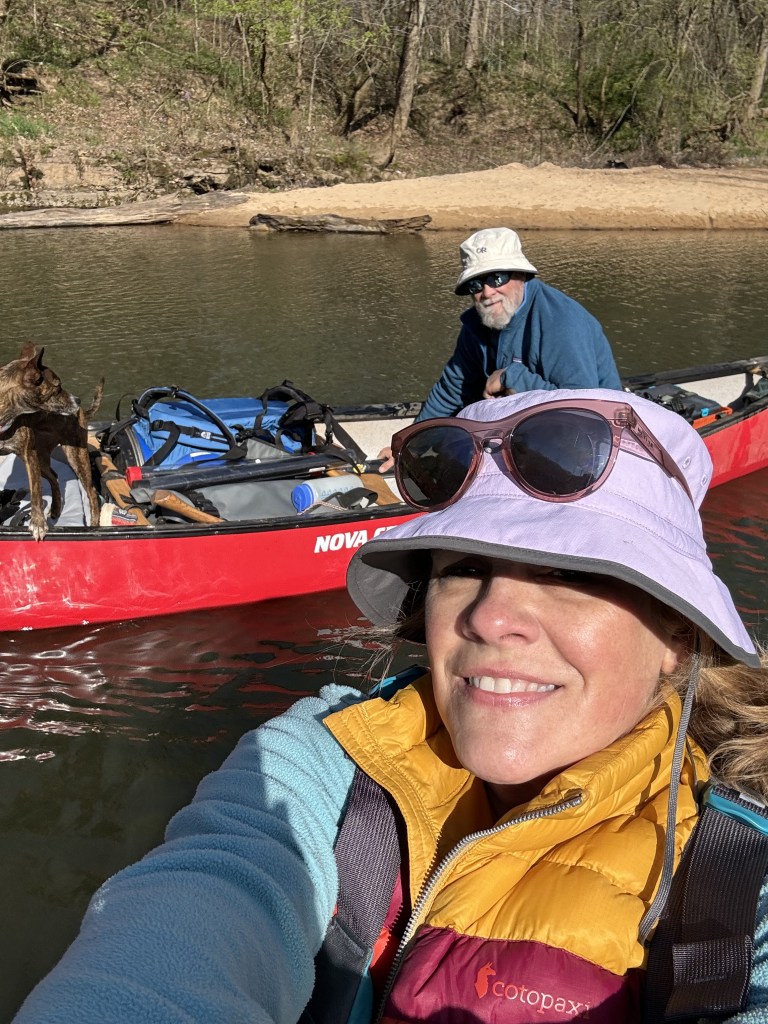

There was another couple there in a cool camping van who were getting unloaded. They were Rachel and Brian from Rising Fawn Ga, and we saw them many times over the next 3 days. Rachel immediately noticed Jango and said “Oh! you have a Feist!” Most people don’t know what breed she is so I was excited! She said she’d had several Feist’s and was looking for one now! We immediately became friends. Wish i’d gotten a picture of them.
About 20 minutes into our float, we saw our first of many bald eagles!
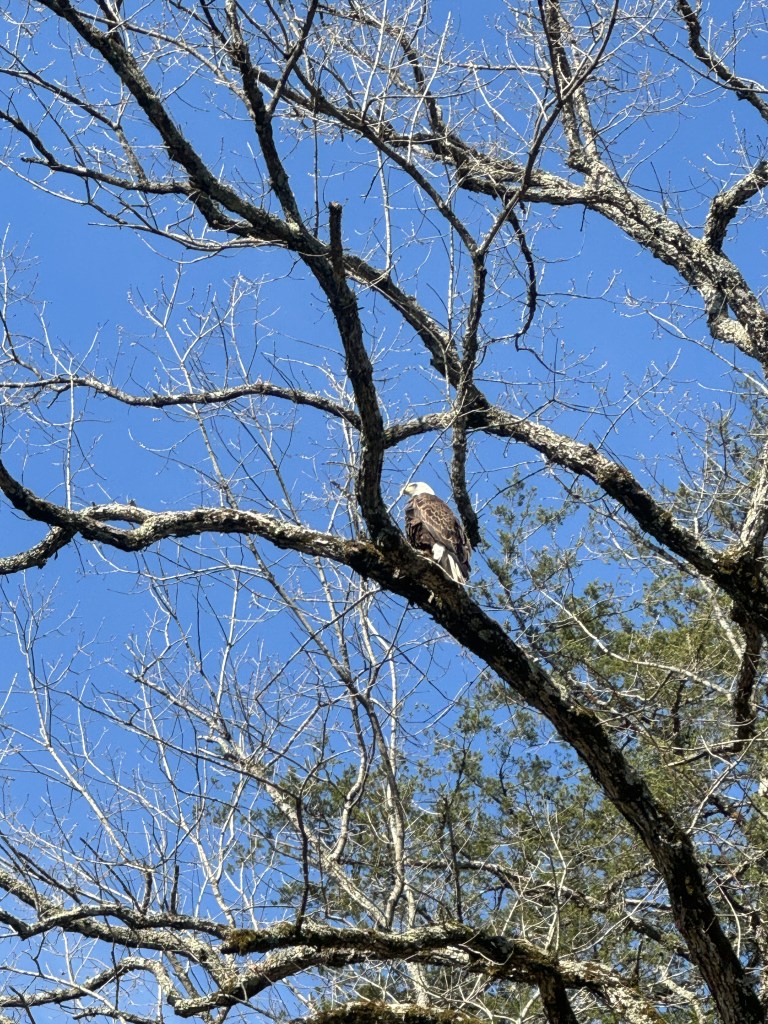
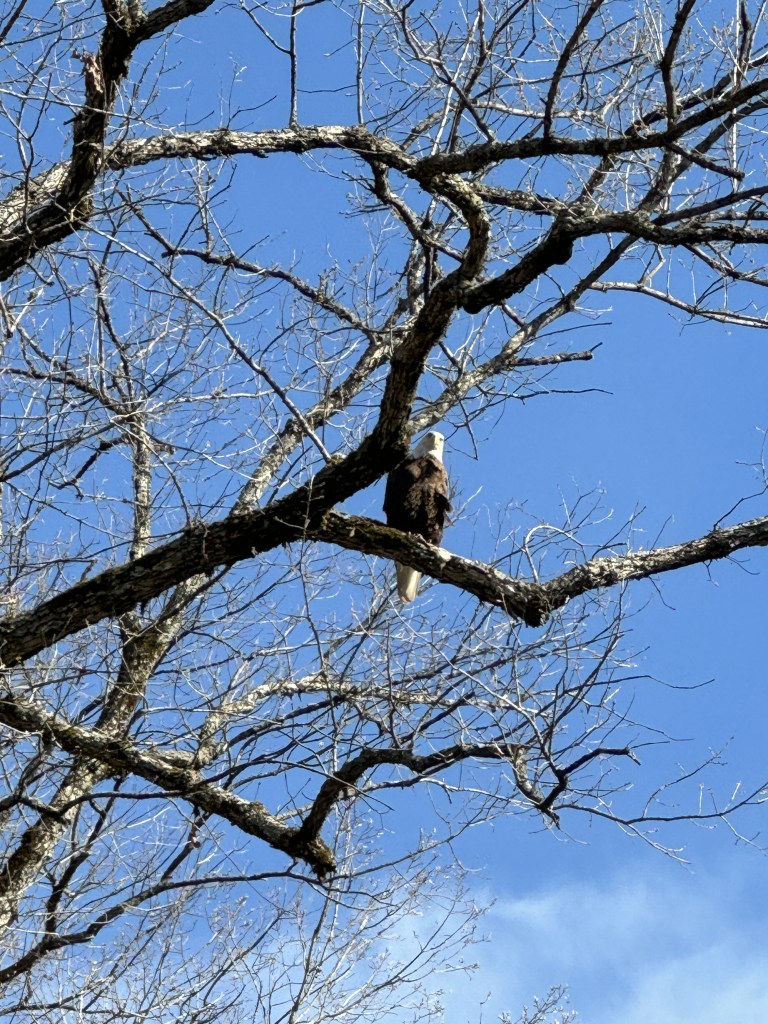
(I like to give the reminder sometimes that if you’re getting this in email, you likely can’t open the videos. You have to go to headseasttailswest.com and select “blog” from the top. I wanted to give that reminder (mostly for my mother honestly) but also because I have quite a few videos to share this time.

The section of the river between Cane Bluff and Greer Spring, was interesting in that there were not many other people at all whatsoever. Shannon said that it was because the water was quite low. We did have to get out a few times and drag our boats over shallow riverbeds. We knew we’d gotten to Greer Spring because of the bridge there. We pulled over and got out and expected to be able to hike to the spring, however, we met a young gentleman from the area who told us it was a hike up the paved road and another mile or so off of the paved road. Hard pass.

The water past Greer Spring was the most beautiful blue-green color, and from here, we had plenty of water to float without dragging the bottom.


Next, saw what we believed to be a juvenile bald eagle

And another bald eagle a little past this one:

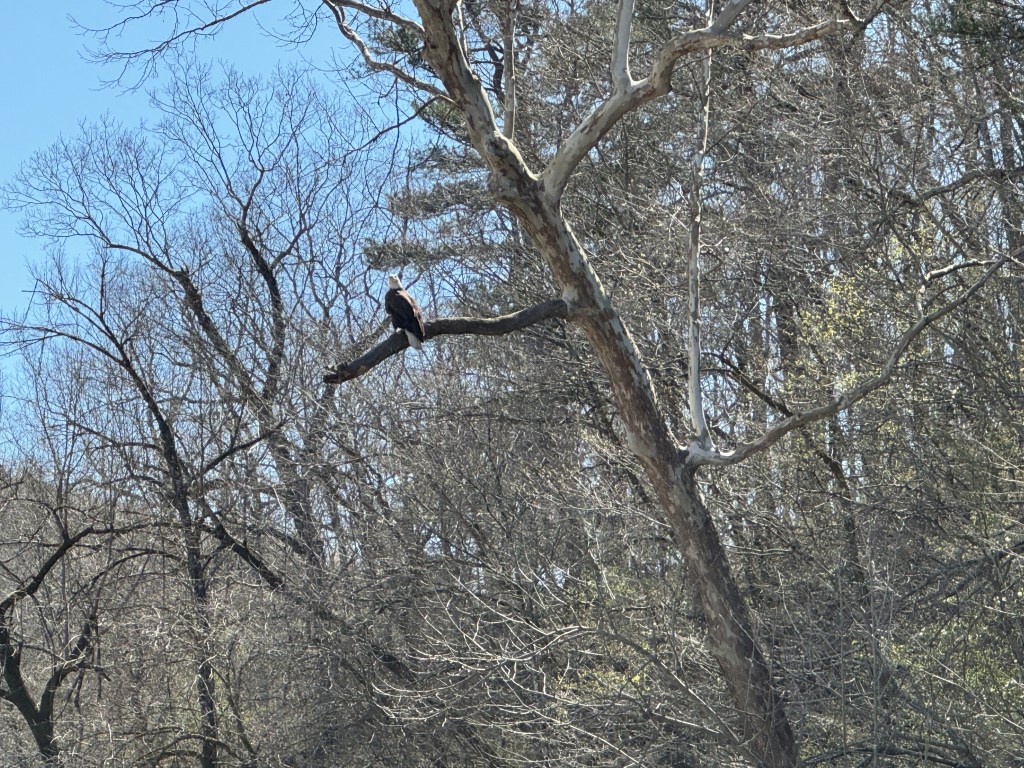
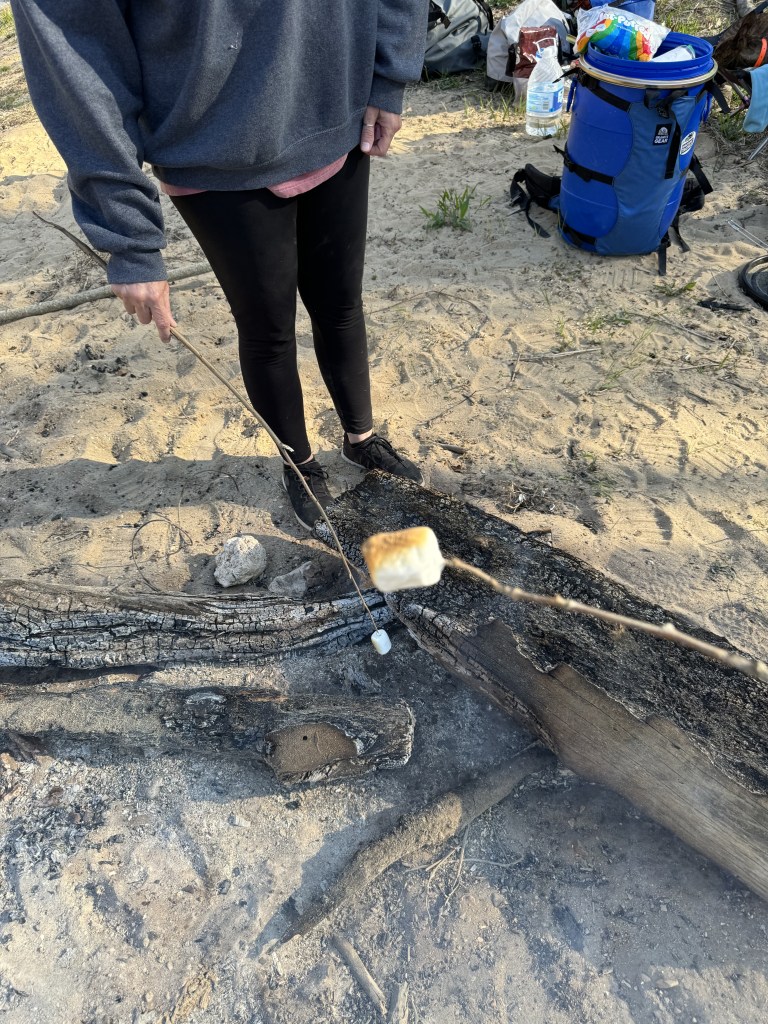
In the afternoon, it started to get very windy. We were having to battle some pretty harsh winds, and it got a little bit exhausting. We decided to set up camp . We were approximately at mile 19 or so, having covered about 10 miles our first day. We found a nice sand bar and built a fire and Shannon made us some great Chili which as it had gotten chilly outside – was absolutely perfect.



We got up the next day and headed out. Within about a mile and a half, we came to Turner’s Mill and Spring which we wanted to stop and check out. From the website linked there, ” Located on the edge of the Irish Wilderness area near Alton, Missouri, Turner Spring is a lovely place for family fun. Turner Spring, which has a 1.5-million-gallon average daily flow, flows from a high rocky bluff and was used to power a 25ft metal mill. The mill is no longer there, however, the wheel is still there.There is a spring that comes out the base of the bluff, a little above the river valley. It flows down some rocks and forms a stream that flows to the river. The wheel sits in the stream. “

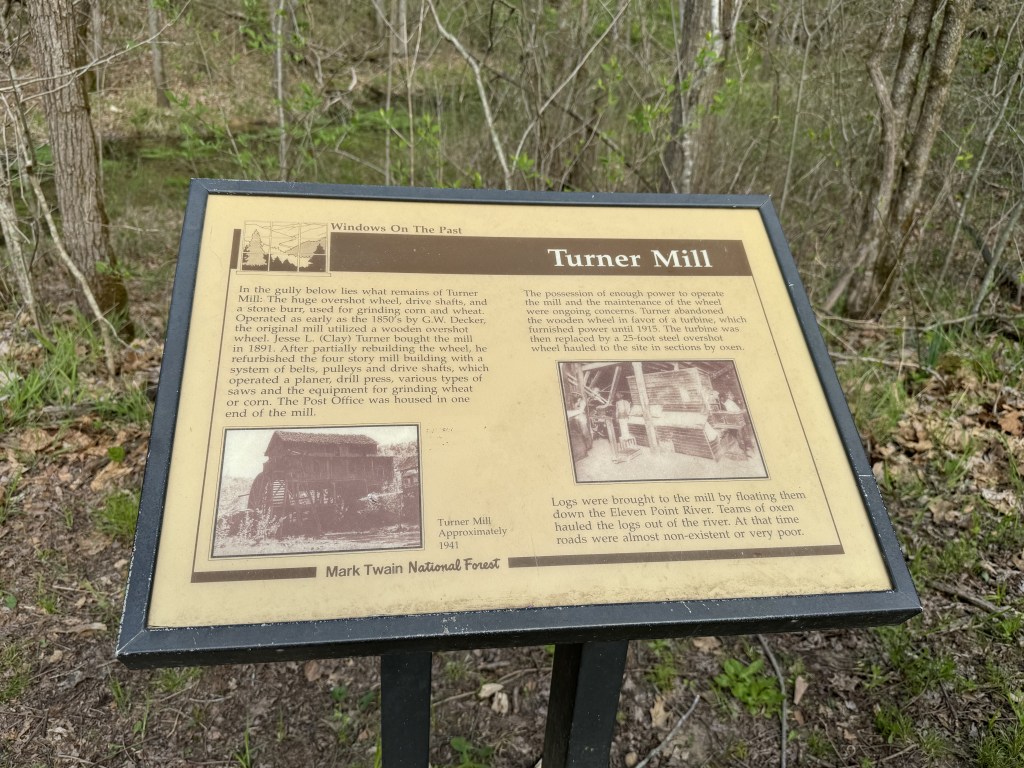
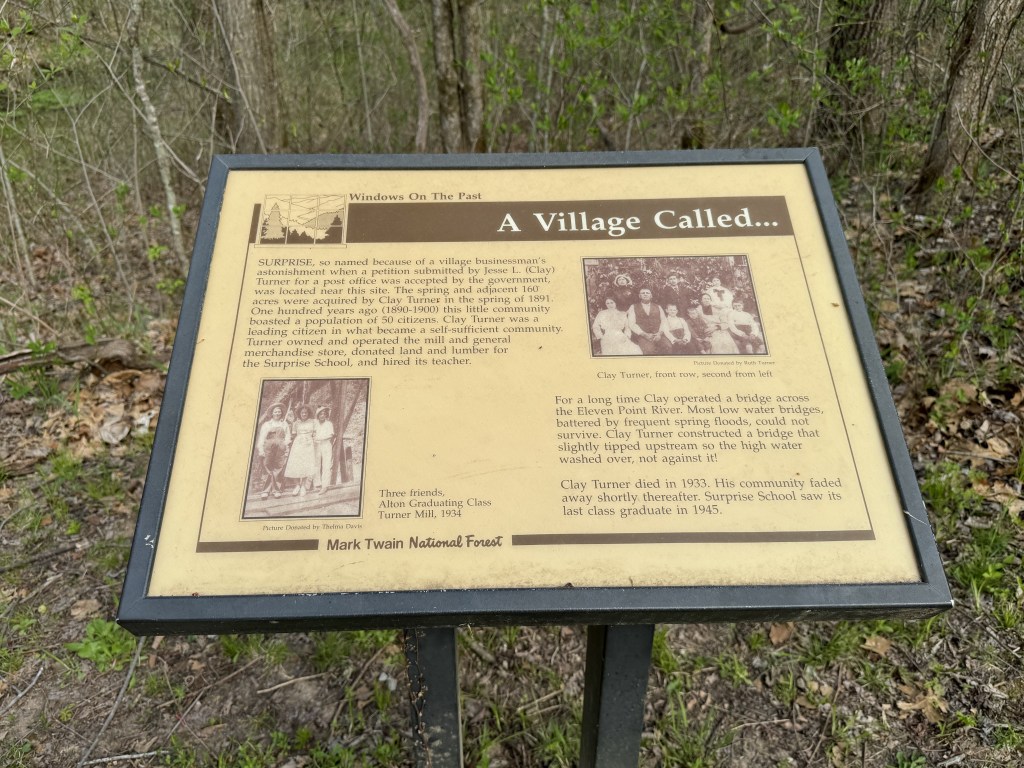
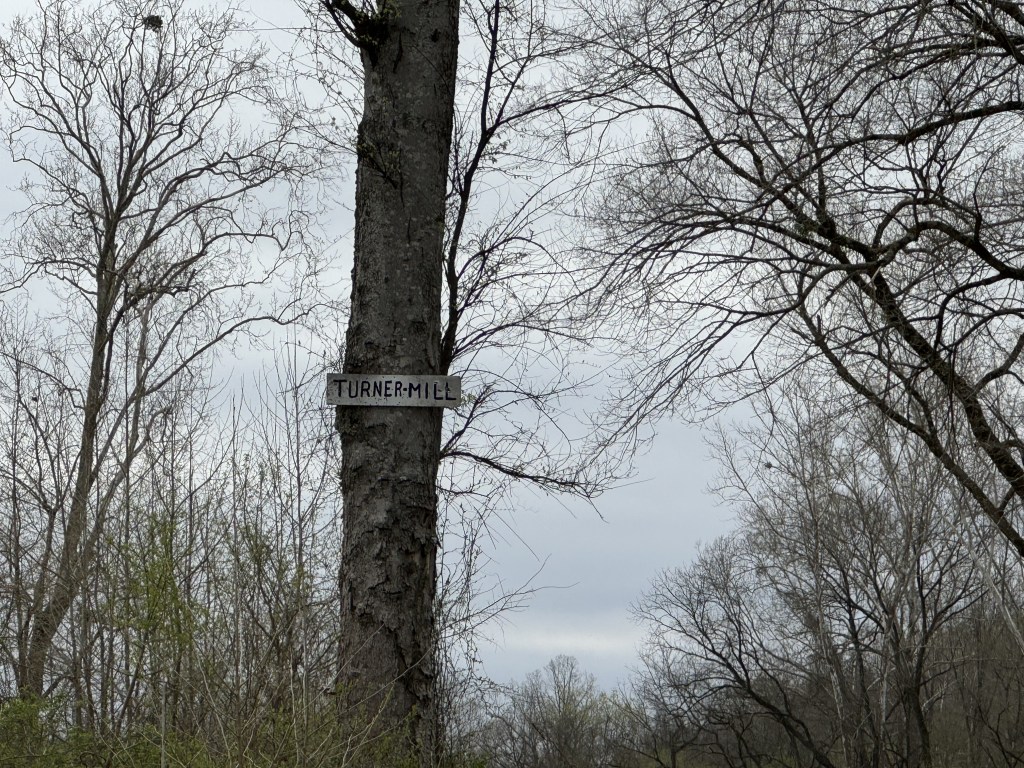

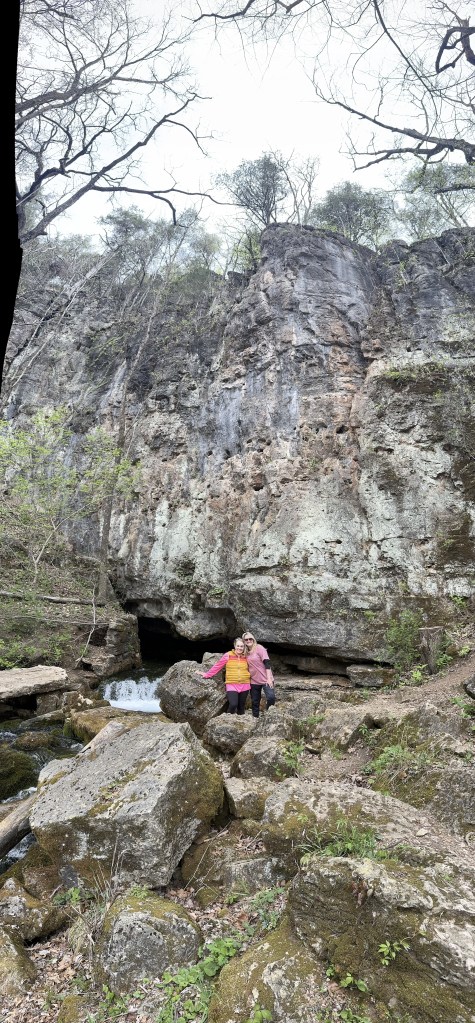
The wayside exhibit at Turner Mill tells a little bit about it. I have the photos above but the writing is small and they’re a bit hard to read. The mill was originally used as early as the 1850’s but was bought by Mr Turner in 1891. Once he bought it, he developed a small community here of about 50 people with a post office and a store and a little school called the Surprise School which saw it’s final graduating class in 1945. Once Mr Turner passed away in the 1930’s, the community faded and is no longer around.
We got back in canoes, and saw our 3rd bald eagle. We started to notice that they seemed to be sitting on short limbs over rapids in the river. As soon as we got within 15 feet of the base of the tree, they’d take off. I decided to look up some info about them and found an article here.
From that link: “Eagles typically search for food in aquatic habitats, and fish are their preferred prey. They are opportunistic hunters, however, and their diets vary considerably depending upon both season and location. In addition to fish, eagles feed on crustaceans, amphibians, reptiles, birds, and mammals. Fish are primarily caught near the surface of the water, and Eagles often hunt near the shoreline. In the breeding season, at least, many eagles seem to prefer large fish. Most of the birds that Bald Eagles prey upon are medium-sized aquatic species including waterfowl. In some areas during the winter, ducks serve as an important food source. Although adept at catching prey, Bald Eagles readily act as scavengers, and they also steal food from other birds and mammals. Stealing is more common outside of the breeding season. Individuals are known to pirate food from other eagles, as well as from Ospreys and from other birds, and mammals. Carrion also is an important food resource, particularly in winter, when Eagles feed extensively on dead fish, birds, and mammals. Eagles will also congregate and feed at garbage dumps. Bald Eagles typically hunt from elevated perches or while flying over suitable habitat, but they also sometimes wade into water to catch prey. Bald Eagles even have been known to hunt cooperatively. Although most prey is consumed at a nearby perch, small prey sometimes is eaten in flight, and large food items are often fed upon at the kill site. Bald Eagles sometimes return to feed at a large carcass for several days. “
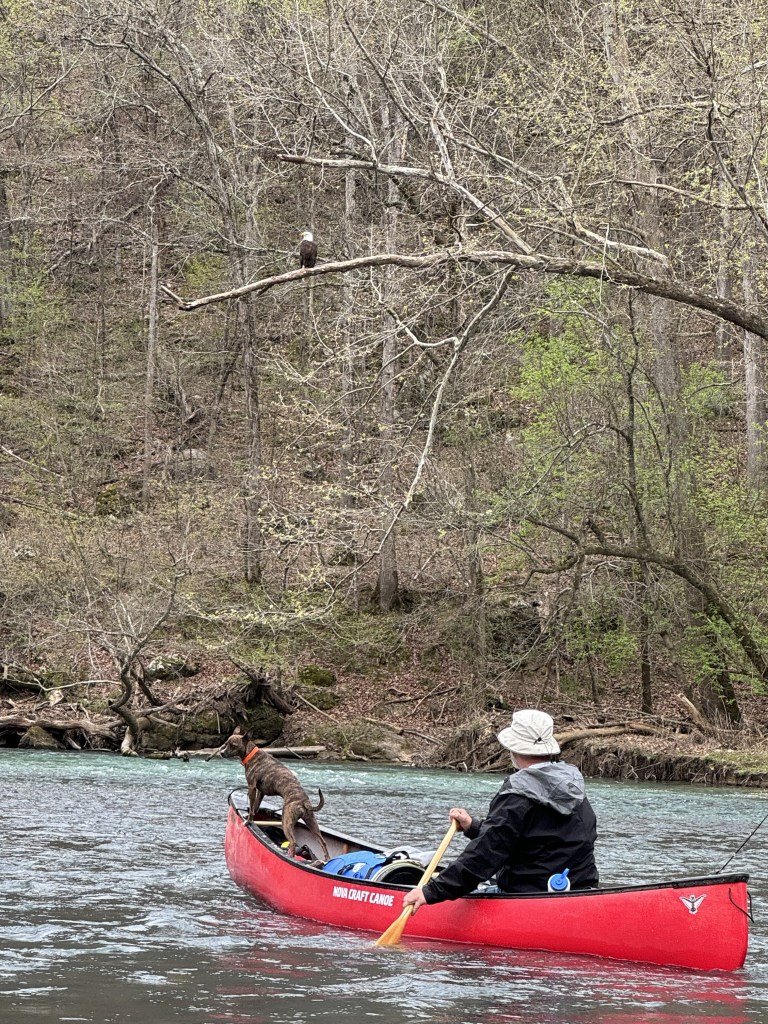
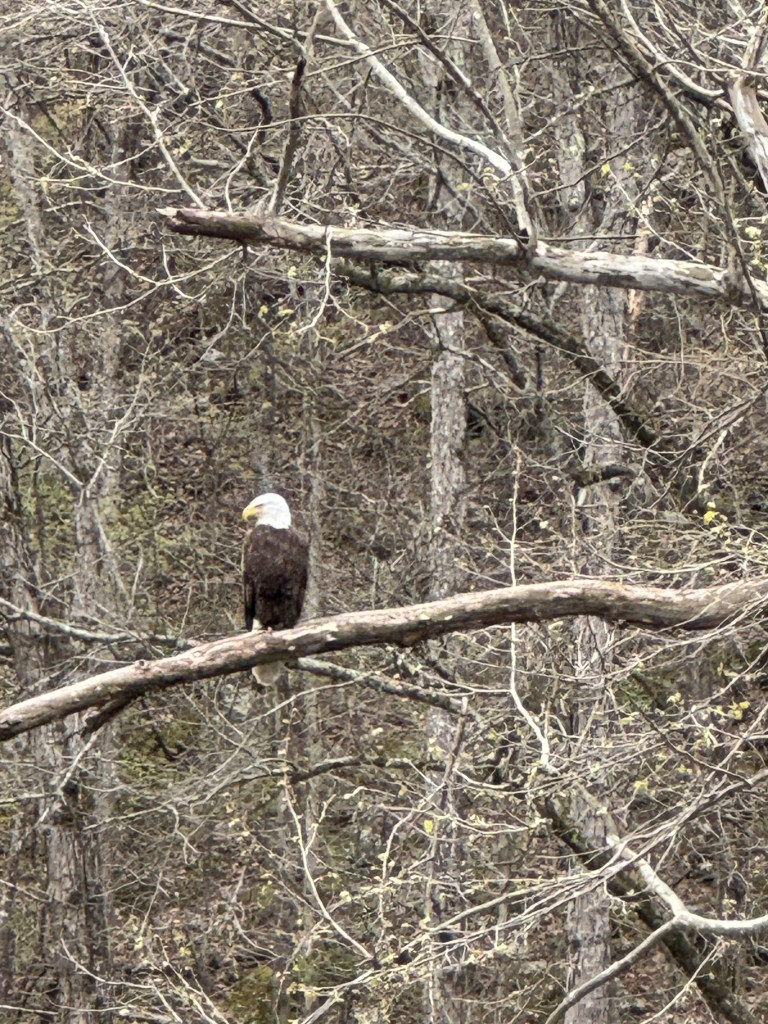


And also this about Bald Eagles:
- Belong to the family Accipitridae, a group of 224 species of hawks, eagles, vultures, harriers, and kites.
- Found only in North America.
- One of 10 species of sea or fish-eagles characterized by the lack of
- feathers on their lower legs and feet.
- Were once called whiteheaded eagles.
- Adult Bald Eagles have a white head and tail with chocolate-brown body feathers.
- Juvenile Bald Eagles do not get their adult plumage until their fourth or fifth year.
- Often steal prey from other raptors, especially Ospreys (Pandion
haliaetus). - Are social outside of the breeding season, especially where food is
abundant. - Build some of the largest stick nests of any bird. Some of their nests are up to 8 feet across and weigh almost two tons.
- Are still threatened by shooting and trapping.
Shannon and I had gotten to see a few River Otters on the Buffalo River, and we’d also seen one crossing the road in the Hoh Rainforest in Washington state. They’re famously elusive, and it was no different here. We’d spot a few of them in the water, grab for our phones, and they’d be gone. You’d see their little heads bobbing in a group, and sometimes it looked like ducks from a distance. We counted over twenty on this trip over the course of 4 days, and I had about 10 videos of water with no visible wildlife trying to capture them.
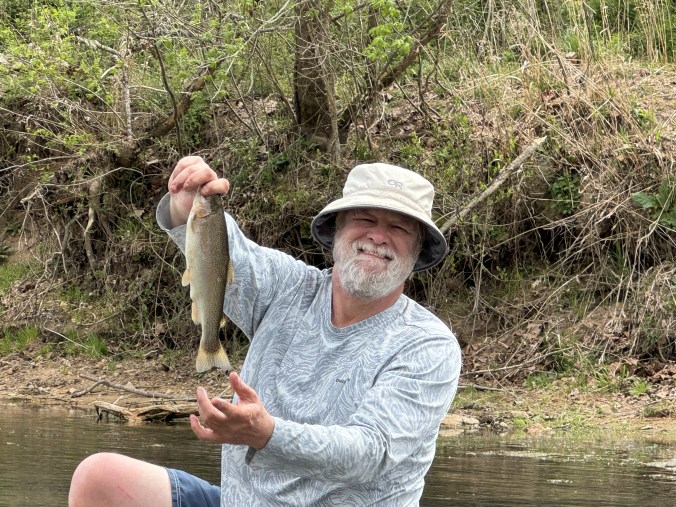
The Eleven point River is excellent for fishing, and particularly for trout. The full explanation is here, but I’ll summarize it for you; From the start of the river in Thomasville, you can expect to see smallmouth bass, shadow bass, rock bass, and gar among other common river fish. Once you pass Greer Spring, you enter into an official cold water fishery. Between Greer Spring and Turner Mill is an official blue ribbon trout area, with regulations, so I’ve linked it to those for you. The bottom line is you can only catch one, must use certain lures, and it has to be at least 18″. So we didn’t fish in that area at all. But right past Turner Mill, Shannon caught the first fish of the trip!
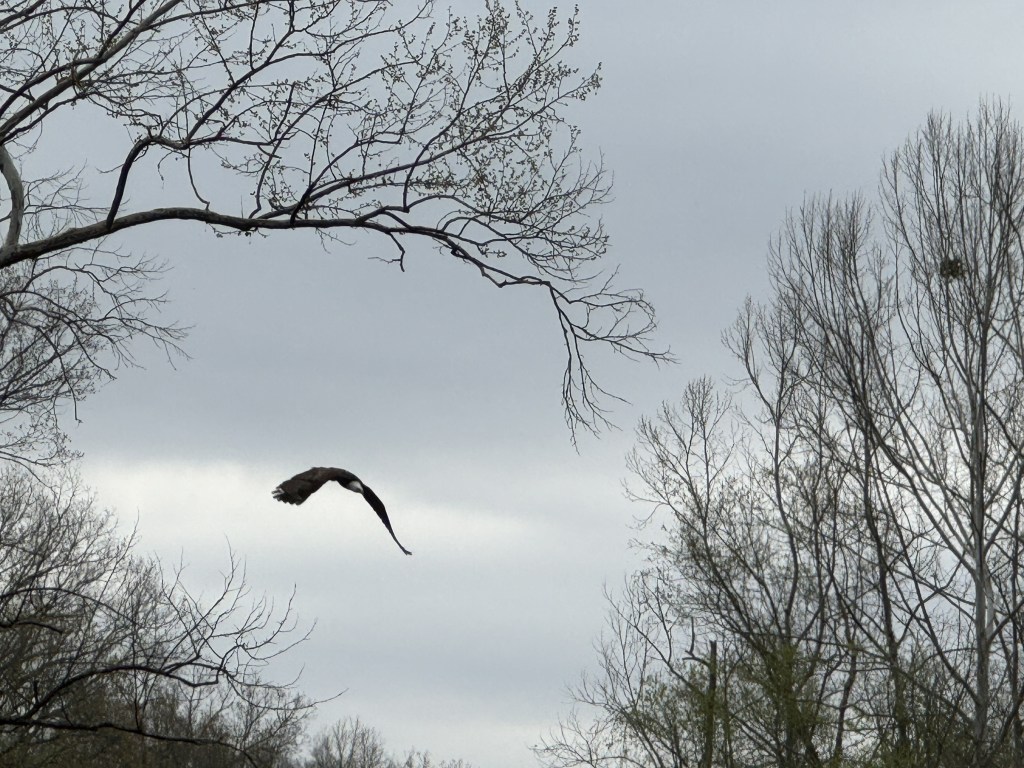
Right as we were coming in to the section of river known as Horseshoe bend, we saw another eagle:
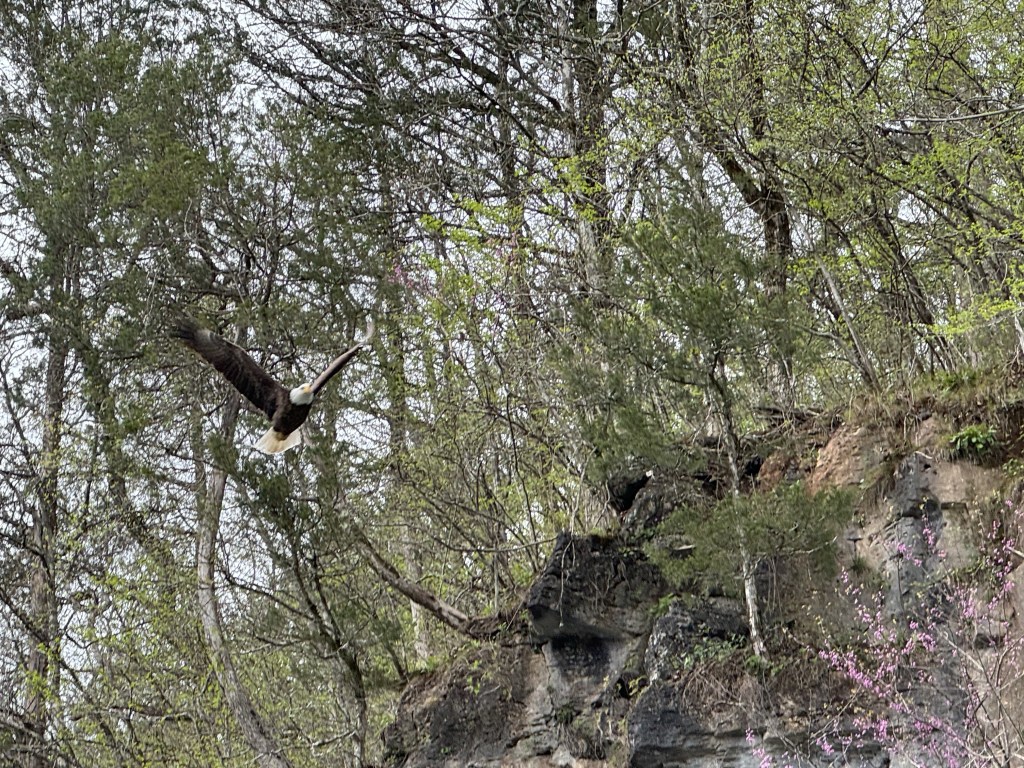
We battled some more wind our 2nd day, and set up camp early and enjoyed some downtime and fishing. Ill tell you about that and the eclipse next!
 Heads East, Tails West
Pingback: Eclipse 2024 on the Eleven Point River – Part 2 | Heads East, Tails West
Go figure you go on some sort of adventure to view the solar eclipse. I love it! And how amazing that you saw so many bald eagles. Looking forward to the next part.
LikeLike
Thank you so much! Have you had your little one yet?
LikeLike
We did! She was born in early December. Nothing really prepared us for parenthood, and it’s been quite the wild adventure so far, but we’re enjoying it. We’ve been on a couple of small trips so far and she seems to do really well while travelling.
LikeLike
That is absolutely wonderful!! I am so happy for you guys!! Girls are the best 💕
LikeLike